

A Serving Of This Popular Cheese Has More Protein Than An Egg
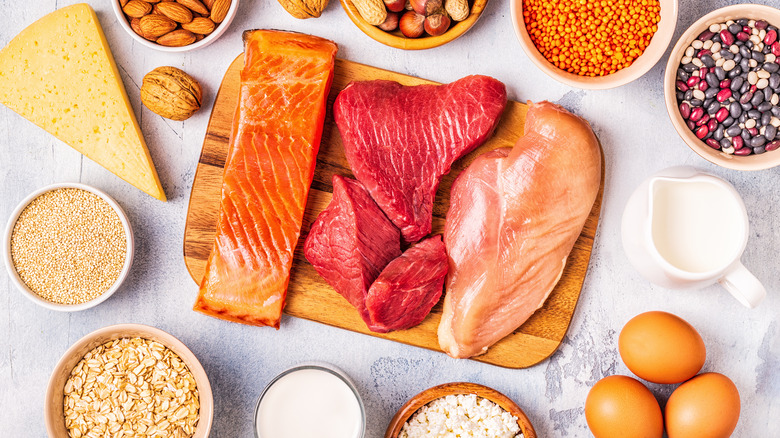
For many people, getting enough protein each day can be a bit of a challenge. While supermarket shelves are seeing more protein-fortified packaged foods each week, most experts recommend getting your daily allotment from whole foods. For example, eggs are a common staple for people looking to get more protein in their diets. However, a popular cheese, Parmigiano-Reggiano, has more protein per serving than an egg.
A regular 1 ounce serving of Parmigiano-Reggiano contains 9 grams of protein while a normal large egg has around 6 grams. A serving of this hard Italian cheese can also provide 25% of the calcium an average adult needs each day. At the same time, research shows that the proteins and other substances in Parmigiano-Reggiano and other hard cheeses like Grana Padano mean the cheese can be considered a functional food. That is, a food with components that can bring about health benefits or reduce the risk of disease in people who eat it.
How cheese is made
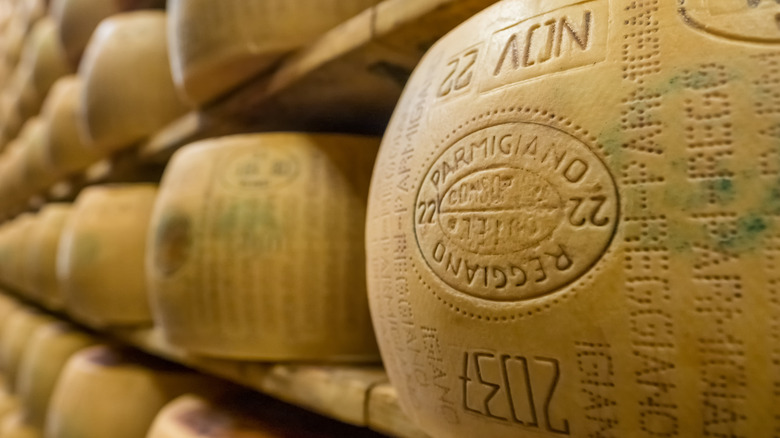
Parmigiano-Reggiano is a hard, granular cheese made from cow's milk (which is surprisingly hydrating). However, not all hard Italian cheeses are Parmigiano-Reggiano, as the name is regulated by the Italian government. To carry the name, a cheese must be made using specific methods and can only be made in the Italian provinces of Parma, Reggio Emilia, and Modena, as well as parts of Bologna and Mantua. The methods used to make and age Parmigiano-Reggiano give it its distinctive flavor.
During the cheesemaking process, milk proteins like casein get broken into smaller protein fragments by an enzyme known as rennet. This causes milk to coagulate, forming curds that can then be collected and pressed into cheese. The resulting cheese is then left to age for different amounts of time depending on the variety being made. During the aging process, lactic acid bacteria cause further changes in the cheese's flavor and texture. Scientists have also found that the enzymes and other chemicals that give cheese its different flavor compounds may also produce peptides that can act like hormones in the body.
The health effects of cheese
Studies are finding that different families of peptides can bring about favorable effects in the body. Parmigianno-Reggiano can contain peptides that inhibit the angiotensin-converting enzyme (ACE), an enzyme that influences processes related to blood pressure. These peptides may act similarly to ACE-inhibitor drugs that are used to control blood pressure. Other peptides found in hard Italian cheeses can stimulate the immune system and tissue repair, change how the intestine absorbs substances, and carry minerals like calcium that can improve bone health.
One study found that Parmigiano-Reggiano can influence the body's response to sugar. Subjects were given a meal of a boiled egg and a couple of ounces of cheese 30 minutes before ingesting a large amount of glucose. The scientists found that those who had the egg and cheese meal did not have as large a spike in blood sugar thanks to greater insulin secretion and slower stomach emptying. This could be due to the proteins and fatty acids present in Parmigiano-Reggiano.
While the protein in Parmigiano-Reggiano outshines eggs on a per-serving basis, most people would not consider it an egg substitute thanks to its intense flavor. But with its high calcium content, useful fatty acids, variety of bioactive peptides, and virtually no lactose, Parmigiano-Reggiano could be just the flavor and nutrition boost your scrambled eggs need to help you meet your daily protein goals.