

What To Do If You Get Stung By A Jellyfish At The Beach
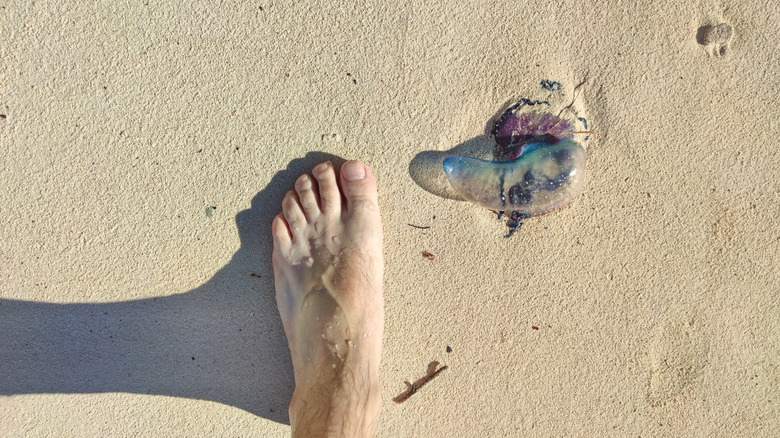
When you head out to the beach for a fun day, you are essentially putting yourself into a whole other ecosystem full of marine life. Unfortunately, some of these life forms can harm humans due to accidental encounters. We are not talking about staying safe from sharks here, though. Stinging jellyfish are, in fact, a much more common danger lurking in ocean waters, especially when recent windy conditions or storms bring them closer to the shore where they make contact with unsuspecting humans. That said, jellyfish do not purposely attack people. Instead, most stings occur as defense responses when humans accidentally encounter them in the water, or step on their tentacles along the shore. These tentacles are in fact important jellyfish adaptations that have helped these creatures survive for the last several hundred million years. If you do get stung by a jellyfish while at the beach, the next steps you take depend on the species, where you got stung, and the overall extent of your injuries.
Overall, it's also thought the jellyfish population might be on the rise due to a number of factors such as declining numbers of predators like sharks, as well as changes in ocean temperature and acidity. This makes jellyfish and human encounters all the more likely. So due to the risk of stinging, it's understandable that you might be concerned about jellyfish during your next beach trip. In fact, about 150 million jellyfish stings are reported globally per year. The good news is that of the more than 2,000 confirmed jellyfish species in the world, only a small fraction can cause significant harm. Nevertheless, when a jellyfish stings, its tentacles pierce your skin and can release venom via substances called nematocytes, which can be quite dangerous.
Certain jellyfish stings and symptoms may require emergency care
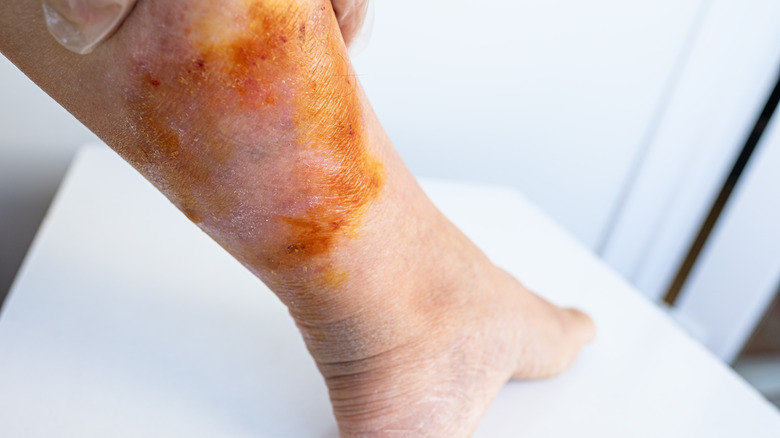
A small number of jellyfish species can pose harm, with the box jellyfish being the world's deadliest type. The good news is that while death by box jellyfish is among the worst ways to die, fatalities are less likely with the subtypes found around U.S. waters, though they can still cause bad stings. Other types of jellyfish that can cause serious stings include the Portuguese man-of-war, lion's mane, and sea nettle. Getting stung by any of these jellyfish could warrant a visit to the emergency room, especially if the injury is severe.
While knowing the type of jellyfish species is important, it's still possible to feel the sting in the water without seeing the offender. This is why going by the severity of your symptoms is also vital in determining whether you can treat the sting on your own, or if you should seek medical care. Some of the more severe symptoms associated with jellyfish stings include chest pain, breathing difficulties, muscle cramps, and nausea or vomiting. A person with a severe jellyfish sting might also exhibit other concerning signs such as excessive sweating and widespread blistering. On the other hand, a mild sting is one that is painful and causes a rash, but is not accompanied by any such severe signs or symptoms.
Getting stung multiple times is another possible instance that could require professional medical care. For example, any sting around the eye area ought to be treated by a doctor immediately to help properly flush the venom out and prevent possible complications. It's also worth taking extra care with children or older adults by monitoring their symptoms and calling their health care providers if these worsen.
Can you treat jellyfish stings yourself?
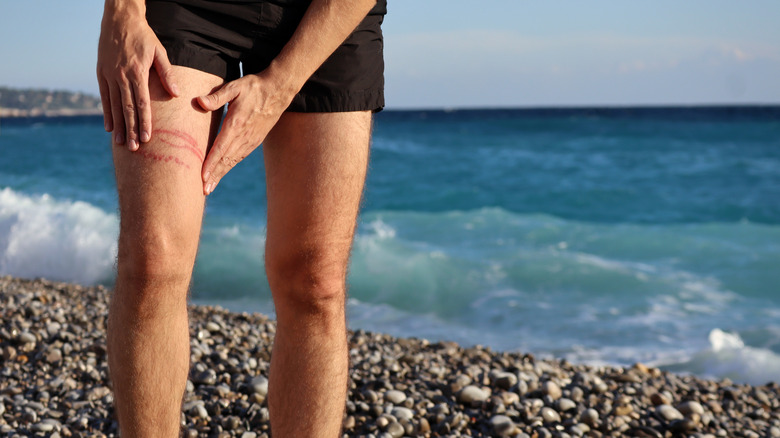
Most cases of jellyfish stings are mild and self-treatable, though it's always a good idea to call for medical advice if you ever have any doubts. Before you leave the beach, rinse the affected area with seawater to help remove residual venom or tentacles that might be stuck to your skin; freshwater might worsen nematocyst activity. Household vinegar is also a well-known jellyfish remedy due to the possibility of nematocyst control, but it provides mixed results overall, and there's even a possibility that it can worsen stings from a Portuguese man-of-war. Next, carefully remove any remaining jellyfish tentacles with gloved hands so your fingers do not get stung during the process. An alternative is to use a set of tweezers to remove them. Also, despite what you've heard, peeing on a jellyfish sting is not a scientifically proven remedy (and it can actually worsen the pain!).
Taking a hot shower or bath can also help ease pain post-jellyfish sting. It might take between 20 and 45 minutes to take effect, but you should never use scalding water to speed up the process. After the affected skin is completely clean and dry, you may consider applying over-the-counter topicals such as hydrocortisone 1% to reduce swelling and pain. Follow all package instructions before use.
Mild jellyfish stings generally start to improve after a few hours, although some people have a rash for several weeks. Scars are also possible. While these do not necessitate a doctor's visit, you should consider scheduling a follow-up if a mild jellyfish sting worsens, itches for several weeks, or is not improving with self-treatment measures.