

The 'Raining Frog' Phenomenon Is Actually Based In Science
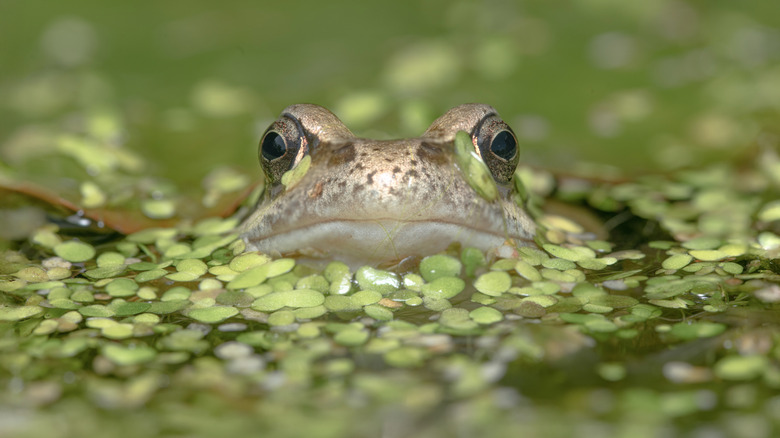
Changes in rainstorms have gained a lot of attention by scientists thanks to the increased number and overall worsening severity of these weather events over the last century. If you've witnessed a related torrential downpour or flash flooding event at any point between late spring and throughout the summer, you've also likely heard someone say the old phrase that "it's raining cats and dogs out there!" Of course we know this is just a centuries-old idiom, but it also turns out that it can indeed "rain" certain animals. If you thought that the concept of "raining frogs" was simply another clever phrase to describe precipitation, this one is actually based on circumstances related to specific weather events and conditions – namely, where extreme winds are involved.
The "raining frog" phenomenon is just as it sounds: It refers to frogs that seemingly fall out of the sky, similar to rain. Such an event sounds mythical (or even downright apocalyptic), but reports of sudden raining frogs can be found as far back as ancient times. You may have even watched eye-witness videos on social media claiming frog rain. Frogs do not directly fall out of rain-producing nimbo-form clouds, though. When people do report raining frogs, they are likely witnessing the aftermath of strong winds that can essentially suck up and carry amphibians or reptiles from one place to another.
Weather events tied to the 'raining frog' phenomenon
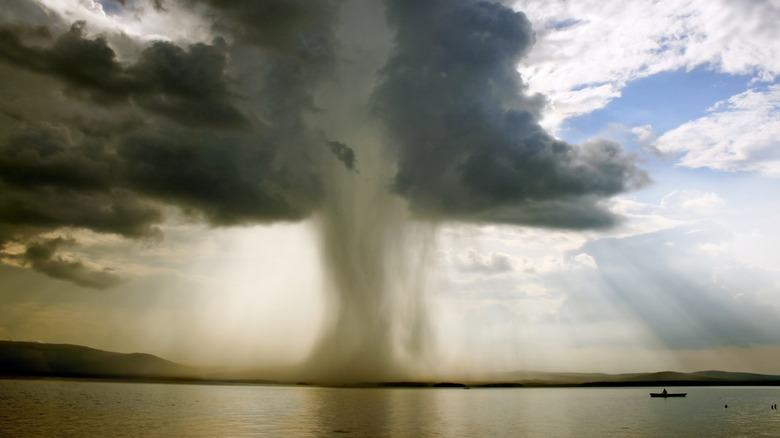
There are a couple of different theories behind this phenomenon. First, the cessation of a wind event during a characteristic tornado or waterspout can make it seem like the frogs are suddenly "raining" down after previously being picked up from a different location, such as creeks, lakes, and ponds. Fish are notoriously affected by waterspouts in this way, too. During such occasions, larger objects usually rain down first due to their weight, and lighter ones to follow suit. This can make it seem like there's multiple numbers of one type of animal coming down at once. Sometimes, these events mix with precipitation to also make it seem as if it really is raining frogs.
It's not just tornadoes or waterspouts that contribute to this amphibian phenomenon, though. In theory, other types of updrafts such as those during severe thunderstorms also produce powerful winds that are capable of displacing these small creatures. Aside from frogs, it's possible for updrafts to affect birds, snakes, spiders, and worms, too. Another possibility is observing a sudden crowd of frogs on the ground due to them being driven out of their usual spots after a storm. In this case, you might not be seeing the aftermath of a literal frog storm, but rather a mass exodus of the animals escaping an unsafe environment to seek shelter in another.
Despite historical accounts of raining frogs and associated valid scientific explanations, this phenomenon is not widespread. Animal rains (including frogs) are in fact considered relatively rare incidents. Yet as storms continue to get more severe due to climate change, one might wonder whether such frog phenomena might become more commonplace at some point in the future.