

Can Your DNA Predict High Cholesterol? Here's What Science Says
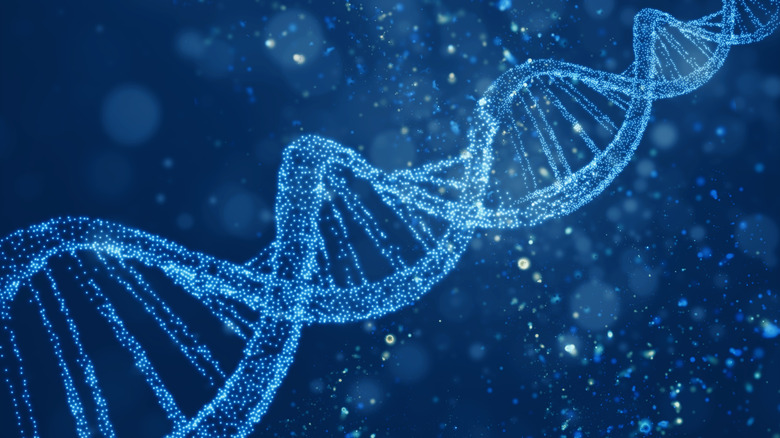
A paper recently published in the journal Nature examined how certain genetic variants are related to several health issues, such as high cholesterol. Associations have long been identified for particular genes and health risks, including cholesterol levels. However, these studies only established a relationship between the two factors, which does not distinguish between correlation and causation. By utilizing a technology that allowed them to test thousands of genetic variants simultaneously, Layla Siraj and colleagues were able to streamline an arduous process and determine what specific genetic variations often led to disease-related cellular activity.
Before we understand how specific genetic variants are related to disease states, we have to understand the process of genetic expression. Genes are sequences of DNA that act sort of like tiny instruction manuals for proteins, which will regulate your cellular machinery. Many cells in the body serve very different functions and display contrasting structures. However, every cell actually contains the same DNA. So, how do our cells differentiate? See, the DNA is very tightly coiled, which means that some of those little instruction manuals cannot be opened. Cells differ by what parts of the DNA are available for transcription and translation.
Genetic variants and cholesterol production
Another portion of DNA is non-coding, meaning that it is not translated into proteins; rather, it can regulate when and how much of a gene is expressed. Many variants in these DNA sequences have been connected to certain health risks. The technology used by the researchers mentioned above allowed them to investigate many of these variants at the same time. They also employed this technique on multiple cell types, including liver cells, which are important for cholesterol production.
Not all cholesterol is created equal, and to fully grasp how these genetic variants contribute to potentially high cholesterol, we have to first understand what that means. When we talk about high cholesterol, we are typically referring to high levels of low-density lipoprotein (LDL) cholesterol. You might have heard this referred to as "bad cholesterol." While labeled as bad, these are necessary to transport cholesterol to peripheral tissue via blood vessels, where it is an important component in the structure of cell membranes. Oppositely, there is "good cholesterol," which is high-density lipoprotein (HDL) cholesterol. These transport cholesterol back to the liver.
What cholesterol levels mean for health
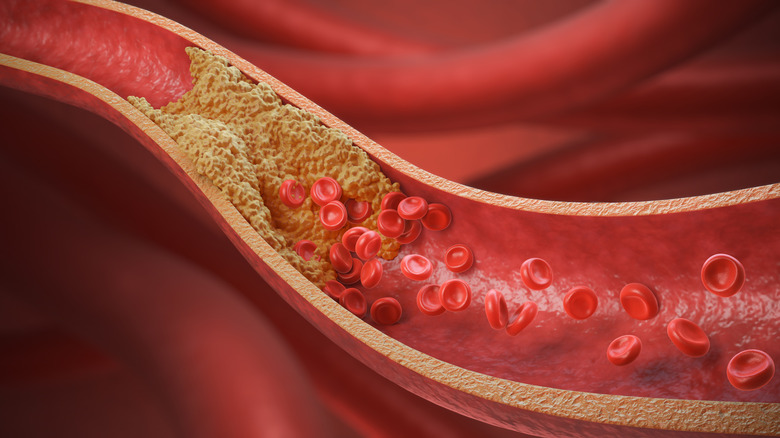
So, why are high levels of LDL cholesterol bad? Their structure makes them somewhat sticky, and they can end up adhering to the walls of the blood vessels. These spots can build up if the ratio of LDL cholesterol is high, leading to plaques that take up space in the blood vessel, essentially narrowing the passageway for blood to flow. These plaques can then lead to the formation of clots, which can have devastating health consequences. For instance, if the clot forms in blood vessels responsible for bringing blood to the brain, a stroke can occur. Likewise, a clot that forms in the coronary artery can result in a heart attack.
A combination of genetic variants investigated in the aforementioned study appeared to promote activity that would lead to lower levels of LDL cholesterol. Such a genetic predisposition might lower the risk of developing chronically high cholesterol, and thus lessen the chances of stroke and heart disease. The authors emphasize that understanding such nuances in the genetic code could aid in the development of more personalized medicine, which could improve treatment and patient outcomes. Overall, these findings are a great advancement, but much more research is required to understand how this can translate to better health.