

What Scientists Know About Death That You Didn't (Until Now)
Humans have been pondering the nature of death since prehistoric times, with evidence of funeral practices dating back to early hominids more than 400,000 years ago. In the millennia since, our curiosity about death has grown more and more complex, with most of the world's most prominent religions and folklore traditions seeking to answer the mysteries of life's end. However, it wasn't until the mid-1900s that researching death became a true science. Known as thanatology, the study of death has yielded fascinating evidence for what it physically feels like to die, and how the mind reacts to those final moments. It may sound like a grim field of study, but thanatology has actually unearthed some surprisingly soothing answers to the mysteries of death.
Thanatology is a uniquely challenging field because, as they say, dead men tell no tales. How can you study an experience without any firsthand accounts? There's no easy way around this problem, but researchers have a few resources to work with. Believe it or not, near-death experiences, known in the medical field as NDEs, are coming to be seen as valuable evidence. Instances in which people's hearts stopped but were later resuscitated have revealed unexpected findings about both the physical and emotional experience of dying. On top of that, there have been a handful of cases in which people actually died while undergoing neurological imaging, providing the most intimate look at mortality that doctors have ever observed. It turns out, many of our preconceptions about death have been all backwards.
Death is not instantaneous
We tend to interpret death as a singular moment — a doctor standing over a body and declaring, "Time of death, 4:52 PM," right down to the minute. But that's not really how death works. It's less like flicking a light switch off and more like shutting down a computer, quitting programs one by one. When the heart stops, some other parts of the body can continue to function for a limited period of time as they gradually exhaust their energy reserves. This includes the brain, which holds enough reserved energy to keep functioning for a minute or more after the heart stops beating.
This is where NDE accounts really come into play. A study published in The Lancet in 2002 found that 62 out of 344 patients who had been resuscitated after cardiac arrest had NDEs, or 18%. These people reported maintaining a sense of awareness after their hearts had stopped, sometimes lasting for several minutes before their cardiac function was restored. Some patients say they can perceive their surroundings even when their hearts are stopped, while others report out-of-body experiences like travelling through tunnels of light or even meeting dead acquaintances.
The brain isn't the only organ that keeps functioning for a period after cardiac death; in fact, every part of the body dies at its own rate, cell by cell. That means that we lose our senses in stages as we die, with some research suggesting that hearing could be the last sense the human body loses before death.
Death causes a surge of brain activity
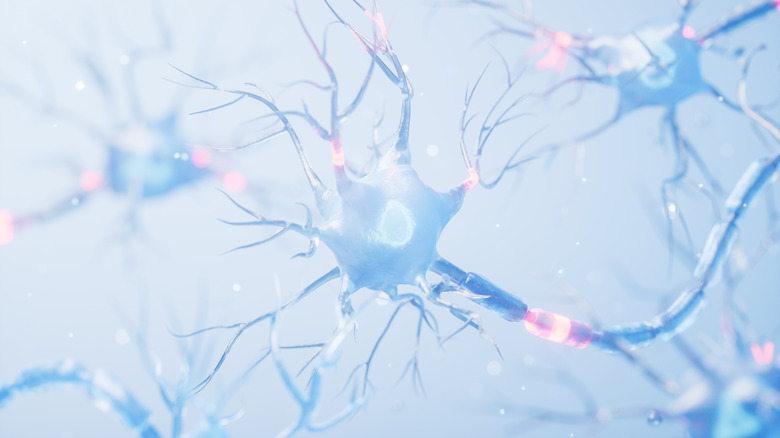
While the brain can maintain some functionality after the heart stops, unless blood flow is restored, it will run out of oxygen before long. However, before the brain shuts down completely, it actually experiences a massive burst of activity that rivals anything we experience in life. When blood flow to the brain ceases completely, it goes into a state of hypoxia — oxygen starvation — which triggers a wild series of events.
First, the cells of the brain begin to die, losing their electrical charges in the process. The surviving parts of the brain, alerted to the unfolding damage, kick into overdrive. Electroencephalograms (EEGs) recording from the brains of dying patients just after they were taken off life support reveal a massive surge in high-frequency gamma brain wave activity right before death. This is followed by a period of low-frequency brain wave activity, and finally a total cessation in activity, forming a three-stage shutdown procedure that some doctors have termed the "wave of death."
The initial surge of gamma brain waves is fascinating because these are the highest frequency of brain waves and are typically associated with alertness and heightened cognitive functioning. Therefore, it's likely that the dying person could maintain some level of awareness, or even higher awareness than usual, during this first phase of the wave of death. This may explain why some people who have had NDEs can recount their experiences so vividly, and it suggests the final moments of life are more lucid than we long assumed.
Death activates memory recall
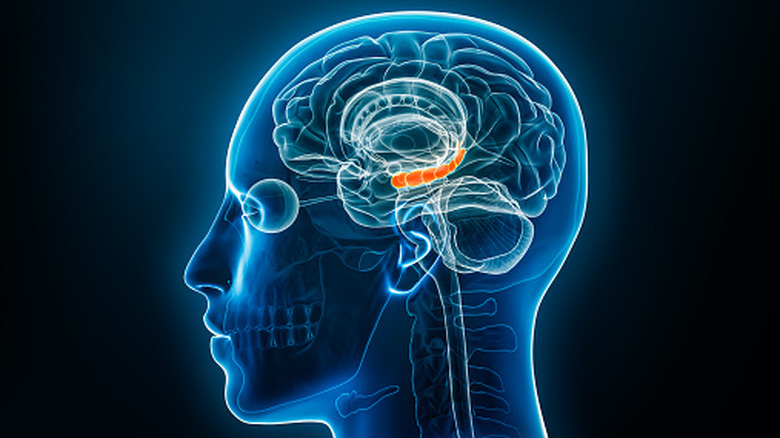
The phrase most closely associated with near-death experiences is probably, "I saw my whole life flash before my eyes." Indeed, many people who have been resuscitated from cardiac arrest report that their NDE involved vivid memories from across their lifespan. Once again, EEG data provides a pretty clear answer for why this is the case. Gamma brain waves primarily occur in the hippocampus, which is the primary structure responsible for memory. The surge of gamma brain wave activity that kicks off the wave of death appears to activate the mind's memory center on the highest level.
What's particularly fascinating is the other circumstances in which similar gamma brain wave activity has been observed. For instance, a study published in the Journal of Neurophysiology in 2020 showed that gamma wave activity increased when people were given an object memory challenge very similar to the classic cups-and-balls trick. What we're seeing is that death appears to activate our memory making and retrieval capabilities. Two other activities that have been found to activate gamma brain waves similarly are mediation and dreaming. This all suggests a rather profound mental experience in the closing moments of life.
The brain floods with chemicals as it dies ... and some might even feel good
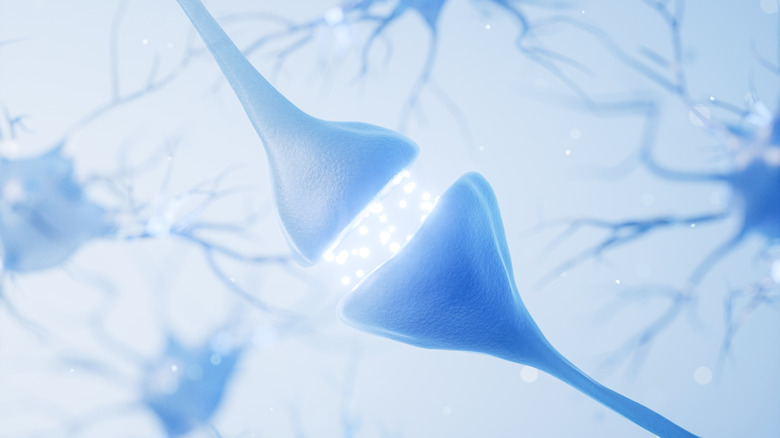
The increase in brain activity at the onset of death doesn't just bring a surge in gamma waves; it also triggers the release of numerous neurotransmitter chemicals. The most common neurotransmitter in the brain is glutamate, which is closely tied to learning and memory function, adding yet another layer of evidence to explain what the mind goes through as it dies. However, there are a few other neurotransmitter chemicals released during this time that can also help us figure out what the body goes through in those final moments. Notably, death is associated with a rise in serotonin and dopamine levels.
Serotonin and dopamine are both closely associated with mood, pain perception, pleasure, arousal, and alertness. The most common antidepressants work by raising the brain's levels of serotonin while many of the most notorious recreational drugs work by raising dopamine levels. There is even evidence that these brain chemicals play a major role in falling in love. If such pleasure-inducing chemicals are released when we die, then the concept of death as a release from suffering for the terminally ill is truthful. Practitioners of palliative care have long suspected this, with one expert writing for the BBC about observing signs of pain relief on the faces of patients upon death. While thoughts of mortality are never really pleasant, it might bring some relief to know that our brains and bodies are carefully prepared to walk us across that threshold.