

Offshore Wind Farms Are Doing A Lot More To The Ocean Than Scientists Expected
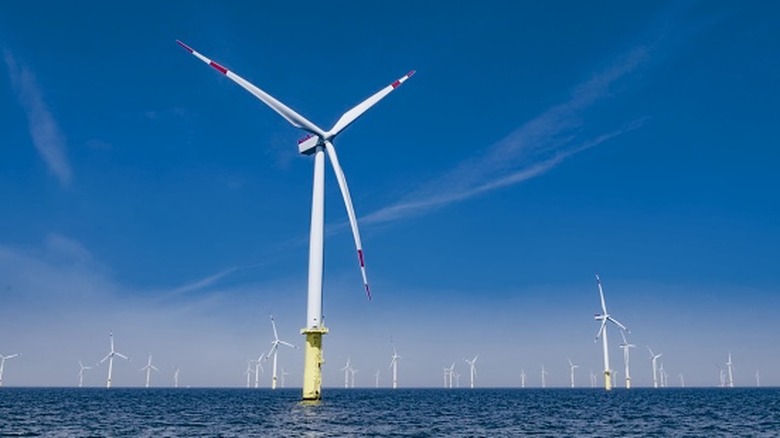
Offshore wind farms use renewable energy resources and present opportunities for reduced greenhouse gas emissions. But one concern has been raised: How do these structures impact marine life? There are many benefits of biodiversity, and it is vital to maintain our ecosystem, therefore, it's important to be aware that disruptions to aquatic life could have detrimental downstream effects. The initial building process does drive certain species away, namely the world's most adorable predators, seals. However, research from 2014, published in the journal Current Biology, revealed that seals return to these spaces in full force, with the implication that these wind farms serve as some sort of seal cafeteria.
The paper found that when seals circle back to the area where wind turbines were built, their migratory patterns reveal fascinating nuances. They tend to go from wind turbine to wind turbine, approaching these structures like buffets, which is quite a different method from the opportunistic hunting typically displayed by these majestic creatures.
Researchers are still investigating the long-term effects of offshore wind turbine construction. Several variables require extensive investigation, including which marine species are affected by these installations — whether positively or negatively — and how long these effects persist. Complicating the matter even further, climate change and the warming of ocean waters affect marine life in ways that we are still uncovering, making the origin of alterations in the aquatic environment difficult to parse.
Why do seals leave windmill construction sites?
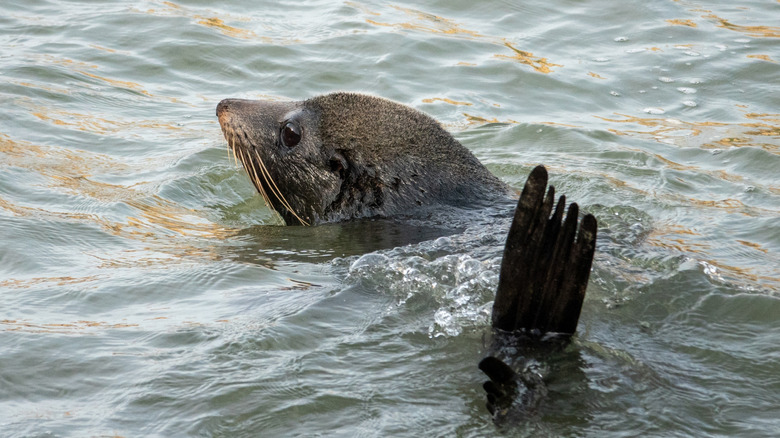
A portion of the disruptions to marine life caused by wind turbines are temporary because they stem from the actual construction process. The process of building such large structures generates a lot of noise, and seals have great hearing abilities. In fact, they and their pinniped cousins are the only mammals that can clearly hear in both air and water.
As mammals, there are some similarities between seal auditory processing and our own. Like humans, exposure to loud noises over time can induce hearing damage. Sound waves enter through the outer ear and are translated into electric signals (the language of the brain) by sensitive, specialized hair cells in the inner ear. Intense stimulation of these hair cells through loud noises can result in cellular damage, which can then lead to temporary and even permanent hearing loss.
A 2015 study published in the British Ecological Society measured the loudness of pile driving involved in offshore wind turbine construction and compared it to known thresholds for hearing loss in seals. By tracking the distance of seals and the noise generated by the construction, the researchers were able to predict that half of the seals observed in the area would experience permanent hearing damage. Therefore, to avoid such hearing loss, many seals leave the general space in search of quieter seas. Fortunately, when construction ceases, the seals find their way back. And because of other marine life drawn to the wind turbines, they come home to a feast.
Coming back around
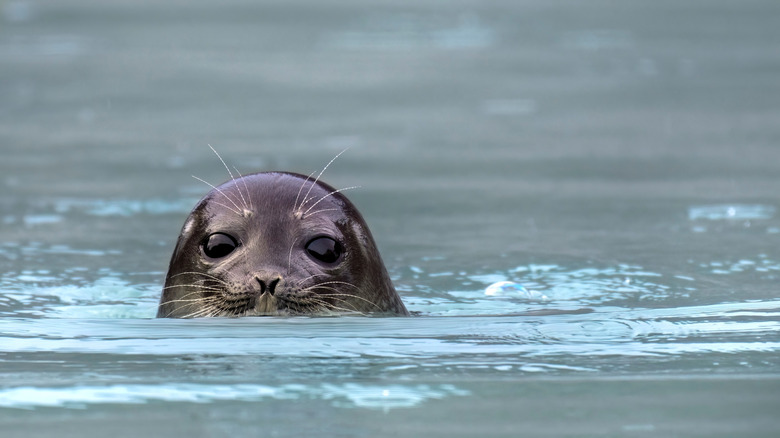
It might seem a bit predictable that the construction of these large structures would drive seals away for a time. What surprised researchers was the manner in which they returned. Over time, the wind turbines begin to serve as artificial reefs. When purposefully introduced, artificial reefs are typically implemented to improve biodiversity. Although an unintended benefit, many marine species begin to colonize the submerged structures in offshore wind farms. The accumulation of organisms that are important to the marine food chain, such as anemones, attracts larger marine life, like some fish species. Some of these fish that are drawn in are common food sources for seals.
Offshore wind farms consist of many wind turbines. So, the authors of Current Biology paper found that these seals would circulate between the different wind turbines. Think of these windfarms as a food court. The seals know where to locate rich sources of prey, and so they can move from one structure to another in search of a good meal.
The installation of wind turbines likely results in the loss of habitat for some organisms, mostly those that reside in soft sediment. Additionally, since seals are a predatory species, we do not know if this food supply will be sustained over time. However, offshore wind turbines appear to create a minimal disruption of marine life and enhance biodiversity in some respects. Moreover, some policies have been proposed to reduce the noise and subsequent displacement of certain species during construction.