

Kim Kardashian's 'Brain Holes' Are Actually Based In Science

Kim, Kendall, Kylie, and many other members of the Kardashian-Jenner family traded their privacy for fame and wealth long ago, starting with the popular reality TV show "Keeping Up with The Kardashians." Along with its successor (simply titled "The Kardashians"), the show made sure that the business ventures, drama, vacations, and personal struggles of the Kardashian crew would be revealed for all the world to see. Even their medical histories become public: Kim publicized in 2025 that she had undergone a brain scan that showed "holes" in her brain, possibly as a result of a brain aneurysm. While the news would be terrible for anybody, Kim is in a unique position to help spread awareness of the deadly condition.
On a November 2025 episode of "The Kardashians," Kim spoke with her psychiatrist Dr. Daniel Amen about the results of the scan. He explained that imaging showed Kim's brain had several areas of low neural activity, concluding that she likely experienced a "little aneurysm." A brain aneurysm occurs when a weakened blood vessel in the brain ruptures. Such an event is preceded by prolonged weakening to the integrity of the vessel's wall lining. The weakened blood vessel can then unexpectedly balloon outward, fill with blood, and burst. The rupture floods blood into the surrounding area, wreaking havoc to the delicate anatomy of the brain. The result are so-called "brain holes," or damaged brain tissue.
Brain aneurysms are fatal about 50% of the time, and survivors have a 66% chance of surviving the often-permanent neurological damage. In the case of Kim, the damage to her brain will likely heal, but not fully: She may continue to struggle with neurological challenges for the rest of her life. Fortunately, there are warning signs to look out for, and there are ways to reduce your risk.
How an aneurysm forms — and its warning signs
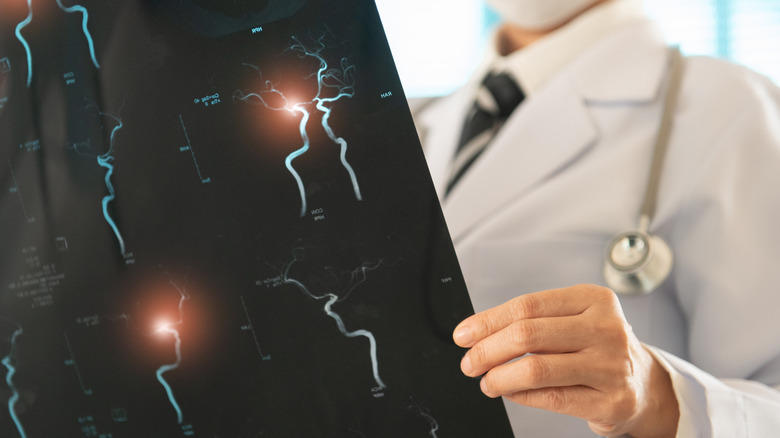
The scary thing about brain aneurysms is that they can kill anyone, suddenly, at any time. Risk rises with age while survival rates drop, but even children can get them. A little over 10% of children with brain aneurysms die, while around 50% of adults die. Indeed, the time between the onset of symptoms and death crosses two thresholds: One in four people who experience a brain aneurysm will die in a day, while another quarter of victims will experience debilitating symptoms within just six months, including death. In fact, around 15% of people die before even making it to the hospital.
It's important to distinguish between a ruptured brain aneurysm and an aneurysm that doesn't rupture. Many people lead perfectly normal lives without realizing that they have a bulging sack in one of their brain's blood vessels. This is because only once an aneurysm bursts does it become deadly. Luckily, the majority of aneurysms are small, common, and don't actually rupture. In appearance, such benign aneurysms look like tiny water balloons or ripe berries hanging from a branch. In any case, unburst aneurysms are typically not serious. When a professional discovers a small unruptured aneurysm lurking in the brain scan of a patient, they may not even recommend treatment or intervention after weighing the risks.
When a brain aneurysm does rupture, however, the brain damage is immediately clear. The main symptom is a powerful, sudden headache as blood pressure presses into the surrounding brain tissue. Many people also experience nausea, impaired vision, light sensitivity, loss of consciousness, and confusion. If such symptoms appear, it's critical to contact emergency medical services immediately and get the person experiencing them to a hospital.
How to reduce your risk of a brain aneurysm

Although the highest risks of a brain aneurysm are being between 30 and 60 years of age and genetics, there are lifestyle factors that can contribute to its likelihood, as well. Perhaps the next greatest risk factor are cigarettes. The latest research suggests that smoking has a significant effect on the chance of experiencing an aneurysm. In fact, some metrics show regular smoking can increase the risk of a rupture by three times, connecting nicotine's vasoconstrictive effects with the increased risk of blood vessel weakening.
The connection between nicotine and aneurysm risk is supported by the finding that vaping nicotine also raises the risk of a brain aneurysm, even without the combustion and chemical profile of smoking. Other studies suggest the heightened risk is due to the body-wide inflation caused by the cocktail of chemicals inhaled from a tobacco cigarette. It would seem the bottom line is that reducing nicotine use in any form also reduces the risk of a brain aneurism. What is clear is that smoking (and vaping) tobacco increases the likelihood of a brain aneurysm. But so does being female.
More women experience brain aneurysms than men, which suggests that genetics have a large hand to play. For instance, a family history of high blood pressure can also forecast weakened arterial walls. (Even blood type can determine risks of strokes.) There are poor decisions that increase the risk, too: Drugs like cocaine and alcohol can raise blood pressure (though that's not exactly why alcohol is banned in space.) Inherited diseases are also at play, such as such as genetic kidney or aortic diseases. In any case, it's worth asking around the family to find out, since brain aneurysms are not a topic to be taken lightly.