

This Spider Species Looks Like Bird Poop And The Reason Is Fascinating
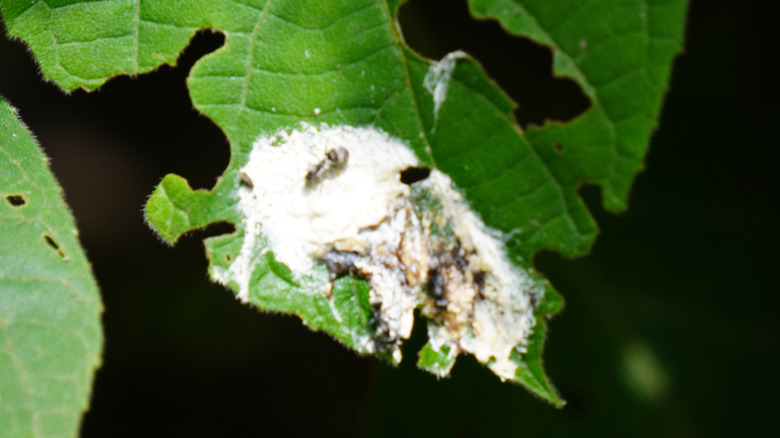
The rules of life in the wild can sometimes be boiled down to "eat or be eaten." To avoid becoming some other creature's dinner, some animals evolved to blend into their surroundings. Predators like pirate spiders have developed sneaky tricks to trap their prey, but prey have developed tricks of their own like secreting toxins to dissuade predators. And others still have evolved to imitate different creatures or look like other objects to avoid attention or get close to prey. One such animal is a type of Australian orb weaver spider commonly known as the bird dropping spider.
The bird dropping spider (Celaenia excavata) lives in forests in southern, eastern, and central Australia. The female of the species measures around half an inch in length while the male is far smaller at around 0.1 inches. These spiders are black, brown, and white, and while immobile, they resemble a blob of bird dung. Their markings can also look like the shape of a skull, giving them the alias "Death's Head Spider." This spider is joined by other orb weaver spider species like Phrynarachne ceylonica, a Southeast Asian species also called a bird-dung spider, and Western Hemisphere bolas spiders in their resemblance to bird poop.
A multitude of mimicry
Looking like bird poop is a type of adaptation known as mimicry. Over millions of years, animals have developed the ability to look like other creatures, plants, and other objects to increase their chances of survival. Mimicry can be divided into a few different types depending on the role mimicry fills and what the creature is mimicking. Some species use mimicry to avoid predators while others use it to get closer to prey.
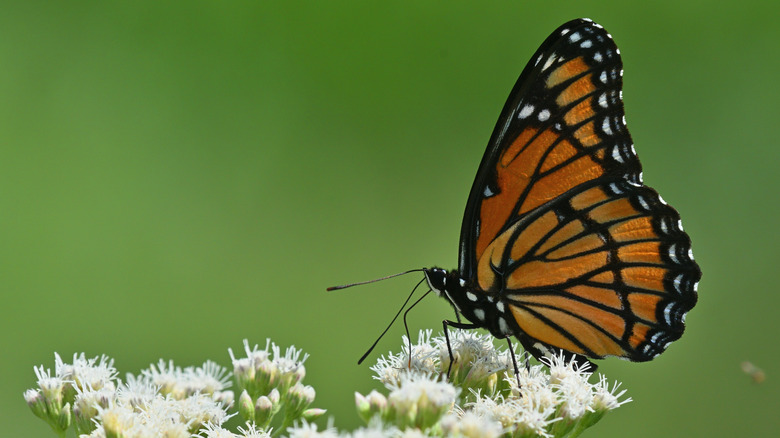
Batesian mimicry is where a creature looks like a dangerous or unappetizing species. Prime examples of this would be the way viceroy butterflies resemble monarchs, which produce toxic compounds to deter predators, and hoverflies, which evolved yellow and black patterns that make them look like bees or wasps. Another form of mimicry known as Mullerian mimicry is where multiple dangerous species evolve to look similarly, giving them a sort of cooperative defense. Masquerading is another type of mimicry where creatures look like objects predators might ignore. Stick insects are a classic example of this.
While mimicry can protect species from predators, aggressive mimicry helps predators deceive their prey by looking like something harmless or even attractive. For example, insect-eating sundew produces droplets that look like nectar that can trap insects. Mimicry isn't limited to visual appearance either. Some species can produce smells that allow them to avoid detection or attract prey.
Looks and smells
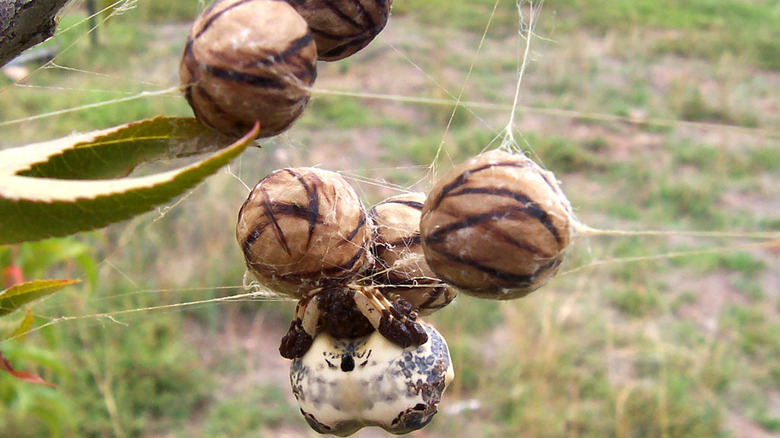
Australian bird dropping spiders use masquerading to avoid birds and wasps that might otherwise make a meal out of them. At the same time, looking like bird poop can allow spiders to get close enough to prey to capture them. Unlike some spider species, the bird dropping spider and bolas spider do not produce webs for catching insects. Bolas spiders swing a silk thread with a sticky blob on the end to catch flying insects. Bird dropping spiders wait until prey get close enough and grab them with their front legs.
However, the bird dropping spider and its Asian and American cousins also use chemical mimicry to their advantage. Phrynarachne ceylonica produce a foul odor similar to bird feces, which can allow it to deter predators and attract prey. Bolas spiders and bird dropping spiders can release chemicals that mimic pheromones released by female moths to attract mates. The spiders then lie in wait for hapless male moths to get close enough to capture.
The animal kingdom is filled with examples of mimicry that deters predators and lures prey. While it may not seem all that great to look like bird poop, these spiders are using their unappealing appearance to their advantage.