

Science Explains Why Train Delays Can Increase In Summer
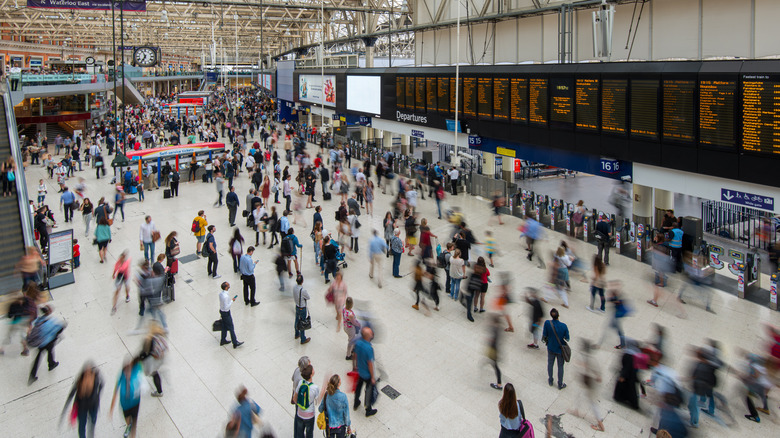
Train delays can turn a normal day of traveling or commuting into a long and frustrating ordeal. Delays can happen for several reasons, but it can seem like delays are more frequent and longer when the weather is hot. However, this isn't just your imagination. Train delays often increase during the summer, especially during heat waves. There is a simple scientific explanation for this: summer heat can cause thermal expansion of steel rails, causing them to bend.
Called a sun kink, a misaligned rail can cause a train to derail. Over the past four decades in the United States there have been more than 2,100 train derailments caused by sun kinks. To reduce the chances of a derailment, train operators will decrease the speed that trains travel. During a heat wave in the summer of 2024, Amtrak restricted the speed of trains traveling between Boston and Washington, D.C., and the Washington Metropolitan Area Transit Authority announced they would be running above-ground trains at slower speeds. These slower speeds can cause delays to pile up even if tracks stay in working order.
Give an inch
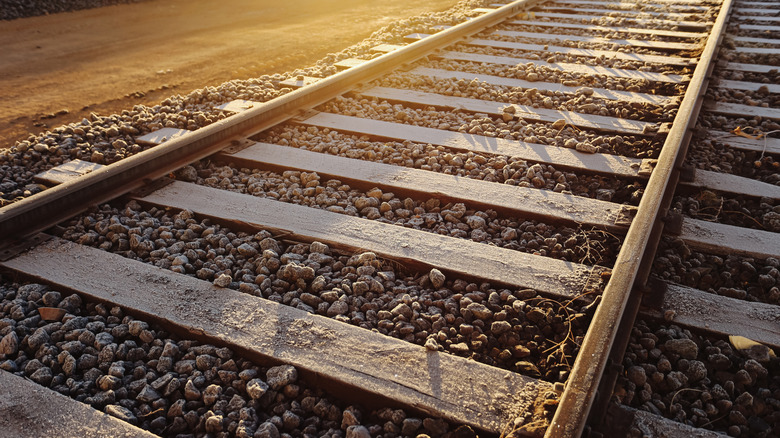
Train tracks are traditionally made of sections of steel rail 30 to 60 feet long resting on wooden ties that are embedded in ballast stones (typically crushed igneous rock). As steel heats up, it expands. For every 10 degrees Fahrenheit of temperature increase, an 1,800-foot-long segment of rail will expand by more than an inch. This may not seem like much, but a 260-mile stretch of railroad tracks would be more than 300 feet longer at 100 degrees than it would be at 65 degrees. As the rails expand, they exert force on the wooden ties underneath. This force can sometimes be more than what the tie can bear, causing the rail to kink. And in some cases, a rail can go from straight to a significant curve in the blink of an eye.
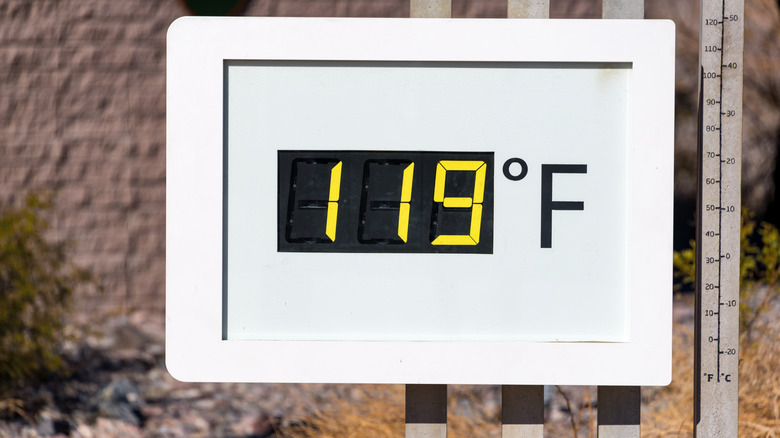
Steel rails heat up quickly in the sun, reaching more than 120 degrees Fahrenheit when the air is only 86 degrees. So when air temperatures approach the 100-degree mark, rails can easily exceed the 140-degree threshold Amtrak has set for speed restrictions. With projections showing that heat waves are likely to become more frequent and stronger due to global warming, delays would become more common. A study from 2019 found that the cost of heat-related delays could be between $25 billion and $60 billion by the next century.
Beating the heat
With the prospect of growing delays and rising costs, railroads are taking steps to overcome sun kinks. Currently railroads are using remote sensors and advanced computer models to measure how hot rails actually are. This can allow more accurate timing for speed restrictions than relying on air temperature alone.
Railroads are also looking at painting rails white as a way to keep them from heating as much on hot days. This could decrease rail temperatures by up to 18 degrees Fahrenheit. However, railroads would need to continually reapply paint to rails over time, raising questions about how feasible this would be.
Another option railroads are pursuing is deploying longer continuous welded rail segments held in place by ties made of concrete. This would make the track much stronger than traditional steel rails on wooden ties. Each track built this way would be optimized around a stress-free temperature based on average temperatures. In cooler climates this could be around 80 degrees, while it could reach 110 degrees in hotter regions.
These options could help decrease the odds of sun kink and heat-related train delays. However, replacing existing tracks would be expensive and time-consuming. So for now it seems like the only option is to be patient and plan ahead when taking the train in the summer.