

The 'Sleepy' Biden Rumor That's Actually Based In Science
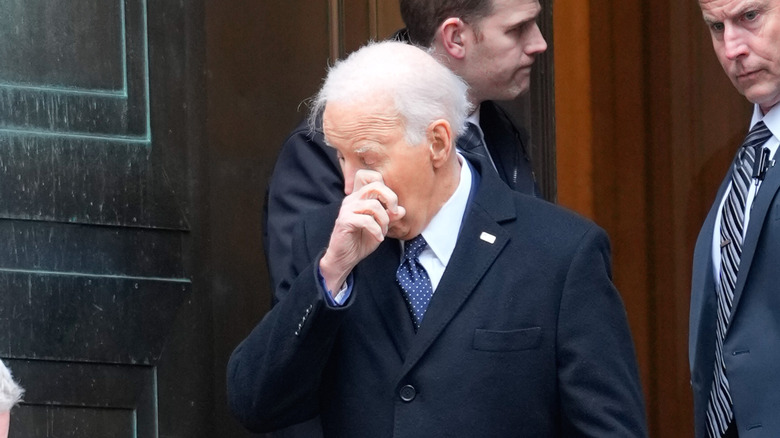
The U.S. presidents over the past decade have been old. Each of the last three presidencies, including Trump's current term, have broken age records. Donald Trump was 70 at the start of his first term and 78 at the start of his second, while Joe Biden was 78 when he was sworn-in in 2021. And their advanced ages have clearly caught up to them. Trump appears to suffer from physical and mental health issues, showing signs of having possibly had a stroke, failing bowels, and poor sleep habits. And his predecessor Joe Biden hasn't been immune to age-related sleep problems, either.
"Sleepy Joe" was the nickname Trump spread during the 2020 presidential race, and it stuck. It was hard for Biden to refute the allegations, especially since he often appeared tired and confused at debates. And during numerous political events, such as a 2024 meeting with African presidents, Biden seemed to be snoozing. To make matters worse, Biden's lifelong stutter appeared to have worsened by the time the president hit 80 years of age, adding to the rumors that he was mentally unfit. But Trump's "Sleepy Joe" moniker may be coming back to bite him, as Trump also shows the same sleepy symptoms of age as his predecessor.
There are several reasons why old folks love naps, and it all starts in the brain. As we age, our sleep cycle is regulated by hormones in a section of the brain called the suprachiasmatic nucleus. As people enter their senior years, the suprachiasmatic nucleus weakens, causing many older people to struggle with low-quality sleep, shorter sleep cycles, and sporadic wakefulness. Add to that the pressures of the presidency, and it's understandable why our aging presidents can't help dozing off.
Why getting old often means getting poorer rest
Adults above the age of 65 generally get 6.5 to 7 hours of sleep per night on average, which is only slightly below the daily recommendation of 7 to 9 hours. However, with a weakened suprachiasmatic nucleus, transitioning between sleep and wakefulness becomes harder to control. Many seniors report waking up multiple times during the night and often can't fall back asleep when they wake up earlier than their alarm clock. Older people are also more susceptible to developing sleep disorders, such as insomnia, sleep apnea, restless leg syndrome, narcolepsy, and hypersomnia.
To make matters worse, our bodies typically produce less melatonin as we age. Melatonin is the hormone that tells our brain when to sleep. To remedy melatonin deficiencies, many people take melatonin as a supplement to help with sleep, but this can cause a "melatonin hangover" that leaves you feeling groggy and more tired than before you rested. That's why doctors recommend lifestyle-based solutions to poor sleep quality among melatonin-deficient seniors, such as getting exercise, following a regular sleep schedule, and avoiding screens and bright light sources before bed.
So if the American people continue to elect people in their 70s and 80s, they should know that sleepiness comes with advanced age. Old age also leads to declines in working memory and the ability to multitask, traits that are both affected by poor sleep quality. They're also traits that a president needs to do their job. In the height of the 2024 elections, Joe Biden openly admitted to being overworked, stating he wasn't "going anywhere" but confessed he needed more sleep than he was getting. Perhaps our aging presidents will just have to power through the sleepiness.