

What Dust In Your Home Is Doing To Your Body Right Now
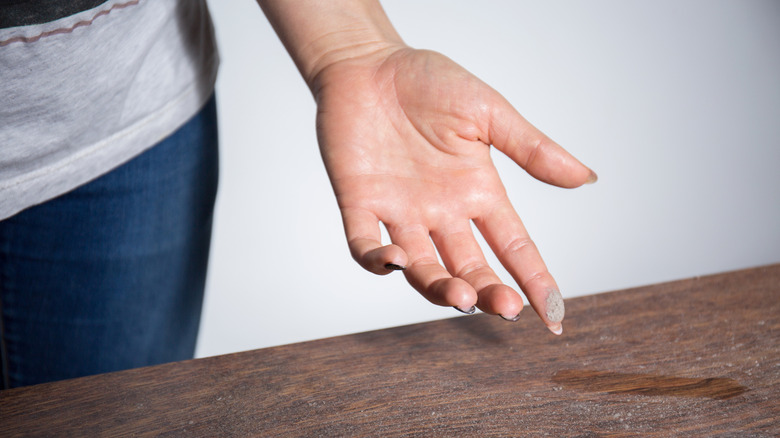
For many households, dust can seem like a perpetual problem. While you might focus on daily essential cleaning chores, such as doing the dishes and taking out the trash, some of those neglected surfaces around your home will inevitably continue to accumulate more dust if you do not address them. It's understandable to address spills, dirt, and other more visible gunk that might be around, but dust can be just as harmful. Dust really is more than just a nuisance – unless you tackle it on a routine basis, dust can in fact have both immediate and long-term cumulative effects on human health because of the various ways its components can affect your body.
You've likely seen your share of dust from time to time, but have you ever really thought about what it's actually made of? Some common components of dust include hair, pet dander, dead skin cells, and pollen. Yet it can also be composed of other more disturbing ingredients. Among these are germs, dust mites, insect droppings, mold, and pesticides. Heavy metals such as lead, and semi-volatile organic compounds like flame retardants are also common, per 2025 research published in Building and Environment.
Many toxins and forever chemicals in household dust can come from surprising sources, such as carpeting, furniture, and electronics. Personal care products and household cleaners may also contribute. As you can see, not only is dust created from elements inside of your home, but it's also composed of components that are brought in from outside via open windows and doors, as well as foot traffic and particles on clothing.
How household dust impacts human health

When most people think of a dusty home, they might envision a situation where dust accumulation can cause sneezing. It's true that dust is a source of allergens for many people, especially those who have dust mite allergies and asthma. In such cases, dust mite waste and fragments can mix in with household dust and lead to both allergic reactions and lung irritation. Pollen, fungus, and other allergens can also cause these reactions in household dust. Allergies are considered the most common health effects associated with air quality issues inside homes. Aside from sneezing, dust-induced allergic reactions can cause irritation in the nose, eyes, airways, and skin, similar to symptoms that can make allergy season miserable.
Dust is really more than just an allergen, though. This all boils down to all the possible components of household dust in your home, as well as how the human body is exposed to them. Inhaling household dust is just one way humans are exposed to such contaminants. It's also common to make contact with such components through the skin, as well as through ingestion when your hands touch your mouth (especially in children). Dust can also hide infectious germs that can make you sick. In the long-term, exposure to toxic elements in dust is linked with possible issues with your immune system (which does more than you think!), nervous system, and vital organs.
It's admittedly disturbing to think about being exposed to these factors on a regular basis, and they can also impact a person's health in different ways. Young children, people with respiratory diseases or allergies, and those who are immunocompromised are particularly vulnerable to the effects of dust on their bodies.
Proven dust-removing strategies for human health

Now that you know that the seemingly harmless dust can have both acute and chronic effects on human health, it's time to take action to minimize its impact on the body. The good news is that the way to manage potentially harmful dust is relatively straightforward. Make it a point to dust your home once a week, and work your way from top to bottom in each room, including molding and baseboards. Follow up with vacuuming and mopping to ensure you trap any dust that falls onto the floor. Alternatively, if you don't have time to dedicate a whole day out of your week to cleaning, you can still make an impact by spending a few minutes a day dusting small areas of your home at a time. Reducing indoor humidity is also a proven method of reducing mold and dust mite problems that can contribute to dust formation.
You might also find it helpful to utilize doormats and to take off your shoes near all entryways to help reduce the risk of tracking in harmful debris and pollutants. These spots are considered ground zero for tracking in contaminants inside your home. According to the National Center for Healthy Housing, about two-thirds of household dust is carried in from outside of the home.
One important note: It is unfortunately impossible to completely remove all contaminants from your home. At the same time, getting a handle on household dust can improve air quality while also reducing other modes of human exposure to some of the harmful components it contains.