

Your Breath Reveals More About Your Health Than You Realize

People can learn a lot about you from your breath. Whether you indulged in that poorly timed afternoon coffee, that you like onions on your burger, and your preferred brand of toothpaste are just a few examples. It's also widely known that you can tell whether someone has consumed alcohol by testing their breath. However, your breath can reveal more about your health that you may think.
During each breath, you exhale clues about your oral and gut microbiome, and it can even be used to diagnose health issues like diabetes, stomach ulcers, or food intolerances. In some cases a simple subjective test of how someone's breath smells can point to a need for further testing. For example, a patient complaining of a sore throat who has bad breath could be a candidate for a strep test. At the same time, it's possible to analyze the compounds in someone's breath to find out about what is going on inside their body.
Your breath and your health

As some bacteria grow and thrive, they release compounds like hydrogen sulfide, which smells like rotten eggs. Overgrowth of bacteria from an infection in the mouth, sinuses, or respiratory tract can cause bad breath to develop. Additionally, having fishy smelling breath could indicate liver or kidney problems and fruity breath might point to poorly controlled diabetes.
Compounds in someone's breath can also highlight imbalances in their microbiome. People have trillions of microbes living in their intestines. These microbes are vital to our health, protecting us from disease, helping us digest food, and producing substances the body uses.
The types of microbes in the human gastrointestinal tract vary from one part to the next. However, sometimes bacteria that live in one region can colonize other parts of the body. For instance, in a condition known as small intestinal bacterial overgrowth (SIBO), bacteria normally found in the colon take up residence in the small intestine, which can lead to excess gas. Overgrowth of microbes in the large intestine that produce methane or bacteria which create hydrogen sulfide can also lead to health issues. But thanks to a growing variety of diagnostic tests and medical devices, diagnosing some health problems can get easier.
Breath-powered diagnostics and devices
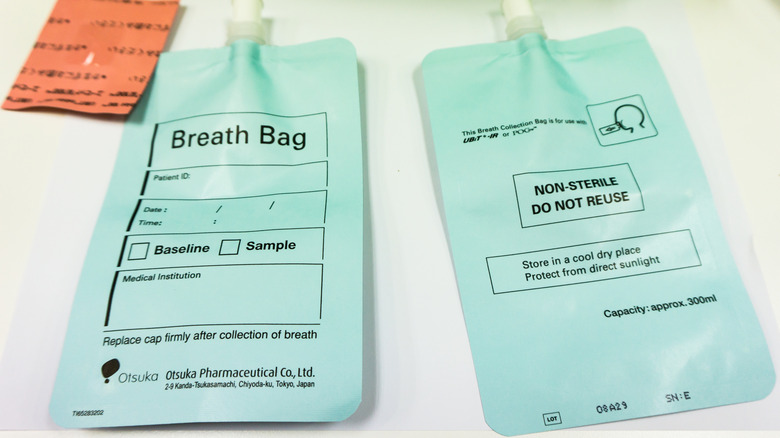
A breath test can detect an overgrowth of Helicobacter pylori, a bacterium that can live in the stomach's acidic environment and causes stomach ulcers. A patient blows into a bag to provide a baseline sample and then blows into another bag after drinking a solution containing urea. H. pylori converts urea into carbon dioxide, so excessive carbon dioxide in your breath could indicate an H. pylori infection. Research is also finding that the levels of chemicals called volatile organic compounds in the breath can indicate problems like SIBO.
There is also a growing number of at-home tests and devices that can analyze your breath to gain a better understanding of your health. For example, the Trio-Smart test measures levels of hydrogen, methane, and hydrogen sulfide in breath samples. This test requires patients to breathe into several sample bags over a two-hour period and then send those samples to a certified lab. A different device known as the Foodmarble relies on a handheld device that uses sensors to collect data that it sends to a smart device over a Bluetooth connection. Other devices can measure levels of ketones in the breath, which can indicate nutritional ketosis from diet or fasting or ketoacidosis from poorly controlled diabetes.
Understanding the compounds in our breath is leading to the creation of new, noninvasive diagnostics for medical providers and health-monitoring devices for consumers. These innovations could help us understand what our breath reveals about our health.