

The 1960s Baby Boomer Habit Linked To Diabetes
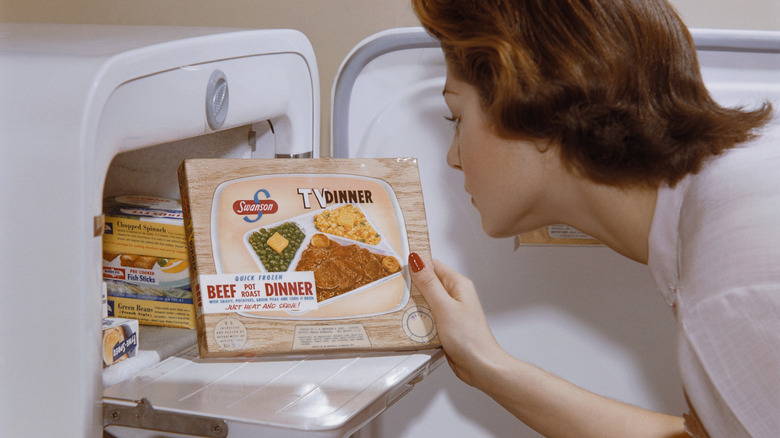
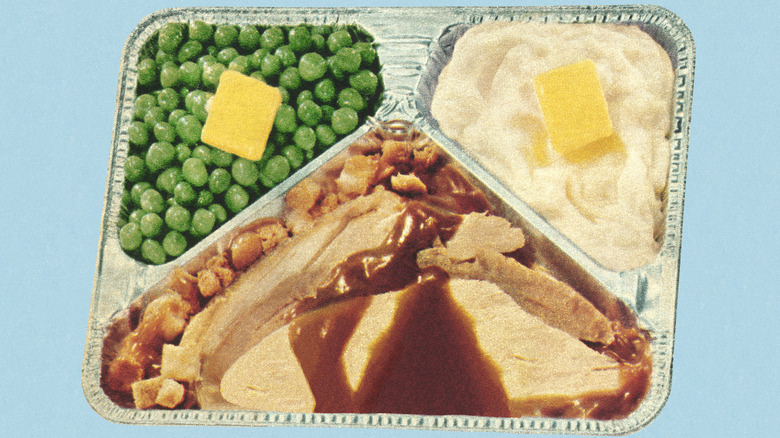
Remember TV dinners? Those frozen meals on trays made of that silvery aluminum, which you could easily heat in the oven or microwave and consume while, well, watching TV? They rose to cultural phenomenon status for the Baby Boomers in the mid-1950s and 1960s, but they also have a hidden dark side: They represent a society's fast track to obesity. In fact, the dietary shift that the comparatively empty calories and lack of fresh vegetables that processed foods like TV dinners are associated with has been linked with the increase of type 2 diabetes mellitus in a developing society.
Research has found that when a society starts transitioning from making healthy food from scratch to the kind of easy meals that contain plenty of red meat, fat, and refined carbs, but comparatively little fiber, said society will see notably more type 2 diabetes cases, as well as an increase in metabolic syndrome and obesity. In recent years, this has been happening in South and Southeast Asia, but the U.S. had a similar type 2 diabetes trend after TV dinners and their ilk exploded in popularity.
TV Dinners are a symbol of a wider phenomenon
While there is a common diabetes drug that could hold the key to slower aging, the condition's no joke. Type 2 diabetes is an insulin-use malfunction that causes a blood sugar buildup, which in turn can lead to various types of organ damage. This is naturally a bad thing, seeing as there's just one truly vital organ that can miraculously regenerate.
In all fairness, it's not just TV dinners that have been causing diabetes. They're simply a symbol for (and one of the most visible symptoms of) a great shift of calorie consumption that happened during the Baby Boomer era, thanks to dramatic developments in food processing and freezing. In fact, it's worth noting that TV dinners and other quick meals did good, too. They allowed households to shave hours off the cooking schedule, thus playing a part in giving women the time and opportunity to join the workforce instead of staying at home.
However, convenience has a price tag. In the 1970s, 2% of women and 2.7% of men had type 2 diabetes. In the 1980s, the figures were 3% and 3.6%, and in the 1990s, it was 3.7% of women and 5.8% among men. As of 2023, roughly 12% of Americans have diabetes. Combined with rising obesity numbers that coincide with the introduction of all these convenient new meals, it certainly seems that the trends in South and Southeast Asia are ones that the U.S. is familiar with.