

What Scientists Have To Say About RFK Jr's Antidepressant Claims

On May 4, 2026, the Make America Healthy Again Institute held a "Mental Health and Overmedicalization Summit." The Secretary of the Department of Health and Human Services (HHS), Robert F. Kennedy Jr., addressed the audience as the event's final speaker. Kennedy outlined a goal to reduce the prescriptions and use of a class of drugs known as selective serotonin reuptake inhibitors (SSRIs), which are commonly used to treat a variety of psychiatric disorders, including depression and anxiety. He focused on providing physicians with outlined plans and reimbursement for deprescribing (monitoring patients as they are weaned off the medication over controlled periods of time). That same day, a letter from HHS, co-signed by Mehmet Oz (famously known as Dr. Oz), also discussed the need to deprescribe SSRIs. However, many of Kennedy's claims related to SSRI usage and cessation were overexaggerated, oversimplified, or straightforwardly inaccurate.
Approximately 16.6% of adults in the U.S. are currently taking an antidepressant (of which, SSRIs are one class). The neurotransmitter serotonin is associated with mood regulation. When released from a neuron, serotonin has the opportunity to act on the receptors of another neuron, which will allow the neurotransmitter to have downstream effects before being taken back up in the first cell. SSRIs work by inhibiting the first neuron from serotonin reuptake, meaning that it has more opportunity to activate serotonin receptors, essentially allowing the brain's serotonin to be more effective. First approved by the FDA in 1987 as fluoxetine (commonly known as Prozac), these drugs have been used for decades.
RFK Jr. vs. SSRIs
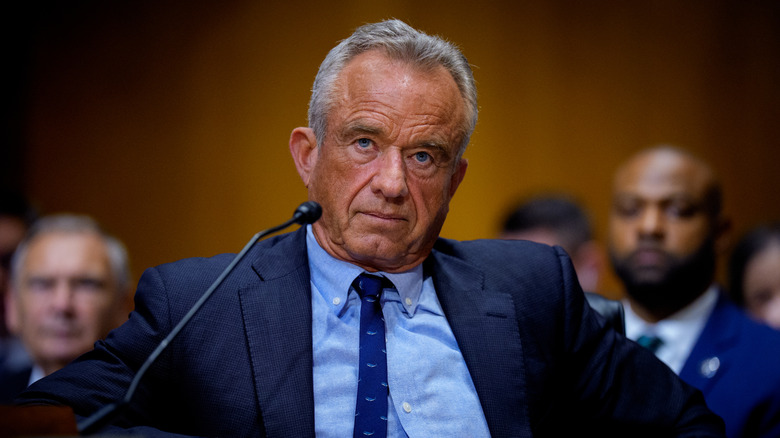
Although serving as the HHS Secretary, Kennedy has no training in the health sciences. However, he does have an extensive record of touting medical disinformation. In addition to strong and uninformed opinions on vaccines and nutrition, Kennedy has a history of deriding psychiatric medications like SSRIs. He has repeatedly compared SSRIs to addictive drugs, like heroin. These comparisons are not rooted whatsoever in the neurobiological understandings of SSRIs and addictive drugs. A professor of psychology at Stanford University addressed Kennedy's claims in an NPR article: "Antidepressants and heroin are in different universes when it comes to addiction risk."
Additionally, it is already recommended that physicians monitor patients as they stop taking SSRIs. A statement on deprescribing psychiatric medications was even published by The American Society of Clinical Psychopharmacology earlier this year. While significant symptoms are rare during SSRI cessation, particularly when done over time with the guidance of a physician, negative impacts can occur. A study published in 2024 revealed that approximately 3% of patients experience severe symptoms while stopping SSRI treatment, and only 15% overall experienced any adverse symptoms. To emphasize the false characterization of Kennedy's frequent comparison, another study revealed that 85% of people using opioids (e.g., heroin) experience withdrawal symptoms and 57% experience very or extremely painful symptoms. Equating the use of an antidepressant medication with that of an illicit substance that resulted in over 44,564 deaths last year is irresponsible and could discourage people from seeking needed treatment.
What's the damage in discouraging SSRIs?
Stigma is not the only concern underlying Kennedy's recent declarations. While the claim has been denied by an HHS spokesperson, health officials allegedly discussed outright banning SSRIs. Although it would be difficult to suddenly remove FDA approval, we have witnessed the circumvention of many checks and balances throughout the Trump administration. For example, Joe Rogan stated that Donald Trump asked him whether he wanted certain "research peptides" that are warned of by the FDA to be granted approval. After which, Trump announced an executive order calling for the fast-tracking of these drugs. Unfortunately, ideals have been driving the management of federal agencies, and we do not know what consequences that will have.
SSRIs have been extensively studied with consistent improvement in outcomes when controlling for a placebo effect for many different psychiatric disorders, particularly compared to other psychiatric medications and older pharmacological treatments for depression. While the letter released from HHS acknowledged that pharmacological intervention is sometimes necessary for the treatment of mental illnesses, the agency is still attempting to incentivize the cessation of these drugs. There are varied methods to treat the disorders for which SSRIs are prescribed, including talk therapy. However, these methods are often much less accessible, and taking away these relatively affordable medications would leave many with no other means of treatment. Moreover, these therapies are not a replacement for medications and are often used in conjunction with SSRIs. Overall, blaming the mental health crisis on prescription medications is dangerous and stigmatizing.