

Scientists Created A Lab-Grown Kidney Assembloid That Produced Urine After Transplant

Scientific research has allowed for the synthesis of all kinds of things, from raw chemical elements and structures to biological systems. When it comes to raw materials, such synthesis can greatly hasten and streamline the manufacture of items. The natural diamond supply chain, for instance, is sluggish and unpredictable compared to growing diamonds in a lab. Because of the complexity of biological organs, though, synthesis in a lab is more challenging and takes longer to figure out. That's one reason the recent creation of human kidney progenitor assembloids (hKPAs) is so impressive.
In September 2025, research led by a team at the University of Southern California was published in Cell Stem Cell, describing how the scientists combined kidney organoids (a sort of synthetic mini-organ) to make the most mature models ever, which they dubbed assembloids. Their first step was optimizing the conditions for generating mouse and human kidney assembloids in the university's stem cell lab. After transplanting the hKPAs into living mice, the synthetic organs continued to grow larger and develop blood vessels and connective tissue. The hKPAs even began to function like kidneys, such as absorbing proteins, filtering blood, and releasing kidney hormones. They were even able to produce urine, although it was more diluted since the hKPAs didn't have the structures required for concentrating it.
USC stem cell biologist and associate professor Zhongwei Li said in a press release, "By maturing the assembloids in the native environment of the body, we tapped into kidney progenitor cells' natural ability to self-assemble." The team believes that this step will be the key to generating functional synthetic kidneys in the future, he added.
The importance of hKPAs for the advancement of kidney disease research and treatment
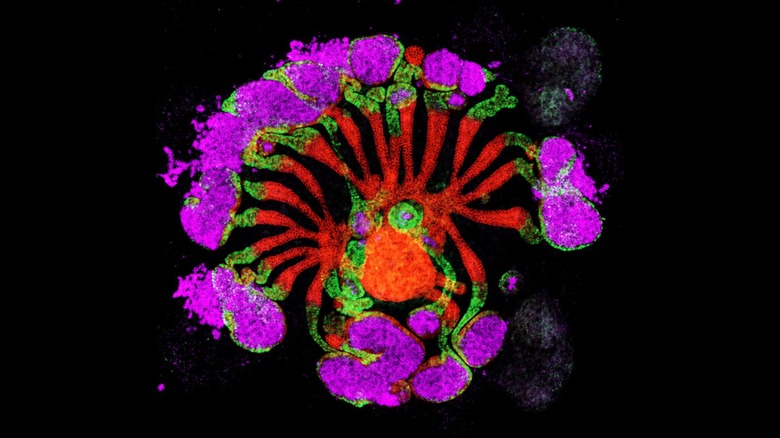
There have been some huge scientific breakthroughs in the medical community over the years. In May 2024, surgeons were able to complete the first pig lung transplant in a human and published the success in Nature Medicine the following year. The lungs aren't the only organs that are likely to develop cancer or other diseases, though. The kidneys have an even higher risk. While renal cell cancer is the most common cancer to form in adults, chronic kidney disease affects about 14% of adults in the United States (per a USC Stem Cell press release).
With these lab-made hKPAs, the scientists hope to improve related disease research and eventually treatment. Many researchers have praised the hKPAs chronicled in this study as the most genuine kidney models created so far. Using a three-year grant secured from the California Institute for Regenerative Medicine, USC's Li Lab and the team led by Zhongwei Li, will have the funds to map the characteristics, function, and structure of the hKPAs to demonstrate how they can be used to advance disease research.
They'll also use the assembloids to model polycystic kidney disease, which is particularly challenging to study because tissue samples can only be tested in the latest stages of the disease. Using state-of-the-tools, they will now be able to observe the mechanisms behind the first cysts forming and investigate possible strategies for treatment. On top of that, hKPAs will be a powerful tool for predicting the kidney toxicity of new pharmaceuticals before they enter clinical trials, streamlining the process and saving time and money.