

What The Blue Origin Rocket Explosion Could Mean For NASA's Moon Base Plans

When it comes to conducting activities in space, whether it's launching satellites into orbit or sending astronauts to the moon, there's very little margin for error. The unforgiving environment means that even the tiniest human error or technical malfunction could have catastrophic results. That's why NASA and private companies that go into space conduct such rigorous testing. With the recent explosion of a Blue Origin New Glenn rocket during a hot-fire test though, doubts have been cast over how it will affect NASA's big plans to return to the moon.
NASA has partnered with Blue Origin and SpaceX to assist it with transporting astronauts in the Artemis program from the moon's orbit to its surface. Part of that plan involves the astronauts practicing on docking NASA's Orion capsule with landers from both private companies during the Artemis III mission scheduled for next year. Unfortunately, the May 28 explosion of Blue Origin's rocket caused such significant damage to their only launchpad capable of launching the New Glenn, that there were questions about whether or not the company could participate in that mission.
Speaking about the launchpad repair timeline, NASA Administrator Jared Isaacman told CNBC, "Even if you're moving at, you know, a pretty quick pace, that's going to take some serious time." Blue Origin CEO Dave Limp, however, reported in a post on X that a lot of the equipment and structures at the launchpad are in good shape. He believes it will be restored for operation so that they can "fly again before the end of this year." If Limp is right, the New Glenn rocket's participation in the Artemis III mission may still be on track.
Plans to leverage New Glenn for the Moon Base I mission are still on track
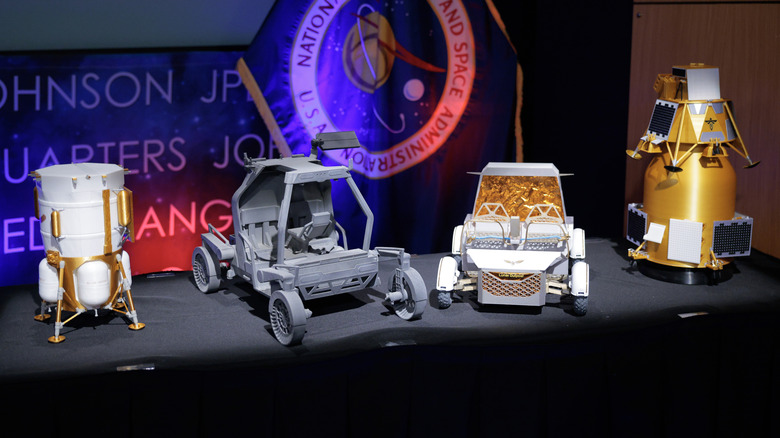
The Artemis III practice docking mission next year isn't the only moon mission Blue Origin has been contracted for with NASA. The company has several contracts with the agency to help land American astronauts on the moon for the first time since 1972, starting with securing reliable access to the lunar surface to establish a base of operations.
The most recent of these deals was made shortly before the New Glenn rocket explosion at the Florida launchpad. For $188 million, NASA has hired Blue Origin to use its New Glenn rocket — a competitor to SpaceX's Falcon 9 rocket — to transport two rovers to the moon using its uncrewed Blue Moon Mark 1 lunar lander.
The $188-million contract is part of NASA's Moon Base I mission and was targeted to launch by fall 2026, but the actual landing on the lunar south pole isn't expected until 2028. In the conversation with CNBC, Isaacman expressed optimism that the 2028 rover delivery will remain on track despite the New Glenn explosion. "So that I think is within the realm of possible for recovery of their launch pad." He noted on X though, that program changes will be provided as they're decided.