

The Difference Between Red And White Potatoes Is Easily Explained By Science
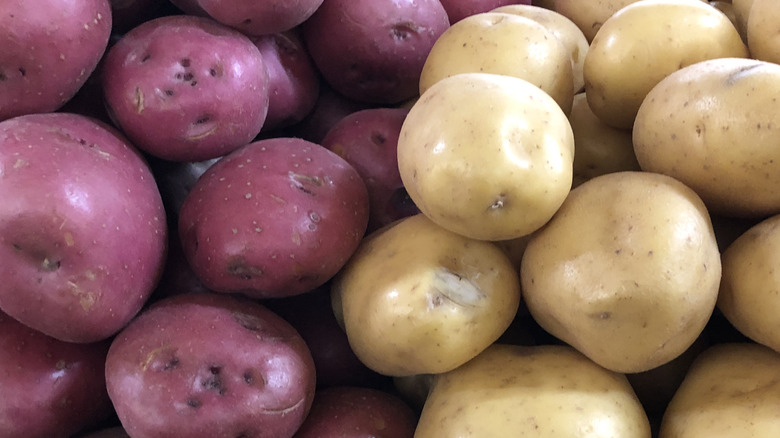
When it comes to vegetables, none is more popular among Americans than the potato. Red and white potatoes are some of the most common, and the difference between them is surprisingly similar to the difference between orange and yellow egg yolks. While the type and concentration of carotenoid pigments determine the color of yolks, flavonoid pigments determine the colors of potato flesh and skins.
One type of flavonoid is anthocyanin, which is one of the pigments necessary for photosynthesis to occur. It's also responsible for the red in fall leaves and the blue, magenta, purple, and scarlet in a lot of plants. In potatoes specifically, researchers identified pelargonidin and petunidin as the primary anthocyanin types in purple and red varieties, publishing the finding in Food Chemistry. A study in Molecules even describes red potatoes and purple sweet potatoes as potential sources of anthocyanins to be used as food colorants because they have such high concentrations.
Another type of flavonoid is anthoxanthin, which is responsible for creamy yellow to white pigments in all kinds of plants, including white potatoes. According to a paper published in Antioxidants, though, these potato varieties contain more catechin than any other flavonoid.
Beyond the surface, red and white potatoes differ in nutritional value
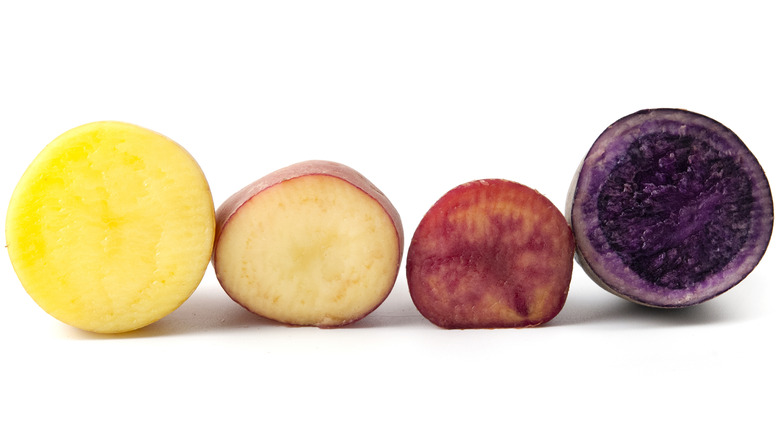
Unlike the difference between brown and white eggs (and yolk color), the difference between red and white potatoes extends to their nutritional value, too. For starters, white potatoes are known for being starchier than their colored counterparts. They have slightly more carbohydrates as well, with 100 grams of the vegetable containing about 21 grams of carbs after being baked (per the USDA's FoodData Central database). By comparison, red potatoes contain about 19.5 grams of carbs.
The biggest difference between red and white potatoes, however, lies in the concentration of flavonoids. When it comes to potatoes, researchers have detected that those with purple and red flesh have two times the flavonoids as those with white flesh. These and other polyphenols (the larger group to which flavonoids belong) are also responsible for colored potatoes having two to three times the antioxidants. About 50% of these polyphenols are located in the skins and neighboring tissues. Additionally, the anthocyanin from red potato skins has more powerful antioxidant activity than the brown skins of white potatoes.
These higher concentrations of flavonoids and polyphenols provide many health benefits. Used by the body for their anti-cancer, anti-inflammatory, and antioxidant characteristics, these plant chemicals (or phytochemicals) have been associated with a lower risk of cardiovascular disease and other chronic illnesses, as well as enhanced cognitive function.