

The Difference Between Blue And Brown Eggs Can Easily Be Explained By Science

When many people think of eggs, those with white shells might first come to mind. Yet eggs do come in multiple other colors, and across different species. Not only are there differences between brown and white chicken eggs to consider, but it's even possible for some avians to lay blue eggs, too. If the seemingly rare sight of blue eggs at the grocery store stops you in your tracks, there's a perfectly sound scientific explanation for these hues (and no, they are not dyed blue). Blue-colored eggs were long believed to be specific to particular types of birds, but researchers now also believe that nutrition and evolution could contribute to their formation as well.
First, it's important to understand how eggshells get their coloring to begin with, and why some hues are more prevalent than others. Egg color does have a genetic component, with certain breeds more likely to lay one hue over another. Brown eggs are produced by many chickens such as Barred Rock, Black Australop, and Rhode Island Red breeds, thanks to their genetic predisposition to create reddish brown-colored protoporphyrin deposits on the outer shells.
Blue eggs, on the other hand, are created with the help of biliverdin pigments. Though it's well known how chickens fertilize eggs, relatively few chicken species create blue eggs overall. Among these include Ameraucana and Araucauna hens. Also, while a brown egg might have a white inner shell, some blue chicken eggs (especially those from Ameraucana breeds) may be the same color on both the outer and the inner parts of the shells. This is attributed to oocyanin deposits, which are derived from biliverdin pigments. Aside from chickens, other birds that may have blue (or bluish) eggs include great blue herons, robins, house finches, and blue jays, just to name a few.
Aside from genetics, other factors may dictate blue egg development
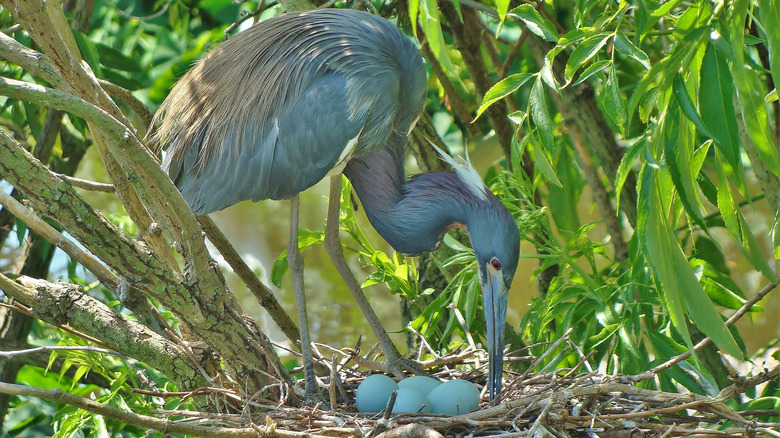
Genetics can still play a role in the tendency for birds to lay blue eggs, but researchers have also hypothesized that other factors may be involved. This could also explain why some birds may have the capability of laying blue eggs, but can also lay other colors. One example is the blue jay, which can lay eggs that vary from light blue to brown in color. This all has to do with which pigments (biliverdin or protoporphyrin) might be more prevalent in egg color creation.
A possible explanation for these variations in coloring may be attributed to the presence of antioxidants in the female bird laying the eggs. According to one study published in Behavioral Ecology and Sociobiology, canaries who were given antioxidant supplements before and during the egg-laying process were more likely to produce bluish-green colored eggs. Separately, additional research in canaries further concluded that the pigments circulating in the female's body could play a role. Collectively, such results might point to eggshell coloration partially being attributed to the overall health of birds. Other factors might include the bird's calcium intake, as well as age and stress (some of which also explain the differences between thick and thin eggshells, too!).
Another theory about the differences between blue and brown eggs is purely evolutionary. Some bird species have developed the ability to lay brown eggs to help protect them from predators, as these are easier to camouflage. Blue eggs may certain stand out more than their brown counterparts, but they might also offer protection from the heat of UV rays. Yet since there are so many nuances at play here, the likely explanation behind why certain birds lay brown versus blue eggs is likely based on a combination of all of these factors.