

The 'Popcorn Brain' Phenomenon Is Easily Explained By Science
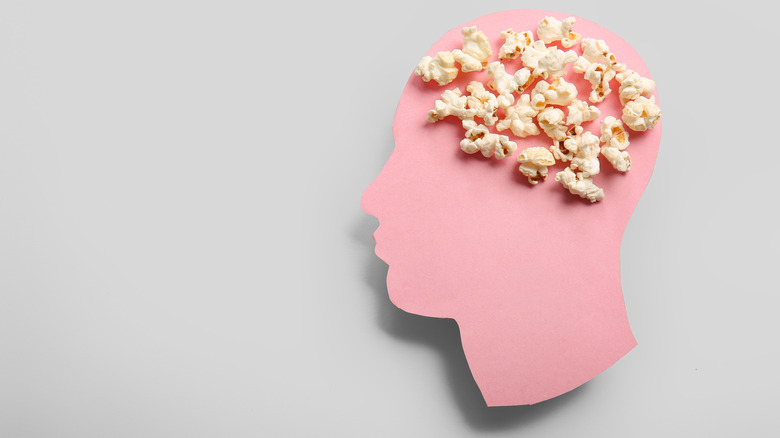
For nearly 100 years, scientists have been investigating the effects of media on the body and brain. The focus was originally on films, but as technology advanced, the research focus switched to TV screen time and then to smartphones. One of the most interesting findings is that taking the phone to the restroom is the common poop habit that increases your risk of hemorrhoids. Meanwhile, a link has been established between increased smartphone screen time and hampered working memory accuracy. With that in mind, it's not surprising that science can easily explain the "popcorn brain" phenomenon.
University of Washington researcher David M. Levy, Ph.D. originally coined the term "popcorn brain" in 2011. Although it's not an official psychological or psychiatric diagnosis, it describes a brain that has gotten so used to being constantly stimulated by electronic multitasking that the slower pace of offline life just doesn't hold the brain's attention. Researchers found in a study published in iScience that continuous social media scrolling on a smartphone alters the brain's reward system, lowering the dopamine synthesis capacity of the putamen, which is essential for learning and motor control. As a result, the brain starts relying on the social app stimulation for dopamine rather than naturally producing it, which explains the urge to use a phone being stronger than non-electronic-related activities.
Another study published in Scientific Reports discovered that a high digital media consumption correlates with a reduced cortical thickness (CT) and sulcal depth in regions in charge of attention, memory, executive functions, and visual processing in young children. Also, lower CT suggested maladaptive neurodevelopment, explaining why people who use electronic media constantly are easily distracted.
It's possible to mitigate the effects of popcorn brain
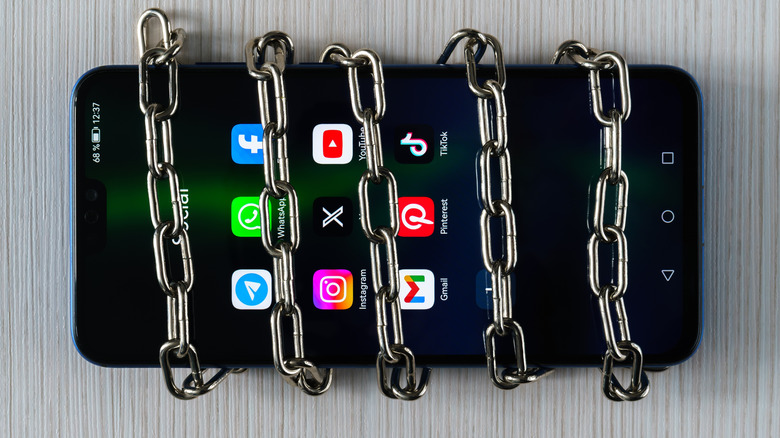
Along with science explaining why the phenomenon of popcorn brain develops, researchers have studied the impact on youths. In GAP BODHI TARU, scientists report that the immersion of youths in endless streams of information, instant messaging, and social media affects the brain in several ways. The breakneck engagement and ongoing connectivity of the modern digital world trains the mind to seek novelty and instant gratification and to skim massive amounts of content. As a result, the brain can't focus on complex tasks, hindering academic performance. Additionally, relying on digital communication weakens real-life social skills, while the constant stream of notifications increases anxiety and stress.
Since online content teaches the brain to crave social reinforcement and informational rewards, popcorn brain is essentially a learned behavior and can be reversed. Harvard physician Dr. Aditi Nerurkar recommends four practices to CNBC Make It. For instance, limit phone scrolling to 20 minutes or less just twice a day, except for essential calls, emails, and texts. If you struggle to monitor your time, consider using the built-in screen time controls on your phone, which are available on both Android and iOS.
Turning off pop-up features and push notifications and setting your smartphone at least 10 feet away are other good practices to alter previously learned behaviors and develop new ones. On top of that, avoid putting the smartphone on your nightstand so that you're not tempted to check it right before sleeping and immediately after waking. Dr. Nerurkar noted that it won't be easy in the beginning, but "rewiring your brain and overcoming your primal urge to scroll is a major feat."