

Long-Term Side Effects Of Tylenol That Aren't Often Discussed
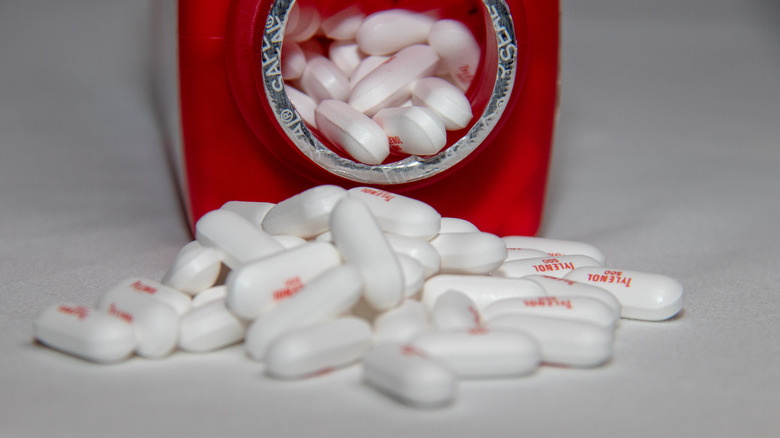
When you have a headache or fever, you might reach for a couple of acetaminophen, the generic name of Tylenol. It's one of the most widely used over-the-counter (OTC) analgesics and antipyretics (pain relievers and fever reducers). Along with there being various forms — capsules, liquids, and powders — this medication is often combined with other OTC and prescription drugs. What you might not realize is that you can eventually develop liver damage if you take it too often.
Because of how the liver functions in the human body, it's almost entirely responsible for breaking down Tylenol. That process creates N-Acetyl-p-benzoquinone imine (NAPQI), a toxic intracellular metabolite. With normal doses, only a small portion turns into NAPQI and can be neutralized with the organ's store of glutathione, a powerful antioxidant that the body produces naturally. In cases of overdose, physicians administer N-acetylcysteine to replenish glutathione and detoxify excessive levels of NAPQI to prevent damage to liver cells.
Taking the recommended maximum dose of 4,000 milligrams in a 24-hour period for more than seven days, though, can have similar effects as acute liver toxicity if it's not addressed. Although the liver is a vital human organ that can miraculously regenerate, this kind of regimen doesn't give the body enough time to replenish its glutathione stores. It's particularly risky for those who are critically ill with multiple ailments or preexisting chronic liver disease.
Fortunately, it's possible to protect the liver by only taking the maximum dose for a few days. If you know you'll need it for longer than a week, consider reducing your dose to 3,250 milligrams per day, and always talk to your doctor about your risks.
Other long-term side effects of Tylenol to understand
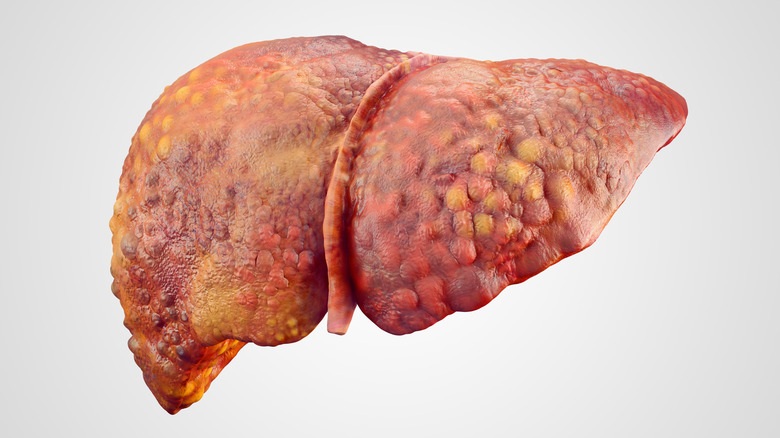
Although liver damage is a concerning side effect of long-term Tylenol use, it's not the only one. The kidneys, one of the other organs most likely to develop cancer, can be affected as well if liver failure occurs. According to a 2018 paper published in the British Journal of Clinical Pharmacology (BJCP), acute kidney injury is rare — only happening in 1% to 2% of patients with acetaminophen overdose. The cause of kidney toxicity isn't clear but could be because of NAPQI or other toxic metabolites. A paper published in Kidney Research and Clinical Practice in 2020 found a correlation between the medication and a higher risk of kidney impairment, but more research is needed.
Additionally, the BJCP paper found an increased risk for higher systolic blood pressure with long-term Tylenol use. A study of 103 participants published in Circulation in 2022 also found a connection between taking the pain reliever and higher diastolic and systolic blood pressure. On top of that, the BJCP paper noted a link between higher doses of acetaminophen and gastrointestinal (GI) complications — like nausea, indigestion, and bleeding — even with no pre-existing GI disorder.
It's important to take these analyses and studies with a grain of salt, though, because more conclusive evidence from further study is needed. Since everybody's biology and health history are different, it's especially important to consult a healthcare provider if you have a pre-existing condition that increases your risk of developing these side effects, such as diabetes, a gastrointestinal disorder, hypertension, or kidney problems. A 2025 study published in Arthritis Care & Research found that seniors are particularly at risk, so treatment with Tylenol may need to be reconsidered for those older than 65.