

To Visualize What Drano Does To Human Hair, Here's The Process Under Heavy Magnification
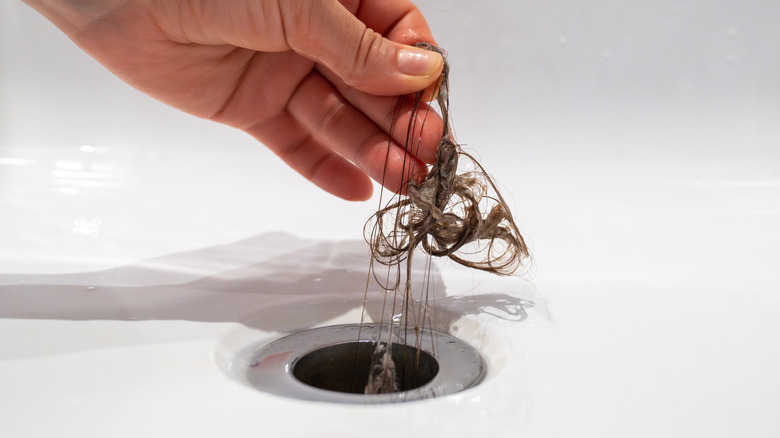
When your kitchen drain is clogged, fats from food debris and soap scum are usually a big part of the problem. A clogged bathroom sink or shower drain, on the other hand, is more than likely due to stubborn tangles of hair that block or at least slow the flow of water through your pipes. Rather than call a plumber, you may use a drain cleaner that can get rid of the hair, like Drano. The process that happens is hidden from sight, but a video by Justice Dodson on TikTok provides an up-close look.
The video begins with a red bottle of Walmart's Great Value Max Strength drain cleaner, which features sodium hydroxide just like Drano Max Gel, being set in front of a microscope. Then, a drop of drain cleaner is placed on a strand (or two) of hair on a slide with a cover slip placed over the top. That's when you get to see what's happening under the microscope at 200 times magnification. In fast motion, you can see bubbles moving around the hair shaft as the chemicals get to work. Watching the hair strand dissolve is actually quite fascinating.
@justice.dodson Human Hair VS Draino 🔬#foryou #microscope #draino #tucop2026slays #echorebel
Essentially, sodium hydroxide (NaOH) — also called lye — is one of the bases commonly used in household products, and it's the main ingredient in Drano and related cleaners that dissolve grease, oil, and hair. Sodium hypochlorite (NaOCl) — the chemical formula for bleach — is also a base, so the combination of these chemicals creates a corrosive liquid with a high pH. While this combination of chemicals can break down a single strand in just seven minutes under a microscope, it can take more than 30 minutes for it to really break up a clump of hair in a drain.
Is Drano really safe for pipes if it can dissolve hair?
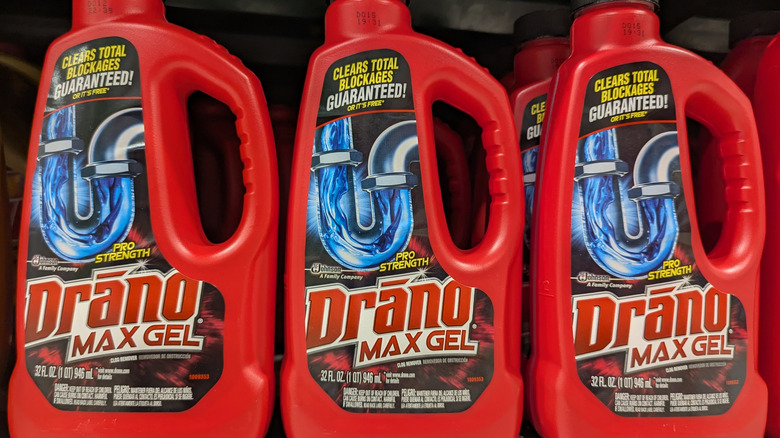
As established, the reason Drano Max Gel and similar drain cleaners work is because they contain sodium hydroxide. This chemical is so good at dissolving grease, oil, and hair that taxidermists use it to remove flesh from bone to preserve skeletons. In fact, drain cleaning products formulated with this chemical warn that getting them on your skin can cause severe burns. If that's the case, are they really safe to use in your pipes? Yes and no.
Generally, sodium hydroxide-containing drain cleaners are safe to use when you don't use too much or use them too often. That's because this chemical is so strong that it can break down rubber and cast-iron coating over time, creating weak spots that can lead to bursts or cracks. The potential for damage increases if the chemical becomes trapped in the blockage. Plus, when the cleaning liquid reaches the clog, a chemical reaction occurs that produces gas and heat. That can produce so much pressure inside the pipes that the material can warp and even fragment.
To play it safe, it's important to avoid using other chemicals — including ammonia and common household acids like vinegar — alongside drain cleaners because of the toxic vapors the combination produces. The same can happen if an acid is trapped in the blockage when the sodium hydroxide makes contact. As a result, it's essential to be mindful when using drain cleaners and to call a plumber if a clog persists or if you notice anything out of the ordinary after using a household cleaning product.