

Why Historians Say This Was The Worst Year To Be Alive

We may receive a commission on purchases made from links.
Most of us can agree that the last several years have been pretty rough. If we were asked what year would have been the worst to live through, we could probably offer a few contenders from our own lifetime. But historians have a different take. One Harvard University professor declared the worst year to be alive was 536 A.D. That year was characterized by famine, cold, volcanic eruption, and 18 months of darkness across Europe and portions of Asia. To make matters worse, things would only continue to deteriorate from there.
Matthew McCormick is an acclaimed historian who specializes in medieval history. When discussing the year 536, he stated, "It was the beginning of one of the worst periods to be alive, if not the worst year," according to an article published in Science. While he specializes in this period of history, and therefore might have some bias when assigning the worst time on Earth, there is some pretty compelling evidence that 536 and the years that followed were a devastating moment to be alive.
McCormick also serves as the chair for a project at Harvard called the Initiative for the Science of the Human Past. This initiative brings experts together from various fields, ranging from genetics to climate science to archaeology. Such a multi-disciplinary project paved the way for a centuries-old mystery to be solved: The darkness that ushered in the Dark Ages was not hyperbole, but a very real phenomenon that started with a volcano in Iceland.
The dark months
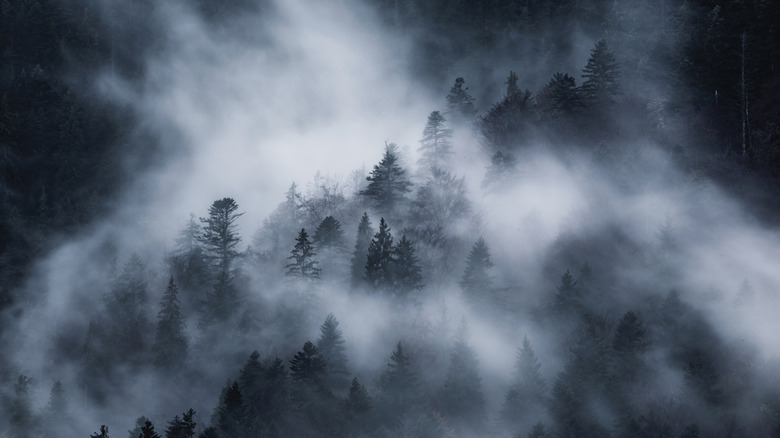
The scholar Procopius provided a vital account of the events that took place during the Justinian Empire from 527 to 565 A.D. In "The History of the Wars," he described the darkened atmosphere: "For the sun gave forth its light without brightness, like the moon, during this whole year, and it seemed exceedingly like the sun in eclipse..." At the time, sunlight was hindered by a mysterious fog, plunging a large portion of the globe into darkness. It was not until 2018 that McCormick and his colleagues provided a plausible cause of this strange event.
Through analyzing glacial ice cores, the research team revealed evidence of a volcanic eruption so large that it spread ash for hundreds of miles, generating the strange fog. But this would have severe effects beyond the eerie shadow. By blocking sunlight, ground temperatures were significantly reduced. Not only did that lead to an unpleasantly cold summer, even causing it to snow in China, but it also meant that many crops perished. Such an agricultural loss led to widespread famine that lasted for several years.
Imagine yourself in 536 A.D. Suddenly, your world is dark, your crops are dying, and there is not enough food to go around. People living through this likely could not understand why or how this was happening, creating even more fear and uncertainty about what was to come. In fact, as the darkness lifted, things were only going to get worse.
Plague
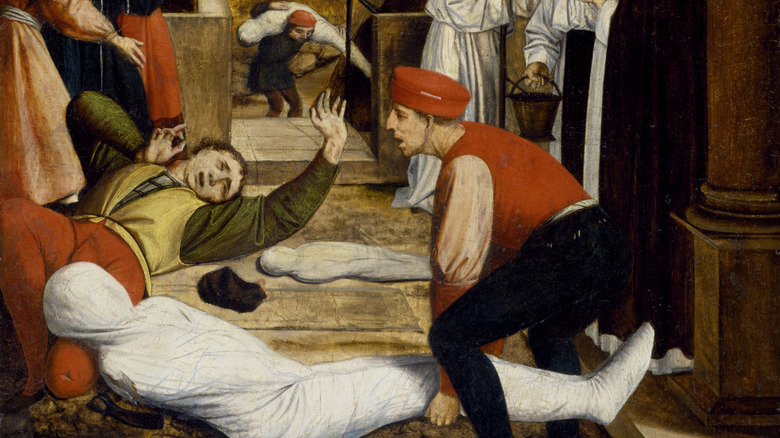
After describing the strange and darkening fog, Procopius wrote, "from the time when this thing happened men were free neither from war nor pestilence nor any other thing leading to death." In 541, the Plague of Justinian came to Egypt. The effect was so severe that between one-third and one-half of the eastern Roman Empire perished. McCormick suggested that this was a catalyst for the subsequent fall of the Roman Empire.
The Plague of Justinian resulted from the same bacterium that causes the bubonic plague: Yersinia pestis, which we know as one of the worst epidemics throughout history, aside from coronavirus. Over 10 million people are estimated to have died from this illness in the Byzantine Empire. What's more, historians consider this to be the first pandemic ever. While the COVID-19 pandemic was awful, at least we could reflect on previous outbreaks to provide some context as to what we might expect. The residents of the sixth century, however, certainly didn't have that same level of information.
The compound effect of these repeated disasters would lead to a fledgling economy as well, which extended for nearly a century. The rebound did not occur until 640 with the growth of silver mining. Of course, all of these events, though covering a large region, are geographically restricted. Thus, whether 536 and the following years were in fact the worst time to be alive can certainly be argued based on location.