

This Prehistoric Apex Predator Known As The 'T. Rex Of The Ocean' Was Pure Nightmare Fuel
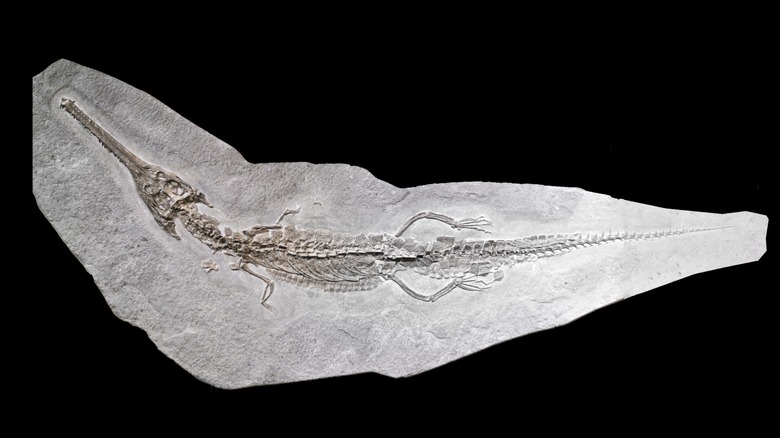
Tyrannosaurus rex is undoubtedly the most famous dinosaur, renowned for its awesome size, unmatched predatory skills, and hilariously tiny arms. If there's one dinosaur everybody's heard of, it's this one, but few people know that the ocean also had a T. rex of its own. That's not just an analogy; there is actually an extinct species called Tylosaurus rex that once dominated the seas. At the time of this writing, the species has only been formally recognized for a few weeks, but while it may be new to us, Tylosaurus must have had quite the vicious reputation in its time.
Tylosaurus rex was first formally described in a study published in the Bulletin of the American Museum of Natural History in May of 2026. Six years earlier, doctoral student Amelia Zietlow was examining fossils of a species called Tylosaurus proriger when she noticed that one was substantially larger than the others. It was also unusual for having been unearthed in Texas, outside of the species' previously recognized range. Zietlow suspected she was looking at a different species entirely, and over the next half decade, she worked with other scientists to reclassify fossils in more than 20 other museums.
In their research, Zietlow and her colleagues describe an apex predator just as worthy of the name T. rex as its landbound counterpart. However, Tylosaurus rex wasn't a dinosaur. It was part of a long-lost group of sea creatures called the mosasaurs, and it lived around 80 million years ago, more than 10 million years before Tyranosaurus.
What were the mosasaurs?
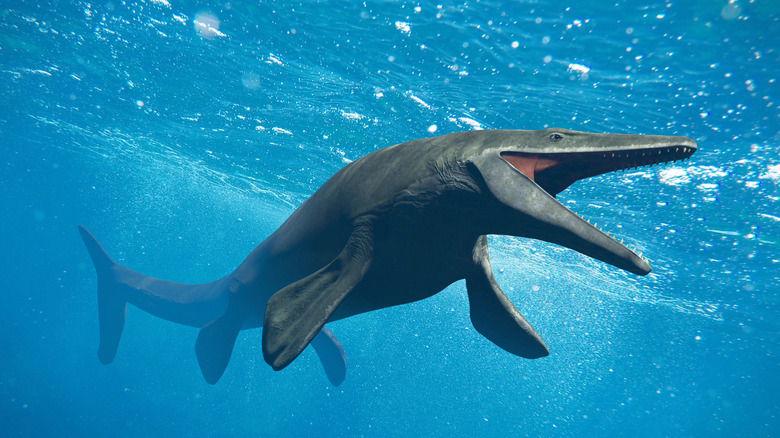
Mosasaurs were a group of marine reptiles that lived during the Cretaceous Period (one of the three time periods in which dinosaurs lived). They aren't as famous as dinosaurs, but they were actually discovered first. The group's namesake species, Mosasaurus, was first found in a Dutch mine all the way back in 1766, nearly eight decades before the word "dinosaur" even existed. Scientists now know that there are not just multiple species, but multiple genera of mosasaurs, and Tylosaurus rex is just the latest discovery in this ancient reptilian group.
The fact that Tylosaurus rex fossils were misidentified for decades is partly due to the many similarities across members of the mosasaur group. Their bodies are long and lean, with elongated snouts that closely resemble one of their living descendants, the monitor lizard. Most mosasaurs were around the size of a porpoise, but Tylosaurus rex was an outlier, estimated to have reached over 40 feet in length. That's not quite big enough to top Megalodon as the largest ocean predator, but given that the two lived tens of millions of years apart, Tylosaurus rex wouldn't have had much, if any, competition to face in its time.
Mosasaurs are powerful predators armed with one particularly terrifying feature. Their jaws are jointed in such a fashion that they are able to expand their mouths both vertically and horizontally. As they opened their mouths, their lower jaw spread sideways, allowing them to swallow large prey with ease. Some researchers believe they would even eat other mosasaurs on occasion.
The mysterious life of Tylosaurus rex
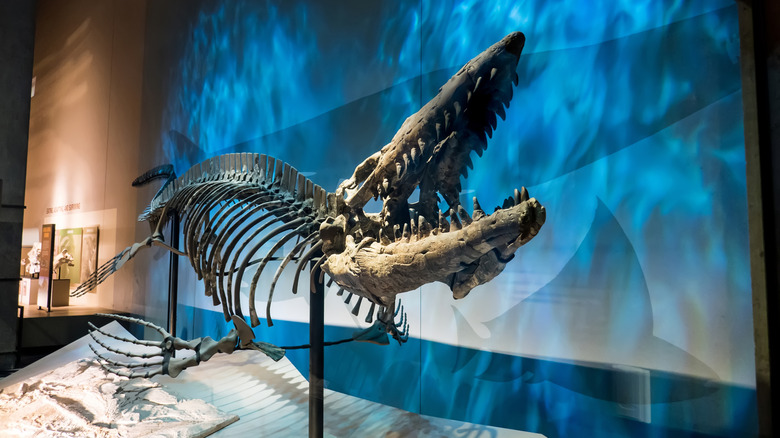
Since Tylosaurus rex is a new discovery, scientists still have a lot of gaps to fill in its history. Nevertheless, existing fossils have given some clues to what life was like for this long-lost creature. Even amongst mosasaurs, Tylosaurus rex appears to have been especially vicious. Not only did it outsize most other mosasaurs, but its teeth were serrated, an uncommon feature that would have made them all the more terrifying as predators. This is a feature it actually shares with the other T. rex. Tyrannosaurus's serrated teeth are considered among the most powerful tools of predation in natural history, and it's not hard to see why both of these reptiles were such dominant apex predators while packing what is essentially a jaw full of steak knives.
Tylosaurus rex also appears to have had an aggressive streak beyond that of other mosasaurs. One fossil specimen that has attracted particular attention shows damage to the snout and jaw consistent with a fight, one that likely transpired with another Tylosaurus rex.
It's not entirely clear what ultimately happened to Tylosaurus rex specifically, but the last members of the mosasaur group perished in the same one of Earth's mass extinction events that killed off Tyranosaurus rex and all the other non-avian dinosaurs. Hopefully, more information about the other T. rex comes to light soon, and until then, let's just all be grateful that the next time we go snorkeling, we don't have to worry about a knife-jawed mosasaur lurking nearby.