

Why Death By A Poison Dart Frog Is One Of The Worst Ways To Die
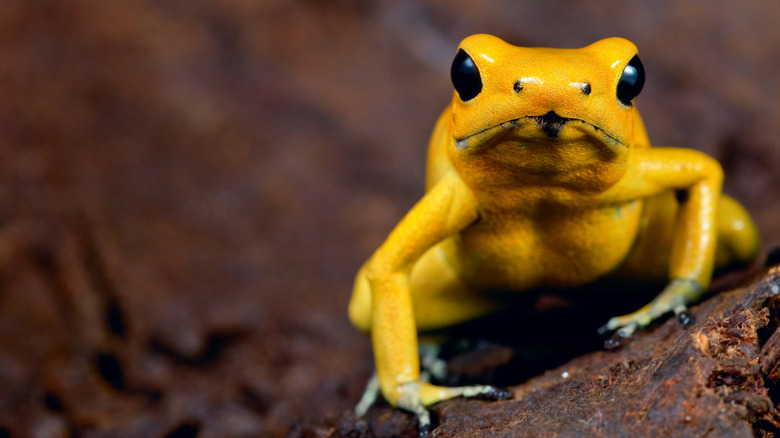
Deep in the rainforests surrounding the Andes live a variety of tiny terrors. The poison dart frogs (not to be confused with venomous frogs) include some of the most stunningly-colored frogs you'll ever see. But those bright colors are a warning to back off because that they're holding a chemical arsenal and what comes next won't be pleasant. But one species, the golden dart frog, (Phyllobates terribilis,) produces a potent toxin that can put down as many as 20 adult humans. Should you be unlucky enough to touch it, even for a second, you'll quickly realize its scientific name wasn't an exaggeration and you're about to die in a horrifically painful way.
It's so potent that the indigenous peoples who lived around it would scrape a dart over the frogs back and take down whatever crosses their path. And even though the rainforest is full of poisonous plants, this little frog — maxing out at only 41 centimeters or 1.6 inches — was so potent it was worth the risk of dying in pain just to smite their enemies.
Let's say you accidentally brush up against a poison dart frog; what will happen? At first, you think it's nothing, but then you start to notice an increasingly painful burning sensation where you made contact. Then, suddenly, your muscles contract, including your heart. Paralysis comes soon after, then arrhythmia, and finally heart failure and death. Currently, there is no known antidote for it, either, so be mindful of where you lean when hanging out in the Colombian rainforests, which are full of deadly animals.
How the poison dart frog's toxins work
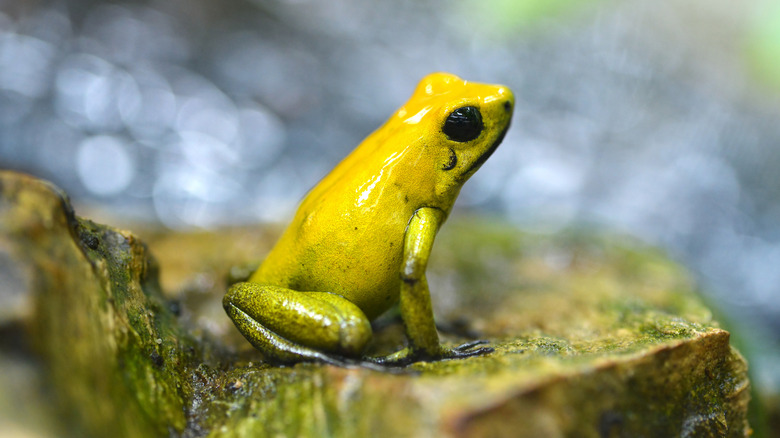
What makes it so deadly is the extremely potent neurotoxin batrachotoxin. It's found in only a handful of animals, which is a good thing for us, because we'd probably see way more agonizing deaths otherwise. Batrachotoxin works by opening sodium ion channels, preventing them from firing and leading to the aforementioned muscle contractions and eventual death.
Interestingly, poison dart frogs kept in captivity seem to lose their toxicity over time, leading scientists to believe it's the beetles in their diet that cause the toxin to develop. We're also not entirely sure how the frog doesn't end up poisoning itself or mating partners, though there is some evidence that a "toxic sponge" protein may be the reason why.
Clinically, there are no current uses for batrachotoxin, but there is some evidence it might be useful for pain relief since it induces numbness on the skin with contact. A 2004 study in FEBS Letters found that batrachotoxin was useful in modulating a sodium channel that's important for activating neuron cells that perceive pain. However, because it's so dangerous to handle and there are no commercially-viable synthetic alternatives, we may not have any answers for how we could utilize this toxin to our advantage in the near future.