

The Most Contagious Disease In The World Isn't COVID Or The Flu

In recent years, the contagiousness of certain viruses was undoubtedly brought to the forefront of disease mitigation during the COVID-19 pandemic. During this time, scientists discovered that the underlying SARS-CoV-2 virus was even more contagious than the seasonal influenza ("flu") virus (there's also key differences between hantavirus and COVID-19). Both of the viruses that cause these respiratory infections are considered highly contagious, although COVID-19 is much more so than the flu. Despite the highly contagious nature of both viruses, it turns out there's yet another virus that's even more contagious than the flu and COVID. Measles is in fact the world's most contagious virus, and it has unfortunately resurfaced in the U.S. in recent years despite previous elimination efforts.
What makes measles such a dangerous virus is its contagious nature and the ability to cause dangerous (and sometimes deadly) infections. Symptoms can appear within one to two weeks of exposure, and may include a widespread rash, high fever, runny nose, and cough. Like the flu and COVID, measles is an airborne disease. This virus may also remain airborne in a room for a couple of hours long after an infected person has left the space. In fact, measles is so contagious that the Centers for Disease Control and Prevention (CDC) says that one person with the infection has the potential to get as many as 9 out of 10 other people sick if they are not vaccinated. This is particularly the case in children under the age of 5, as well as adults and children with weakened immune systems, and people who are pregnant.
Measles is now spreading again in the US
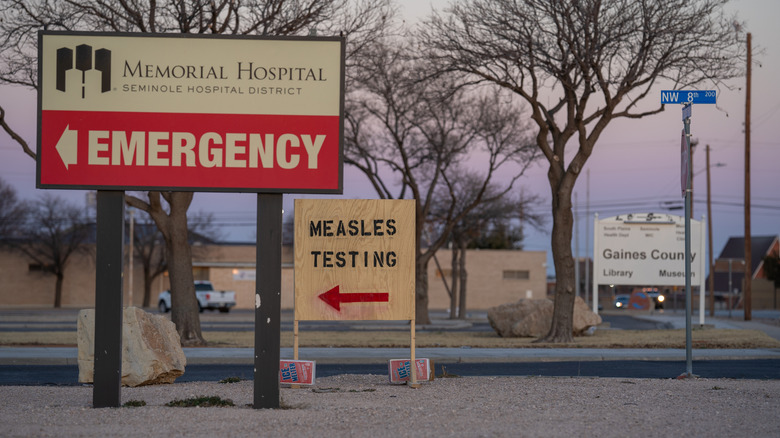
Measles itself is not a new virus. While first identified as an infectious disease in the 1700s, there are descriptions of the virus dating back to the 9th century. Like other types of viruses, measles has historically caused cases of severe disease and death. Before the development of a measles vaccine in 1963, World Health Organization (WHO) estimates the virus was responsible for at least 2.6 million deaths every year globally. What's more, related disease epidemics occurred every couple of years due to the contagious nature of the virus. As more people were vaccinated against measles, the number of infections significantly declined each year. In 1989, a second dose of the measles, mumps, and rubella (MMR) vaccine was recommended for children going forward in response to an outbreak of measles that occurred among children who were already vaccinated.
Thanks to vaccination efforts, measles was declared eliminated in the U.S. in 2000, with occasional cases occurring mostly among unvaccinated international travelers each year. For a disease to receive this designation, this means that there are no signs of continuous spread among the population over a period of 12 months or longer. Unfortunately, there are some signs that measles' elimination status may be unraveling. Measles infections are gradually increasing, with numerous outbreaks of 50-plus cases being reported in sections of the country.
Outside of the U.S., WHO has also noted a decline in measles vaccination rates along with an uptick in infections since 2024. While WHO estimates that previous vaccination rates helped prevent 59 million measles related deaths between 2000 and 2024, there were also 95,000 deaths caused by measles in 2024. Even the U.K. is no longer measles free, as of 2006.
Tips for protecting yourself against measles
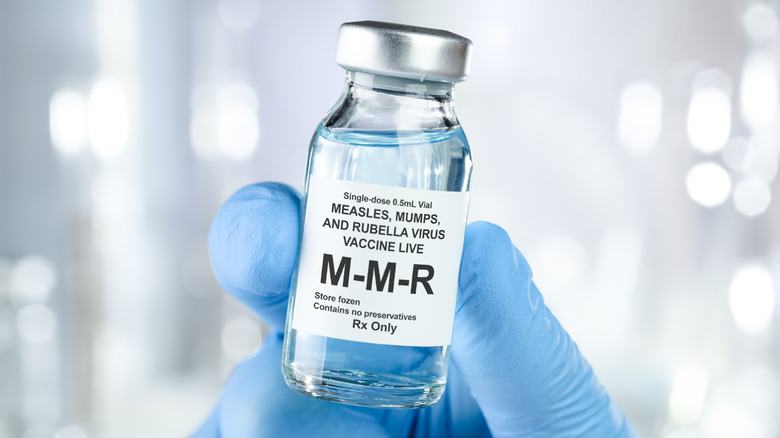
There's currently no cure or treatment for measles, which is why prevention remains paramount in protecting yourself from this highly contagious virus. Vaccination continues to be the best way to achieve this goal. In particular, measles protection may be achieved by receiving two doses of the MMR vaccine. The CDC says that while one dose of the vaccine offers 93% protection against measles infections, you can increase this level to 97% by obtaining both doses. It's important to talk with a doctor about the MMR vaccine, as well as any concerns you have about risks and side effects. The good news is that serious complications related to MMR vaccines are considered rare, although misinformation continues to run rampant. Almost all cases of measles occur among people who have not yet been vaccinated.
Since measles is so contagious, vaccines are really the only way you can protect yourself against getting sick from exposure to someone who might have this infection. In June 2026, the CDC reported more than 2,100 confirmed cases of measles across the U.S., as well as 30 new outbreaks. Not only does this underscore the problem of measles spreading across several states, but there are likely many other cases that have not been reported. Alert your doctor right away if you think you have measles or if you've been exposed to someone who is infected. They might also recommend testing, self-isolation, and wearing masks to help protect yourself and others against the spread of measles.