

AC Vs. Dehumidifier: Which Is Better At Reducing Humidity?
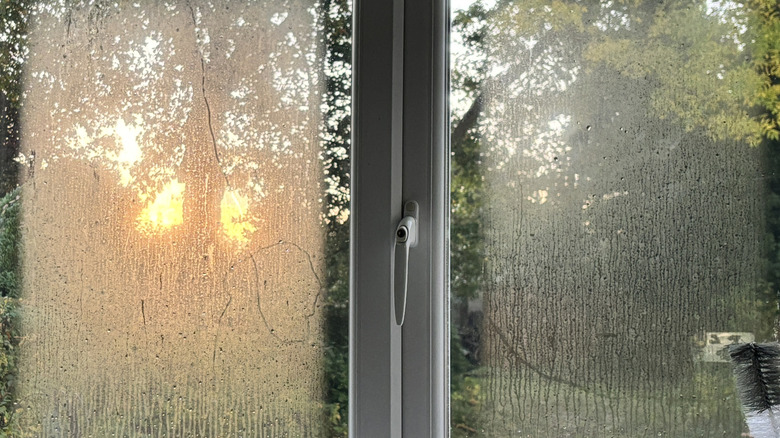
In hot climates especially, condensation can easily build up on walls and windows inside your home or business as humidity rises. More than the climate can cause excess moisture, though, including simple cooking and showering. Left unchecked, high relative humidity impacts your body and your belongings. One way to get the extra moisture out of your indoor air is to run an air conditioner or a dehumidifier. However, the dehumidifier is the clear winner over air conditioning.
If you use a hygrometer, it will show your home's or business' relative humidity levels. It's considered too high when the device displays 60% or more, but the ideal range is 30% to 50%. Since an air conditioner draws in warm indoor air, it naturally removes moisture from that air as it passes through the condenser lines before being blown out as cold air into the room. Removing moisture from the air isn't its main purpose, so 2 gallons is likely the most that an air conditioner can do.
On the other hand, moisture removal is the sole purpose of a dehumidifier. Compressor types, which use a refrigeration system to draw excess water over cooled coils, are the most popular choice because they work fast and are energy efficient. However, desiccant types are another option. They work by drawing humid air over a filter and zeolite (an absorbent, crystalline aluminosilicate material), blowing warm dry air over the saturated zeolite, and then collecting the moisture into a tank. Depending on the size, a dehumidifier can pull 3 to 18.5 gallons out of the air in a day.
How to use a dehumidifier in your home
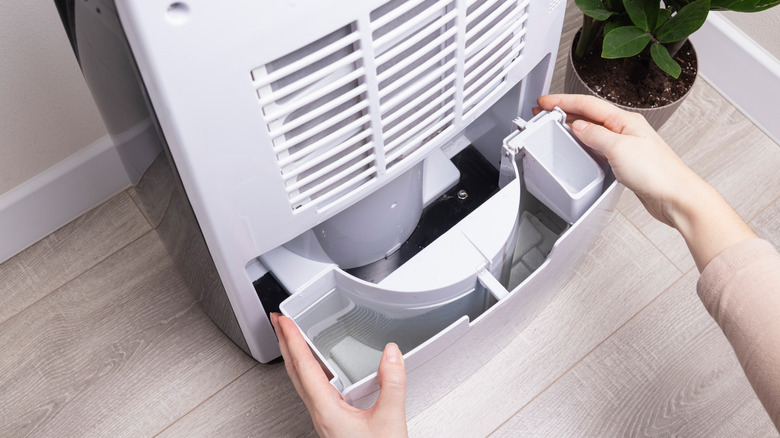
Now that you know when to use a dehumidifier — when indoor humidity exceeds 60% — following some tips can help you effectively remove the excess moisture. The device's placement is one of the most important parts, aside from setting your ideal level of relative humidity to between 30% and 40%. The best places are those anywhere steam is produced, such as the bathroom, kitchen, and laundry room. How you place it matters, too. On top of that, you need to leave plenty of room around the dehumidifier so that the fans have plenty of room to draw in and blow out air. The most ideal position is at least 12 inches from furniture and walls.
To help the dehumidifier work as efficiently as possible, you need to prevent more moisture from entering your home from the outdoors. Simply keeping the doors and windows closed, especially in the rooms you're dehumidifying, can achieve that.
Additionally, it's essential to keep the dehumidifier's filter and grille clean according to the device manual. Doing so ensures proper air flow so that the device doesn't have to work harder. The same goes for periodically emptying the water tank, which you can do by manually dumping the removable container. Creating a routine based on how fast the tank fills is helpful. If your model has a built-in pump, though, you may leave a hose connected to continuously let the water run out of a window to the outside or into a larger-capacity bucket or nearby sink.