

The Difference Between Ostrich And Chicken Eggs Is More Than Just Size

Ostrich eggs are well known for being the largest bird eggs, measuring around 20 times the size of an average chicken egg. While their size is impressive, and would make serving up breakfast for the whole family an easy task, the difference between the eggs goes further than sheer magnitude. With a significant nutrition difference between the two, and potential for ostrich eggs to be used to fight disease, these enormous eggs have a lot to offer.
One notable difference, other than the space it takes up in the fridge, is the thickness of the egg shell. A quick tap against the edge of a bowl might be enough to coax a chicken egg into breaking, but you will need more brute strength for the ostrich version. A hammer or a drill is usually required to crack into the substantial shell, which can be as thick as 3.5 millimeters.
In spite of the thick shell, once you have cracked into it, ostrich eggs are completely edible, and the taste is often described as comparable to chicken eggs, but with a richer flavor and texture. Unlike eggs from an emu (the second largest bird) which have much more yolk than white, the ratio of an ostrich egg is similar to chicken eggs.
Nutrition of ostrich eggs vs chicken eggs
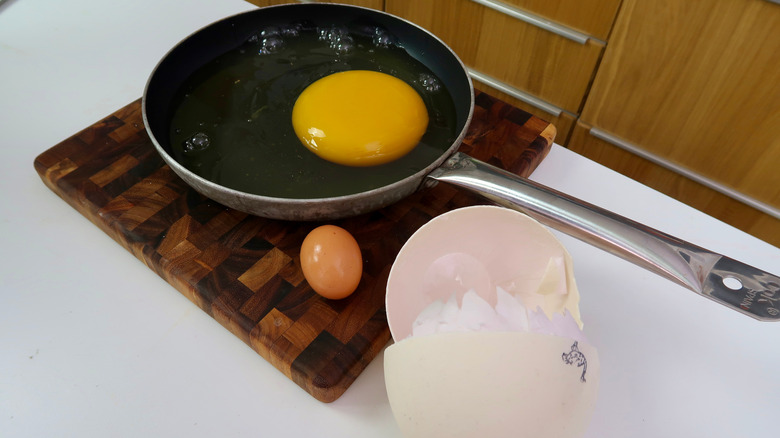
The enormous size of ostrich eggs obviously means that they have significantly more calories and macronutrients than their chicken counterparts per egg — an average ostrich egg contains around 2,000 calories. When comparing per serving, however, ostrich eggs contain less fat overall than chicken eggs, but they do contain more monounsaturated fats. Since these unsaturated fats are considered incredibly healthy for both heart and brain, this makes the ostrich egg an excellent nutritional choice.
The protein content of the two types of egg is very similar, at around 47%, and like chicken eggs, ostrich eggs are a complete protein. This means they contain all of the essential amino acids that our bodies are unable to synthesize, making them a high-quality protein source.
In terms of micronutrients, ostrich eggs are richer in many minerals and vitamins, including vitamin A, which helps to support eye health, vitamin E, iron, and copper. They don't contain much magnesium, with chicken eggs gaining superiority in that particular mineral, but they also contain no sodium, which makes them an excellent choice for those on a low salt diet.
Ostrich eggs could have a role to play in preventing disease
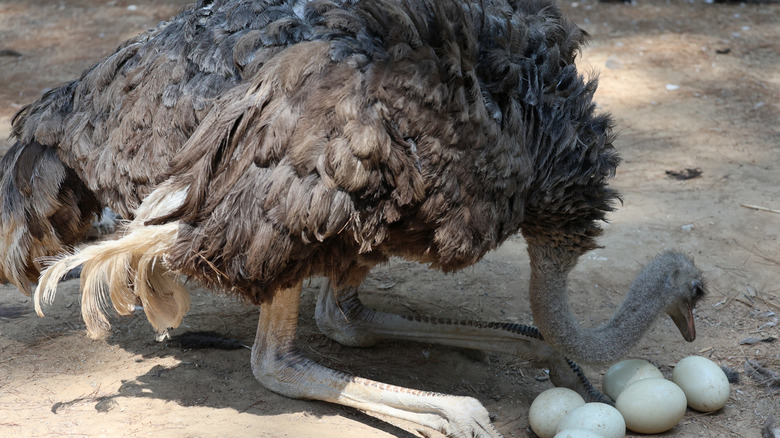
One of the most significant scientific differences between ostrich eggs and chicken eggs actually has nothing to do with their use in the kitchen. Instead, there is increasing evidence that they can be used in the fight against disease. Just like humans and other mammals during pregnancy, birds pass antibodies on to their young, in their case in the yolk of the egg. Because of the size of an ostrich egg, it means that large numbers of antibodies are produced in one egg. Yasuhiro Tsukamoto, veterinary professor at Kyoto Prefectural University in Japan, has spent more than 10 years learning how to customize the antibodies to target certain diseases, with the end goal of using them in disease prevention.
While similar processes have been used in the past with a variety of animals, ostriches are especially suitable. "Antibodies from other animals are very expensive [to grow] and prone to degeneration," explains Tsukamoto. "Ostriches', on the other hand, are extra resilient. The proteins can withstand temperatures up to 250 degrees Fahrenheit and highly acidic conditions." This means that antibodies retrieved from ostrich eggs could have excellent potential in health applications and preventative supplements.
A 2010 study, on which Tsukamoto was one of the authors, also showed that a single ostrich egg yolk contains 4 grams of immunoglobulin Y, which is the main antibody birds pass on to their offspring. These antibodies can be extracted and used for research into disease prevention, and the non-invasive procedure makes it much more straightforward compared to drawing the blood of mammals. This abundance of antibodies in ostrich eggs means they could be a low-cost way of sourcing antibodies for future pharmaceutical use.