

Scientists Say This Nearly 5,000-Mile Atlantic Seaweed Belt Keeps Getting Worse
When it comes to seaweed, more than 12,000 species have been identified around the world. Some of these are cool-water species that have been degrading over the last half-century as ocean temperatures rise. However, those same increasing temperatures are part of the ideal conditions that allow warm-water plants that live in the Atlantic ocean to thrive. Among those species is Sargassum, a genus of algae which has been multiplying and expanding the reach of the Great Atlantic Sargassum Belt (GASB).
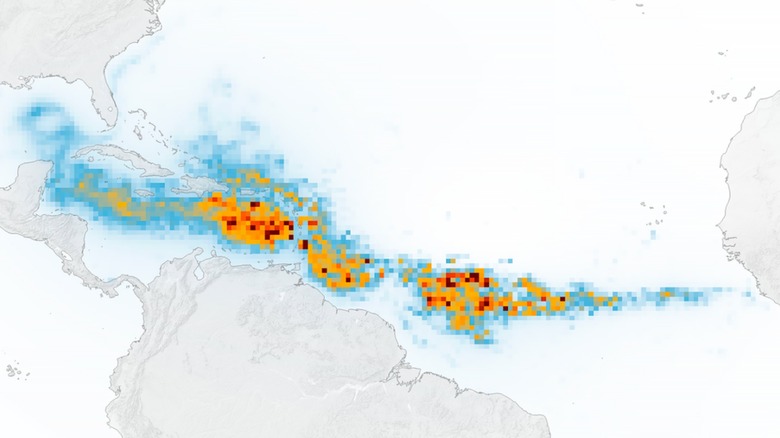
Stretching from the West African coast to the United States, the GASB is a seasonal mass of floating Sargassum seaweed mats. It has appeared in satellite imagery since 2011 and has reached up to 5,000 miles long. Scientists have also been tracking the biomass of the GASB, which was about 9 million tons in 2015, 19.7 million tons in 2019, and about 21.7 million tons in 2022. However, a record-breaking biomass of about 37 million tons occurred in May 2025 and was published by Florida Atlantic University-Harbor Branch Oceanographic Institute researchers in Harmful Algae.
In a paper published in PNAS Nexus just a few months ago, scientists found evidence that the first significant Sargassum seaweed bloom in April 2011 originated in West Africa — specifically the Gulf of Guinea — up to two years before the satellites caught it. Researchers are still trying to predict the extensiveness and timing of the GASB. So far, they've learned that many factors have an impact on the GASB's biomass and length, such as an increase in the ocean's nitrogen-to-phosphorous ratio over the last 40 years, Sargassum's ability to tolerate temperatures between 64.4 and 86 degrees Fahrenheit, and ocean winds and currents.
Why this rapidly growing Great Atlantic Sargassum Belt is a bad thing
As a type of floating algae, Sargassum is an essential part of an open ocean ecosystem that is home to a diverse array of marine species, such as crabs, loggerhead sea turtles, marlin, shrimp, and tuna. The stretch of open ocean it occupies is known as the Sargasso Sea, the world's only shoreless sea, named after its wealth of Sargassum. It's a 2-million-square-mile sea in the middle of an ocean where circling ocean currents aggregate the seaweed in a flourishing ecosystem.
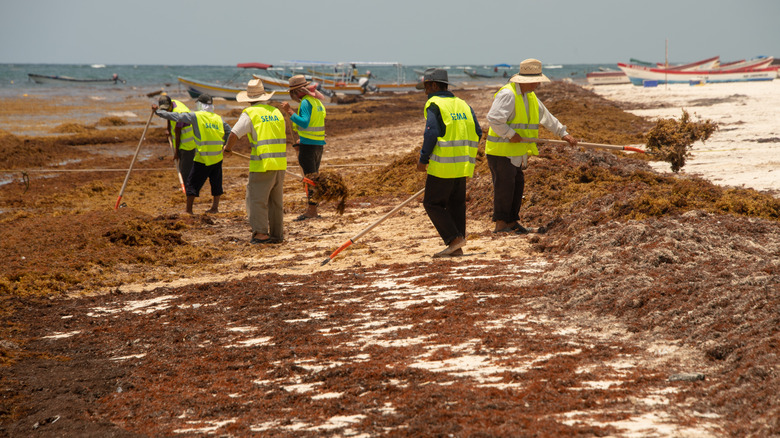
Unfortunately, the overgrowth of the GASB becomes a danger to coastal economies, the environment, and human health when it aggregates near shorelines and washes up onto beaches. When Sargassum overwhelms an area (referred to as a Sargassum inundation event), it can block the sunlight that underwater plants need to survive, which has a domino effect that impacts aquatic habitats. Additionally, decomposing Sargassum releases gases, such as ammonia and hydrogen sulfide, that cause marine mortalities.
Along with the air smelling bad when it's inhaled, those gases can have cardiovascular, neurological, and respiratory effects. The seaweed can also cause skin irritation and make seafood unsafe to eat by leaching heavy metals like arsenic, pesticides, and other pollutants. When it comes to the economic impact, excessive Sargassum can bring commercial fishing, recreational activities, and tourism to a halt. The cleanup is costly, too, with Miami-Dade County in Florida estimating that it will spend $35 million to gather, transport, and dump the algal bloom every year.