

Does Creatine Actually Affect Your Brain? Scientists Say That It's Pretty Complicated
Creatine supplements are exceedingly popular and growing in usage, particularly among women and teens. A recent study found that creatine use among teen girls more than doubled from 2023 to 2024. In attempts to expand the market to more than the stereotypical gym bro, many have highlighted potential benefits of creatine that go beyond muscle-building, which had originally sparked its popularity. Claims are being made that it improves cognition and reduces depression, but does the actual science back this up? The short answer is that it's complicated. While some studies have shown moderate benefits, others have shown no effect. Thus, the research suggesting creatine supplementation's positive effect on the brain is shaky at best, and much more work is needed to fully understand the benefits and risks.
A brief review published recently in Brain Medicine has garnered some attention for its assessment of creatine supplements and depression. Researchers examined the findings of six different studies. Two of the included studies exclusively consisted of women and revealed that creatine monohydrate (the most common form of creatine supplement) reduced depressive symptoms when taken in conjunction with a prescription antidepressant. Another study found that creatine supplementation decreased depressive symptoms compared to placebos when taken while undergoing cognitive behavioral therapy. The remaining three studies observed no significant effect and were conducted among medication-resistant patients, adolescents, and patients with bipolar disorder, respectively. Of note, while creatine monohydrate did not reduce depressive symptoms in patients with bipolar disorder, two of the patients did develop some level of mania.
The science of creatine
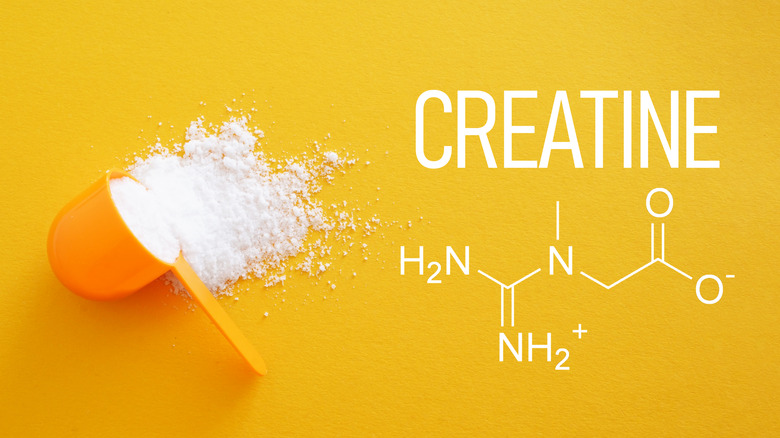
Creatine is a naturally occurring compound that can be derived from three amino acids, which are essentially protein building blocks. Generally, our bodies produce roughly 1 gram (0.04 ounces) of creatine daily. Additionally, we typically consume between 1–2 grams (0.04–0.07 ounces) each day through our diets, as creatine is found in seafood and red meat. The vast majority of creatine, roughly 95%, is stored in skeletal muscle, while 5% is distributed among other tissues, including the brain.
The primary purpose of creatine supplementation is to help with regenerating energy during exercise and recovery. Our cells generally rely on energy from adenosine triphosphate (ATP). While ATP production mostly takes place via the mitochondria, creatine can aid in the generation of ATP. When it is phosphorylated, creatine acts as a delivery system, bringing the necessary phosphate group to convert adenosine diphosphate into ATP. Because creatine can regenerate ATP very quickly, it is typically utilized during bursts of high-intensity exercise.
The use of creatine supplements is correlated with improved exercise performance. Additionally, some studies have linked creatine supplementation to increased muscle growth and better recovery after exercise. It makes sense that creatine would help with these activities, given how it is used in the body. However, the degree to which added creatine affects the brain is a bit more difficult to determine. As mentioned previously, 95% of creatine in the body is stored in skeletal muscle. So, how much of it reaches the brain?
Creatine and the brain

Although it only takes up about 2% of the total body weight, the brain accounts for 20% of the body's energy usage. Most of this energy is metabolized from glucose, and creatine seems to facilitate a very small portion of the brain's ATP production. While creatine can cross the blood-brain barrier, it is mostly taken up by the skeletal muscles. Therefore, to generate any neurological effects, it is likely that higher doses would be required compared to those that garner results for exercise improvement. However, what that dosage might be remains unknown.
Generally, creatine supplements are safe. While creatine supplementation occasionally begins with a loading period of roughly 20 grams (0.7 ounces) for a brief period, regular consumption to maintain creatine levels is recommended at 3–5 grams (0.11–0.18 ounces) daily. There is some evidence linking higher doses to gastrointestinal distress. However, there is limited research on the effects of long-term usage in some populations, such as pregnant individuals and adolescents.
Generally, physicians do not recommend creatine if you are younger than 18 years old. This is concerning, given the popularity of creatine use in teens, with nearly 17% of boys reporting use of the supplement. Additionally, people with a personal and/or familial history of kidney problems should speak with their physician before using creatine to evaluate health risks. Overall, much more research is required to understand whether there are neurological benefits to creatine supplementation and to assess safe and effective doses.