

How Inhaling Wildfire Smoke Affects Your Health
We may receive a commission on purchases made from links.
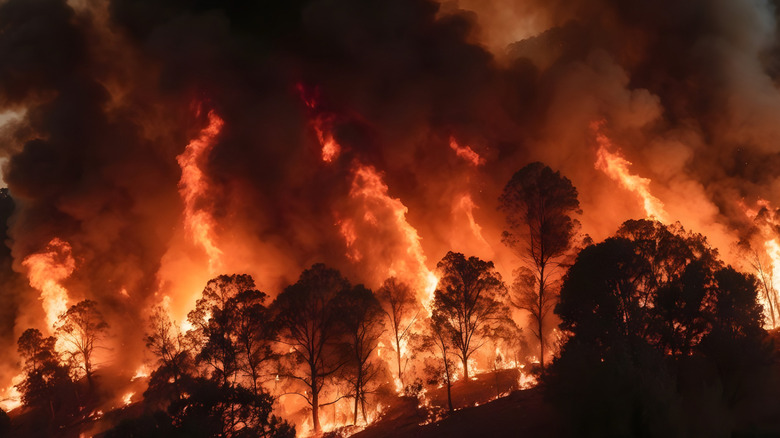
Wildfires are an ongoing concern because they can create significant environmental disturbances across biomes, such as erosion and air and water pollution. While there's no doubt that these effects have a domino effect on wildlife, you can't ignore the potential dangers to your own health as well. Breathing in wildfire smoke, for instance, can make you sick and is currently worrisome as the smoke from Canadian wildfires travel across the Midwest and Northeast.
It's helpful to understand first that wildfire smoke contains a variety of organic and particulate matter, gases like nitrogen oxides and carbon monoxide, and volatile organic compounds (VOCs). Forest fires can spread fast when the weather is dry, hot, and windy, and prevailing winds can carry the smoke across great distances — sometimes thousands of miles. Even when the wildfire is miles away, these pollutants are still present in the smoke and can have a negative impact on your health when you breathe it in.
Right away, wildfire smoke can make your eyes itchy and sting, and when you inhale it, the mixture of chemicals, gases, and matter can make you cough and wheeze. It may also trigger asthma attacks, breathing trouble, headaches, itchy throat, racy heartbeat, runny nose, sinus irritation, and tiredness. Some people even experience chest pain when the smoke enters the lungs. Because of these health effects, your risk of getting sick is higher than anyone else if you have a chronic condition, such as asthma, chronic kidney disease, chronic obstructive pulmonary disease (COPD), diabetes, and heart disease.
How you can protect yourself against inhaling wildfire smoke
The immediate effects of inhaling wildfire smoke generally dissipate in a day or two for most people. But scientists have conducted experimental studies that suggest even short-term wildfire smoke exposure can have long-term health effects because fine particulate matter can penetrate the lungs and get into the bloodstream, causing inflammatory responses and oxidative stress in the body. They still don't have concrete evidence, but it's clear that repeated exposure is more likely to cause lung issues, including persistent coughing and shortness of breath. Also, researchers have found that wildfire smoke inhalation has been involved in premature respiratory deaths, and they've seen a connection with influenza and potentially cardiovascular illness.
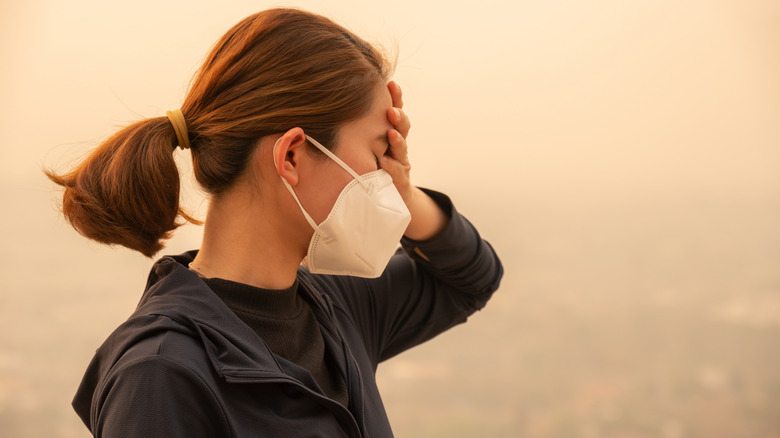
Because of that, it's important to protect yourself, especially if you have one of the chronic illnesses above. The best precautions you can take are to stay indoors as much as possible with the doors and windows closed. Since pollutants can develop and get trapped inside with you, though, a portable air purifier with a HEPA filter (which is an unexpected home appliance that could help lower blood pressure) is handy for maintaining good indoor air quality. In the event that you do need to leave the house, wearing a mask is essential. Only N95 or N100 masks are efficient at filtering fine particulate matter, but KN95 masks may be more widely available and come in children's sizes. Additionally, it's important to keep car windows closed as you drive between destinations.