

The Unusual Deep-Sea Species That Could Change Everything
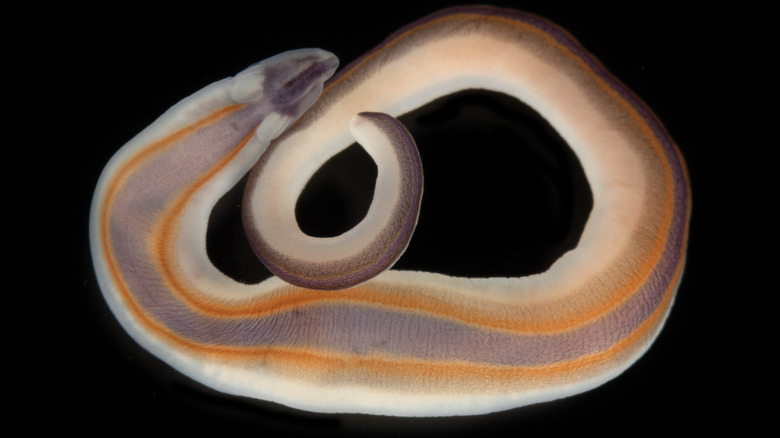
If you want to encounter lifeforms truly worthy of a science fiction film, you don't need to look to the stars. The ocean is home to lifeforms more mind-boggling than anything on the silver screen, and what we've discovered so far barely scratches the surface. That's the premise of the Ocean Census, a project launched in 2023 by the conservationist organizations The Nippon Foundation and Nekton, which aims to accelerate the discovery and classification of marine life. In just last year alone, the Ocean Census discovered 1,121 previously-unknown species, and one of them is particularly notable. It's a type of ribbon worm, currently known only as Drepanophoridae sp.1. At no more than three centimeters in length (a bit over an inch), it doesn't look particularly notable, but there's something within these worms' bodies that could hold keys to humanity's most troubling brain disorders.
Drepanophoridae sp.1 was discovered in the waters near Timor-Leste by ribbon worm expert Svetlana Maslakova. Despite its small size, it catches the eye with its intense orange stripes. Bright colors in nature are often an indicator of venomous species, and this is one such example because ribbon worms like Drepanophoridae sp.1 are covered in a toxic mucus to protect against predators. Among the toxins present in this mixture is a substance called anabaseine, which it might surprise you to learn is the key compound in a group of pharmaceuticals called nicotinic receptor antagonists, which include GTS-21, one of the few drugs to show actual promise for Alzheimer's and schizophrenia patients.
How a ribbon worm toxin could treat brain disorders
Believe it or not, biotoxins actually make great building blocks for medicine (provided they are used in very small amounts, of course). For example, pit viper toxins are routinely used to make drugs that treat high blood pressure, and Botox is actually named in honor of the botulinum toxin from which it derives. So, turning the anabaseine found in ribbon worms into productive medications has precedence.
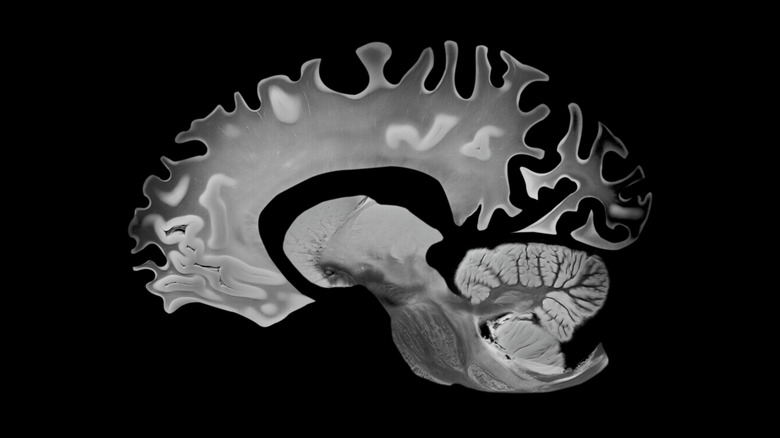
Specifically, anabaseine is used in nicotinic receptor antagonists, a class of drugs that block the nicotinic receptors in the nervous system. As you might have gathered from the name, these receptors are linked to nicotine substance addiction, which is one reason they might need to be blocked, but some trials have shown promising links to Alzheimer's and schizophrenia treatments as well. These devastating brain conditions are associated with a loss of nicotinic receptors in the brain, which are highly involved in sensory gating, the brain's process of sorting relevant from irrelevant stimuli. The use of nicotinic receptor antagonists has been indicated to counter this degradation in trials on lab mice.
Anabaseine is specifically used in an experimental nicotinic receptor antagonist called GTS-21, or DMXBA, which shows another benefit for Alzheimer's patients. Alzheimer's is associated with the buildup of a peptide in the brain called amyloid-beta. Trials of GTS-21 show that it can break down amyloid-beta, clearing away this dangerous buildup. All of this thanks to a worm's biotoxin, and that's not even the most interesting thing about ribbon worms.
The weird and wild world of ribbon worms
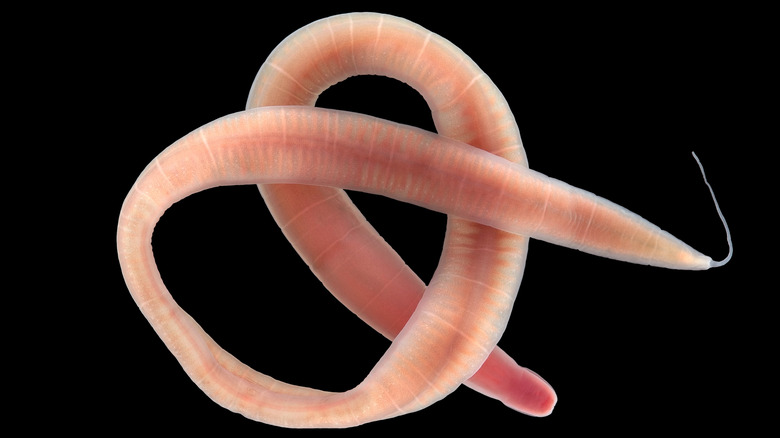
Ribbon worms belong to the phylum Nemertea, which contains over 1,300 species and counting. They are mostly found in the saltwater ecosystems of the ocean, but there are a handful of freshwater species, and even some that live on land. Nemerteans are found all across the world, and they are remarkably diverse in their habitats. They can thrive in conditions ranging from the warm tropical waters where Drepanophoridae sp.1 was found to harsh polar climates like the waters around Antarctica, where another ribbon worm called Parborlasia corrugatus lives.
The vast majority of nemerteans are carnivorous, and the toxins found in ribbon worms are a critical part of their predatory strategy, paralyzing small invertebrates for the worms to devour. They have a specially designed proboscis to deliver a dose of toxin to their prey, and to devour plankton and eggs. However, not every type of ribbon worm possesses the toxins of Drepanophoridae sp.1 that the medical community prizes so much, which is why a discovery like the one uncovered by the Ocean Census is so valuable.