

Scientists Found Things In The Poop Of WWI Soldiers That Changed Medicine Forever
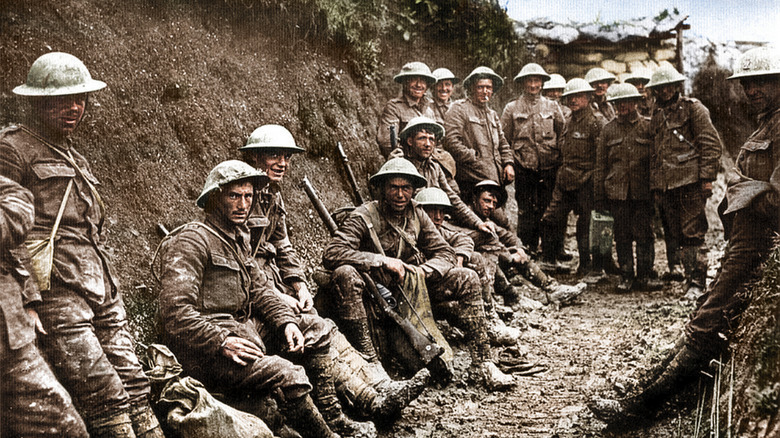
During World War I, gastrointestinal diseases like dysentery, paratyphoid fever, typhoid fever, and other infections could sometimes prove more debilitating than combat wounds. Because water, food, and bathrooms were largely shared among the lower ranks, a single malicious bacteria could spread like wildfire in a short amount of time. At the time, the nature of gut bacteria was poorly understood, but German physician Alfred Nissle would change all that in 1917. Inside the feces of a German soldier, Nissle discovered the first non-pathogenic strain of E. Coli bacteria, one which not only resisted the growth of pathogenic bacteria but actually stopped them from spreading.
By 1917, the Central and Allied Powers were stuck in a fierce war of attrition in the Balkans. German soldiers weren't used to the extreme Mediterranean conditions, and more combatants died of malaria than actual combat. To add to the chaos, most of the German soldiers returning from the Balkan front were reeling from Shigella dysentery, a highly contagious stomach infection caused by the Shigella dysenteriae bacterium. Curiously, in Freiburg hospital, only one soldier was spared the diarrhea, vomiting, and chills. Stranger yet, this unusually gut-healthy individual told doctors that he hadn't contracted a single GI disease once during the campaign.
Dr. Nissle realized that the healthy soldier must have had some kind of immunity to pathogens, and he guessed correctly that a certain bacteria was the reason. Well-versed in examining poop for health clues, Nissle took a stool sample and began experimenting. He discovered something remarkable: A bacterium that was found to have high antagonistic activity against pathogens, later named "Escherichia coli strain Nissle 1917" (EcN). This special strain stops pathogenic bacteria by outcompeting them for space and resources. In other words, Dr. Nissle had found a way to fight bacteria with bacteria.
How a single strain of E. Coli can fight off some of the worst stomach bugs
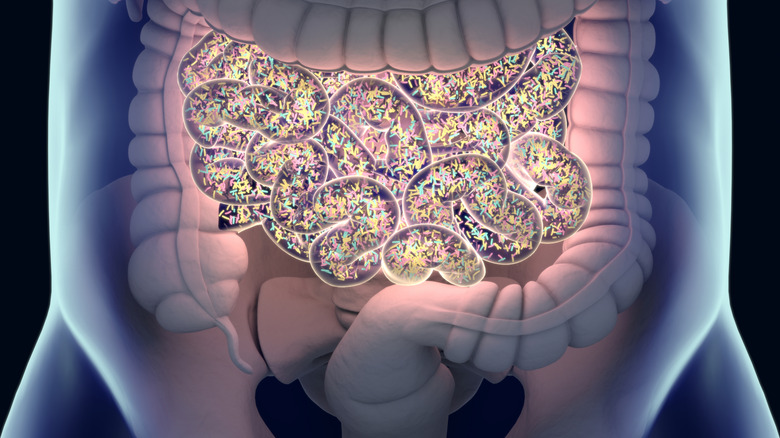
EcN has been called a "probiotic microbial cell factory" due to its speed in colonizing the human gut. When taken as a supplement, it spreads from the stomach to the intestines and forms a layer of biofilm on the intestinal walls. Pathogenic bacteria propagate in the same way, and they can even form biofilm "shields" to protect them from other bacteria. This is why EcN probiotics are typically used for prevention rather than treatment of an ongoing infection, since they're most effective when they've had time to build a protective biofilm layer in advance of a potential infection. Nissle's anonymous soldier likely carried the probiotic EcN bacteria in his gut before the war even started.
Pathogenic bacteria are dangerous because they colonize quickly, often using chemical warfare to eliminate the local competition and damage the gastrointestinal walls. This is an evolutionary tactic. The infected body responds by attempting to flush out the bug, either via vomiting, diarrhea, or both. Expelled from the body, the pathogen can spread to new hosts, especially among the shared latrines and mess halls of WWI soldiers where a single contaminated bowl of soup can spell disaster for the regiment.
On the other hand, EcN isn't considered pathogenic because it colonizes the gut without harming the established gut flora. Instead, it forms strong colonies over time in balance with the other beneficial gut bacteria. When a pathogen is introduced, EcN simply denies the foreign microbes of nutrients and space, while also releasing certain antimicrobial proteins that only attack foreign pathogens and not the gut itself.
You can still buy probiotic supplements made from the original WWI bacteria

Alfred Nissle certainly didn't invent the E. coli bacteria that he's named after. That's natural selection's job. He was, however, the first person to successfully manufacture probiotic gel-capsules with the stuff. In fact, "E. coli strain Nissle 1917" (EcN) is still manufactured and sold under its original brand name "Mutaflor" in many parts of the world. Today, the methods used to culture probiotic microbes have advanced immensely, and there's little need to go rifling through soldiers' stool samples. In fact, Nissle's original 1917 culture — extracted from poop — is still the original progenitor of every EcN bacteria found in Mutaflor supplements.
The FDA has never approved a live culture of E. coli bacteria, no matter the strain, for sale in the United States. In 2011, the FDA classified Mutaflor as a "New Dietary Ingredient," making it illegal for distributors to ship and sell the supplement in the U.S. It's not, however, illegal to purchase or own the supplement, driving many Americans to obtain it through private online sellers from countries where it is legal, such as China and Germany.
While EcN supplements are not approved by the FDA, the strain's probiotic benefits have been extensively documented in the scientific literature over the past century since its discovery. Mutaflor is often recommended by doctors for the treatment of constipation, a condition that can become a serious medical emergency if you don't poop for a week. It's also used to relieve the symptoms of irritable bowel syndrome, which illuminates the the gut-brain connection and explains why we need to poop when we're nervous. In countries where it is available OTC, such as Australia, many people take it as a regular supplement to strengthen their gut flora. After all, the EcN bacteria used in Mutaflor emerged from a 1917 overcrowded hospital where dysentery ran rampant, so it's safe to say that it can help steel your stomach against nasty bugs.