

Why Death By A Scorpion Sting Is One Of The Worst Ways To Die
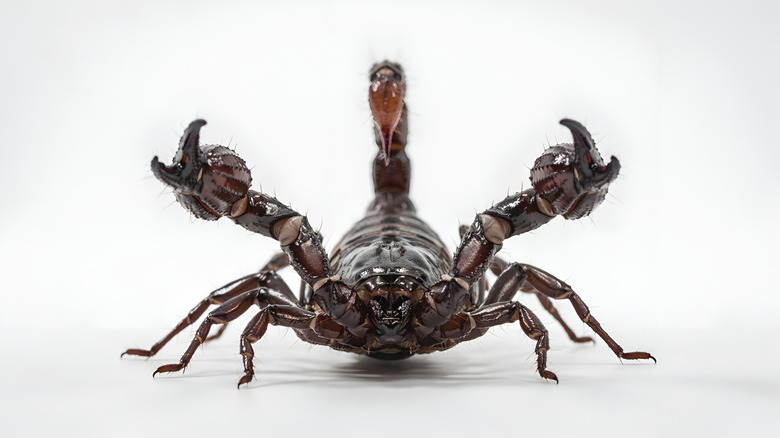
Scorpions get a bad rap. Thanks to Hollywood, the infamous arachnids have crawled their way into our folktales, televisions, and nightmares, often depicted killing people in mere minutes with a single sting. In reality, most scorpion species aren't fatal. Out of the world's roughly 2,500 scorpion species, only around 25 of them produce venom strong enough to kill a human. Still, a sting from the deathstalker, Indian red scorpion, Brazilian yellow scorpion, or the deadly Arizona bark scorpion could prove fatal. Over 3,000 unlucky people die every year from scorpion stings, and the experience is one of the most terrifying and painful ways to go.
No matter what the species, a scorpion sting hurts. To envenomate their victims, scorpions strike with their powerful, needle-tipped tails, which penetrate the skin and inject venom directly into the body in less than a second. People have described the sensation as being stabbed with a hot knife or getting shocked by electricity. But if you're stung by a highly venomous species, the initial pain of the sting itself is the least of your problems.
Scorpion venom attacks the nervous system by flooding it with a cocktail of neurotoxins. Essentially, these chemicals prevent affected neurons from shutting off, leaving them firing in a runaway current of electrochemical signaling. The consequences of such an attack can be terrifying and irreversible. Victims become twitchy and restless, seemingly unable to control their movement. Their eyes may rove around the room, they begin drooling or foaming at the mouth, and many people vomit violently. Depending on the sting site, it may take several hours for the venom to reach the heart and lungs. Once it does, however, death by cardiac shock or respiratory failure is possible without medical intervention.
How the body fights off venom naturally
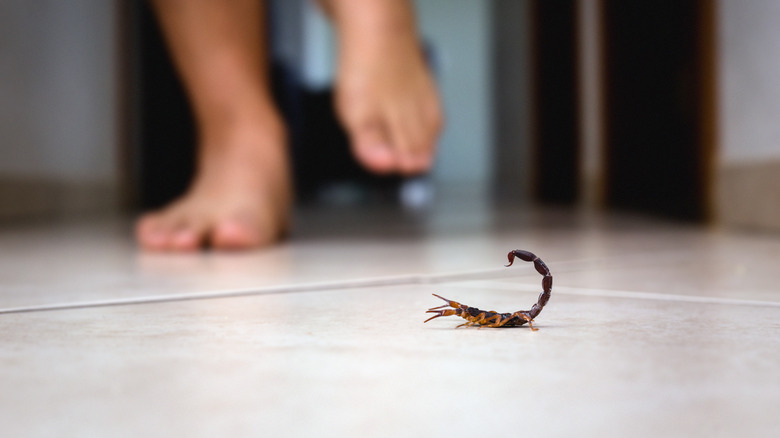
Our species hasn't survived this long without picking up a few sting-survival tricks along the way. Whether the venom comes from a scorpion, a snake, a spider, or even the shockingly venomous cone snail, the human immune system is adapted to recognize and neutralize toxic threats before they can kill. Its success depends on the health of the individual and the potency of the envenomation, which explains why small children, the elderly, and the immunocompromised are the largest risk groups for experiencing life-threatening effects.
After a scorpion sting, the immune system kicks in immediately. First, tissues at the sting site inflame and blood vessels dilate, allowing white blood cells and immune proteins to flood the area and break down foreign compounds. This swelling response also helps slow the spread of the venom to the rest of the body. People who have been stung in the past by the same species may even carry specialized antibodies, which essentially act as a homemade antivenom. But for first-timers, it can take the lymphatic system several hours or even days to filter the venom out of the affected tissues and draw it into the bloodstream. From there, the liver breaks down the toxins into neutralized compounds, which the kidneys then filter out of the blood and release through urine.
Clearly, the body needs time and patience to break down neurotoxins. Sometimes, it takes too long. The venom of some animals, such as the blue-ringed octopus, is so potent that it can kill you in mere minutes. Fortunately, scorpion stings are mild in comparison, and hospitals often carry antivenom for local species. Still, as with all wild animals, scorpions are best admired from a distance.