

The Strange Phenomenon That Can Turn Humans Into Soap After Death
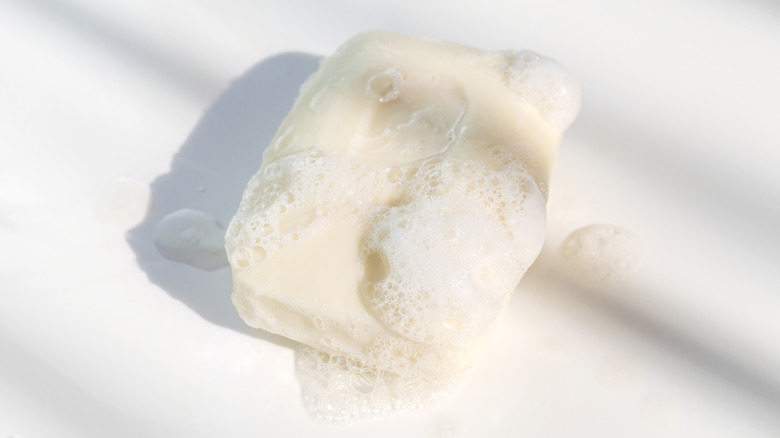
Something strange exists in the Smithsonian National Museum of Natural History: a 19th-century American mummy. This mummified corpse is not wrapped in the gauze typical of the mummies we imagine from horror films. Instead, the body is encased in a thick waxy substance derived from its own fats. The "Soapman" is a unique example of the macabre formation of adipocere, which translates from Latin as "fat wax." Under specific circumstances of decomposition, the body's fats can mix with an alkaline substance and become soap. If this sounds terrifying to witness in the safety of a museum, imagine what the first discoverers of such a phenomenon must have felt.
By 1875, the Holy Innocents' Cemetery (Cimetière des Innocents) in Paris had been housing the dead for over 500 years, with many new inhabitants coming to join their deceased neighbors regularly. As the bodies of the dead and living vied for space, the rotten air began to stir fears of miasma. Prior to germ theory, many were under the impression that disease was spread through "bad air," which is why plague doctors once covered their faces and breathed through those long-beaked masks. As many in the area grew ill, the Holy Innocents' Cemetery was officially closed for business. At night, under the light of fiery torches, the bodies were exhumed and transferred into the famous catacombs. Overseeing the operation was scientist Antoine François Fourcroy. Noticing an odd waxy substance over some of the corpses, Fourcroy coined the term adipocere.
Saponification
Adipocere forms through a process known as saponification. This is a hydrolysis reaction during which the triglycerides of broken-down adipose (fat) tissue react with a strong base (alkaline substance) and form a soap-like material. The soaps we use on our bodies are made through the same chemical process, obtaining triglycerides from animal fat or plant-based oils and mixing them with an alkaline substance, such as lye.
As mentioned above, this process is not very common in human decomposition. In cases in which adipocere forms, generally the corpse is not exposed to oxygen and is surrounded by warm, alkaline soil with plenty of moisture. The bodies in the Holy Innocents' Cemetery had the ideal conditions. Corpses were packed tightly together, which created little room for oxygen to seep through, and the damp soil seemed to provide a great environment for anaerobic bacteria to thrive and induce the saponification process.
The Soapman residing in the Smithsonian is thought to have been buried around 1800 in Philadelphia. His casket was not exactly vacuum-sealed, and water slipped in through the cracks along with the surrounding earth composed of alkaline soil. Such a process can be useful in forensics research, as the wax seal formed around bodies slows decomposition, providing analysts more time to assess identifying characteristics, indications of injuries, or possible causes of death. However, there are also complications, as the slowed process of decay makes it difficult for examiners to ascertain the exact time of death.
The soap maker of Correggio
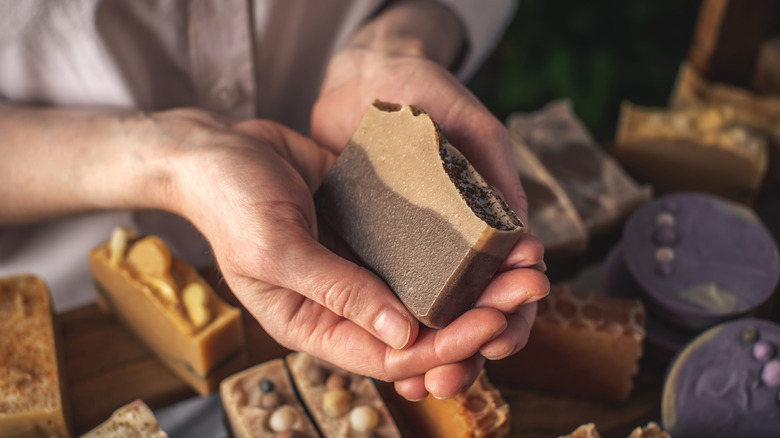
Reportedly, the process of saponification has also been used to dispose of remains in an effort to obscure crimes. Leonarda Cianciulli owned a small shop in Correggio, Italy during the 1930s. While plagued with the tragic loss of 13 children over the course of 17 pregnancies, Cianciulli indulged in many superstitions, believing that her mother had cursed her at a young age. As World War II raged, her oldest son delivered the frightening proclamation that he would join the Italian forces. Desperate for a way to protect her son, Cianciulli retreated into her superstitions and emerged with the conviction that there was one way for her child to survive, and that was through human sacrifice.
Between 1939 and 1940, Cianciulli murdered three women. To dispose of the evidence of her wrongdoing, she dismembered the bodies and melted them down. For her third victim, she described dissolving their flesh in a pot with caustic soda (sodium hydroxide), which is an extremely corrosive base. From the mixture, she made soap that she distributed among friends and neighbors. In a strange twist of fate, her son was suspected of the murders, and she soon confessed in an effort to spare him. However, there is some debate as to how effectively Cianciulli was able to convert the tissue of her victims into soap. Critics question whether her claims were accurate at all in terms of both method and motivation. For now, let's hope no one is repeating her experiments.