

Everyone Had It In Their Home In The '70s. Science Explains Why It Made Rooms Feel Warmer
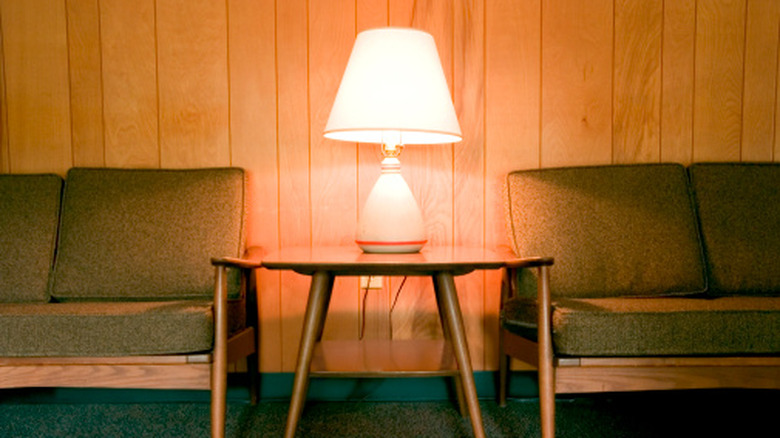
Every decade has its own, telltale aesthetic that includes architectural choices, color schemes, and textures and materials. When people talk about the '70s and '80s, you might start thinking about avocado green appliances, shag carpets, and wood paneling everywhere. By the late '80s these design choices started seeming dated, leading people to paint over or pull down wood paneling. Nostalgic trends are starting to bring wood back into home decor, perhaps in smaller amounts, in part because of the warmer feeling this product made from trees brings.
The wood paneling trend of the '70s, together with the dominant color schemes that included earth tones and warmer colors like yellow and orange, gave the decade a warmer aesthetic. This contrasts with the attention grabbing colors of the '80s and '90s. And while having a warm and inviting home was certainly a driving factor, one big reason wood paneling was popular during this era was it was relatively inexpensive. Unlike solid wooden walls of the past, wood paneling was made of glued together wood fibers or sheets of wood with a thin veneer of a hardwood like oak pressed on top. This meant that the average homeowner could buy and install wood paneling on their own.
Bringing nature inside

As wood paneling became more popular, it started oversaturating the market. After a while, people's tastes changed and wood paneling started to disappear from homes. Today, wooden wall treatments and decor are making a comeback, though not to the extent seen in the completely paneled walls of the '70s. Some of this can be attributed to nostalgia, but there is a growing awareness that including natural materials like wood indoors can improve human health and well-being. This can be explained by something known as biophilia, the human desire to connect with nature.
Research has found that being in natural settings, or around natural materials like wood, has a calming effect on people. Biophilia seems to go beyond a simple preference for natural settings, though. One of the advantages of natural environments is that people in such settings have lower blood pressure and heart rates and release smaller amounts of the stress hormone cortisol. Researchers suspect that the human brain finds the natural environment more familiar, and have found that incorporating wood into the design of homes, offices, and even hospitals can reduce stress and improve health, concentration, and productivity.
Warmer in multiple ways
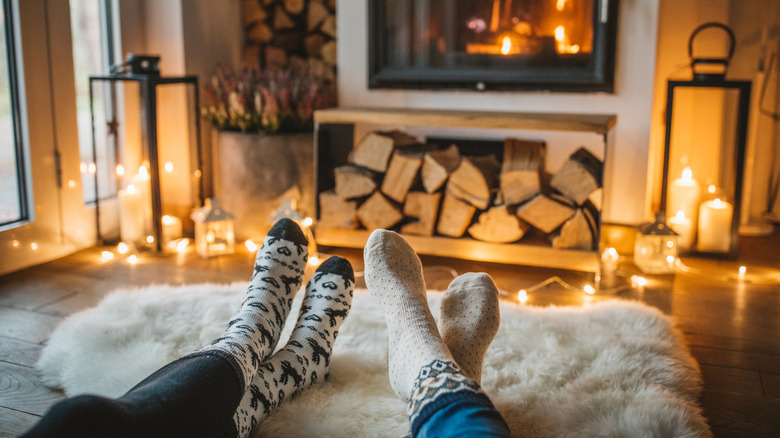
Going beyond the clinical effects of reduced cortisol and lower blood pressure, people report feeling greater senses of warmth and comfort when around wood. Part of this could be the biophilic effect that wood has, while some of it could come down to wood's physical properties. People living in colder climates have long used wood wall treatments to insulate their homes. Wood itself has a relatively low thermal conductivity, meaning it feels warmer to the touch than materials like brick or concrete.
Wood's color and texture likely also has a lot to do with the feelings in evokes. Smooth or polished wood surfaces give a sense of order while rougher textures can be soothing due to their visual complexity and connection to nature. Light-colored woods like pine give a space a more open feeling and can make spaces seem larger. In contrast, darker woods like oak and walnut give a room a warmer, cozier, and more relaxing feel, while the darkest woods like mahogany can promote focus and contemplation.
While a return to the world of ubiquitous, mass-produced wood grain everything of the 1970s is unlikely (and maybe undesired), there are good reasons to include wood in our decor. Wood can make a space feel warmer and more inviting and even improve the health of people living in it.