

You Should Think Twice Before Peeling Stickers Off Your Fruit
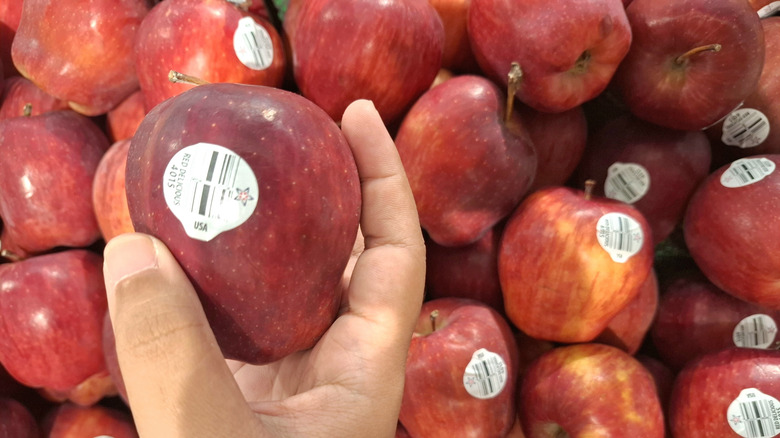
Unless you're buying locally grown fruits directly from a farm or a farmer's market, your produce will inevitably come with unwanted stickers. Also known as price lookup codes (PLUs), these annoying stickers do serve practical purposes, such as inventory tracking. These also help cashiers correctly ring up your purchase (or perhaps yourself in the self-checkout lane), so you pay for the right items. The journeys of these PLU stickers don't stop at checkout, though. Since these sticky items are not edible, you do need to peel them off correctly before eating or cooking your fruit. You should avoid peeling stickers off your fruit until you're ready to use them though, as doing so may lead to premature rotting of these fresh produce items.
PLU stickers on fruits seem relatively innocuous, which is why many people peel them off at home before storing these items away in their refrigerators or fruit baskets. But once you peel off the stickers, chances are you will also remove parts of the fruit's skin. The rationale is that damaging the outside of the fruit when removing its sticker can cause it to rot. This is all attributed to oxygen exposure, which makes the fruit change color due to a reaction known as enzymatic browning. Fruits with softer skins, such as different apple varieties, nectarines, and plums are the most vulnerable to such damages. Another reason you should hold on to those fruit stickers before consumption has to do with food recalls. If a recall does happen, the only way to know whether it includes any fruit you recently bought is by their identifying stickers. The best thing you can do with store-bought fruit is to leave all stickers on them before you're ready to eat or cook with them.
Other concerns about fruit stickers, and what to do

PLU stickers have been around since the 1990s. Since their introduction on the market, there haven't been any widespread reports of any health dangers. However, as consumers are being more mindful about microplastics in foods more generally, there have been some concerns about whether plastic-containing produce stickers can be dangerous when eating the fruits they're attached to — especially those that you do not peel before eating. The good news is that these stickers and the adhesives used to attach them to fruits are all food-grade. The bad news? A "food-grade" designation is not the same as edible, and your body cannot digest fruit stickers. So while you shouldn't eat the stickers on purpose, accidentally ingesting small amounts of the sticker or adhesive won't cause harm on an occasional basis, says the NC Cooperative Extension. The stickers can, however, pose a choking risk for small children, which is yet another good reason to remove them before washing and eating your fruit (though pesticides might still be left on the skin).
Another issue involves waste. While stickers on fruit are small, and a few won't take up much room in your garbage can, there is a real concern about whether these stickers might add up in landfills (and the overall effects of landfills on the environment). Again, the biggest concerns are those stickers that contain plastic. One possible solution rests in biodegradable produce stickers. As these inventions start becoming more widespread within the produce market, you might feel better knowing that such fruit stickers won't contribute further to landfill issues — just be sure you refrain from peeling them until right before consumption, as always!