

Why Death By A Six-Eyed Sand Spider Might Be One Of The Worst Ways To Die
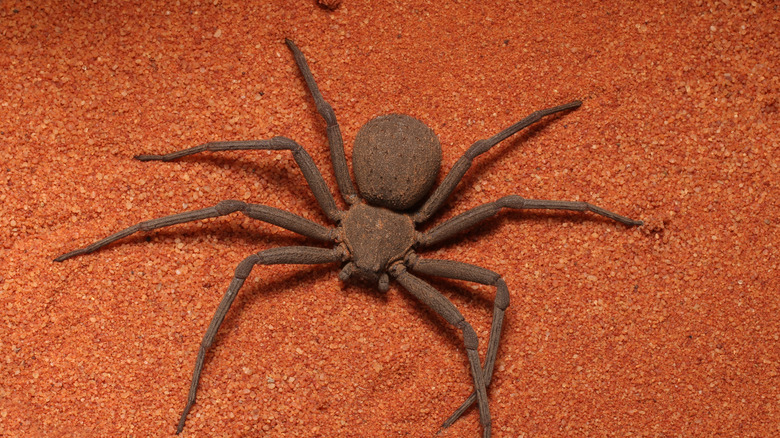
The six-eyed sand spider of Southern Africa and South America is one of the deadliest in the world, and yet there are no confirmed deaths from its bite. Fortunately for us humans, they're highly timid and reclusive creatures. In fact, the six-eyed sand spider is closely related to the North American brown recluse, another deadly spider that prefers to flee than to fight (hence earning the name "recluse"). Nonetheless, although its kill count is zero, the six-eyed sand spider still possesses one of the most toxic venoms in the arachnid class.
The venom of the six-eyed sand spider is unique. Most notorious venoms in the animal kingdom are composed of neurotoxins, which attack the nervous system. Six-eyed sand spider venom, however, is primarily composed of cytotoxins, which attack all cells. For comparison, death by the neurotoxic venom of the blue-ringed octopus or the cigarette cone snail usually occurs when the victim's nervous system fails to keep the heart pumping. Death by the six-eyed sand spider, however, would most likely occur due to infection around the bite site as the affected cells literally rot away to necrosis.
Although no one on record has ever died from a six-eyed sand spider bite, survivors still give us glimpses into the first stages of the horrifying hypothetical. Out of just two unconfirmed bite reports, one victim reportedly lost an entire arm to the extensive necrosis around the bite site. This is due to the necrotic nature of the powerful cytotoxins in the six-eyed sand spider's venom: As soon as it enters animal tissues, it slowly eats through them like acid. Left behind in the venom's wake, the dead tissues are susceptible to infection. And even if you survive, the necrotized tissues never grow back, leaving a hole or a stump where the spider bit you.
Why six-eyed sand spider venom is so darn deadly
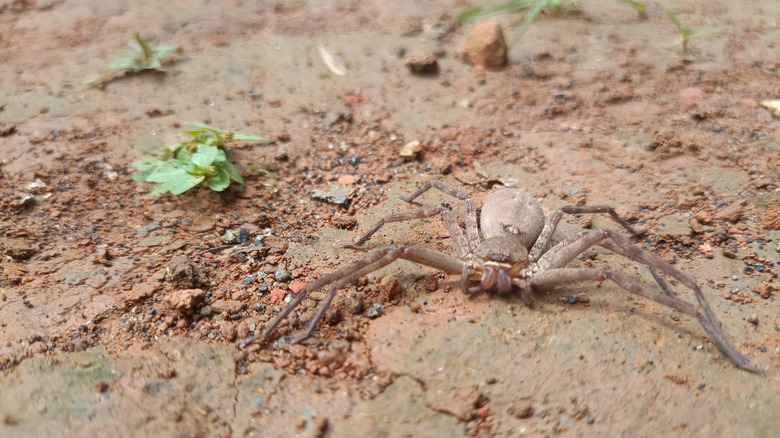
Although all spider species have their own unique habits and habitats, many of the most venomous of the bunch share one thing in common: their hunting strategies. Many of the world's most venomous spiders, such as the deadly banana spider and the world's fastest-killing spider, the funnel web spider, evolved their powerful venom to take down large and fast prey quickly. To avoid getting hurt in a prolonged death struggle, these spiders evolved to produce a venom packed with fast-acting neurotoxins and other chemicals which paralyze or stun their victims within seconds.
The six-eyed sand spider's primary diet is composed of small invertebrates, insects, and other arachnids, yet it uses a fundamentally different biochemical approach from neurotoxic venoms for taking them down quickly. To neutralize such agile prey as mice and lizards, the six-eyed sand spider's venom contains an abundance of a protein called phospholipase D, which, as a powerful cytotoxin, literally dissolves cellular tissues. In scorpions and insects, for example, this venom can kill within seconds.
In laboratory studies involving rabbits, a single envenomation by spiders within the six-eyed sand spiders' family, Sicariidae, was enough to eat through the leporine subjects' skin, muscle, and fat layers until it reached the internal organs and cardiovascular system. Within 4 to 16 hours, 77% of rabbit test subjects were killed by either organ failure or internal bleeding. For an adult human (with about 10 to 15 times the body mass of a lab rabbit), it's unlikely that such a quantity of venom would be enough to reach the internal organs and kill. In the worst-case scenario, you'd die from infection. In the best-case scenario, you'd probably end up with a large, scarred hole where the six-eyed sand spider bit you — still not recommended.