

The Difference Between Edible Mold And Harmful Mold, Explained By Science
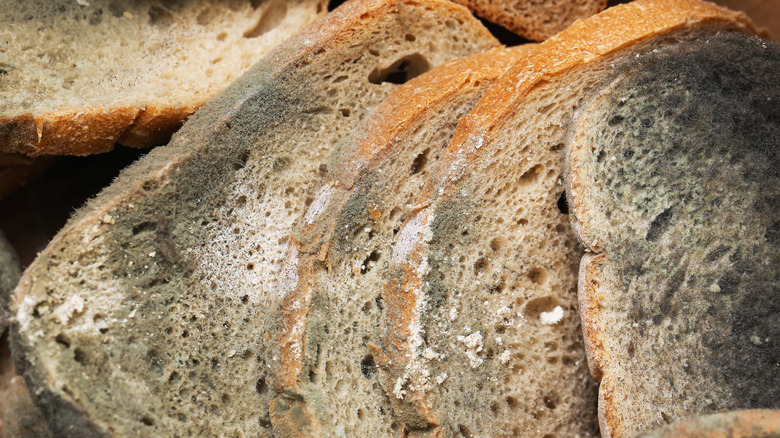
As a natural and essential part of the environment, mold can grow almost anywhere there is moisture and oxygen. It's a type of fungi and plays the important role of decomposing dead organic matter outdoors — sort of like a trash cleanup crew. Despite that benefit, it can be annoying to find mold growing on food. Not all mold is created equal, though, which is why it's vital to understand the difference between edible and harmful molds.
Let's start with what makes food molds harmful. If you see mold growing on bread, you might think that it's safe to just cut it off and eat the non-moldy part. The problem, though, is that the mold may not just be on the surface. The "root" threads of the mold are likely to have penetrated deep into the food if there's heavy growth. Since a few molds contain toxic compounds called mycotoxins in and around those threads, you could still get sick even if you eat a piece of food that doesn't have surface mold.
Generally, the molds that contain mycotoxins affect about one-quarter of the world's crops — mainly nut and grain crops and products but also produce, such as apples, celery, and even grape juice. Most of these mycotoxins are aflatoxins, which commonly affect field corn and peanuts. Unfortunately, they have been linked to various diseases in animals and humans, including cancers, and large doses can damage the liver and be life-threatening. Aside from aflatoxins, other dangerous mycotoxins that can contaminate foods in your kitchen include ochratoxin A and patulin. These have been linked with kidney damage and gastrointestinal disturbances, respectively.
Some foods are safe to eat even if they have mold on them
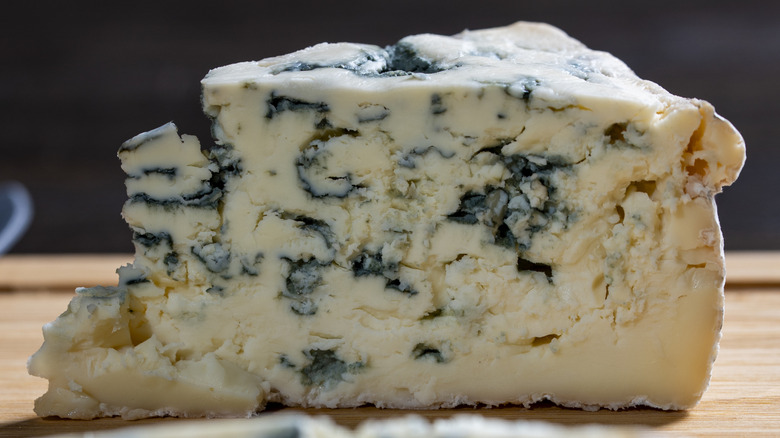
While some molds produce poisonous mycotoxins, not all of them do. Most notably, mold growing on cheese or within cheese is part of the cheese-making process and safe to eat. The spores of Penicillium roqueforti, for instance, are introduced to milk cultures during the production of blue-veined cheeses like blue cheese, Gorgonzola, Roquefort, and Stilton. This type of mold is very effective at breaking down fat and protein, resulting in aromas, flavors, and textures that you either love or hate. Additionally, Geotrichum candidum and Penicillium camemberti are used to make soft cheeses such as Brie and Camembert.
Meanwhile, Penicillium nalgiovense and Penicillium salamii are common species used for dry-curing meats. The mold creates the signature white coating that you see on some salamis. Plus, Aspergillus oryzae — also known as ancient koji mold — is used to ferment soybeans for Japanese alcoholic drinks (like sake and shochu), miso, soy sauce, vinegar, and more. However, these molds are only safe when they're eaten as the manufacturer intended. They aren't safe to eat if they contaminate other foods.
Also of note, mold that grows on cheeses and cured meats because of spoilage isn't safe to eat and could make you sick, especially if your immune system is compromised by an underlying health condition. You might be able to save molding cheeses and firm fruits and vegetables (like bell peppers, cabbage, and carrots) by cutting off the mold and an extra 1 inch from the moldy spot. For dry-cured meats and salami, all it takes is scrubbing off the surface.