

The Mesmerizing Full Moon Phenomenon You Can Experience In August
We may receive a commission on purchases made from links.
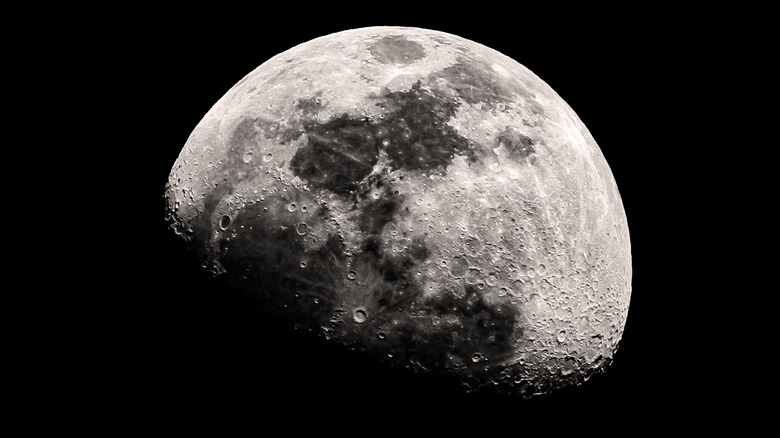
The night sky holds a ton of far-off wonders that can make gazing up mesmerizing, but some of the coolest phenomena you can catch in the night sky involve the moon. For instance, Earth's moon experiences a rare blood red color change during a total lunar eclipse. The most common phenomenon, though, is the full moon, and August's full moon is called the Sturgeon Moon.
For tens of thousands of years, civilizations and cultures around the world have been tracking the lunar cycle. The full moon is the eighth phase in that cycle, when the entire face of the moon is illuminated by the sun and visible by everything on Earth. Since the Sturgeon Moon occurs every 29.5 days, you don't see it on the same date every month. For example, it occurred on the 1st in 2023; the 19th in 2024; and the 9th in 2025. In 2026, it will peak shortly after midnight Eastern Time on the 28th, and in 2027, it will peak on the 17th.
This timing means that (typically) the Sturgeon Moon is the last full moon of the summer season. Because of that, it represents the coming of fall and darker, longer nights around the corner for even better night sky stargazing. What really makes it stand out from all the other full moons, though, is in the name.
The origin of the Sturgeon Moon name and alternatives
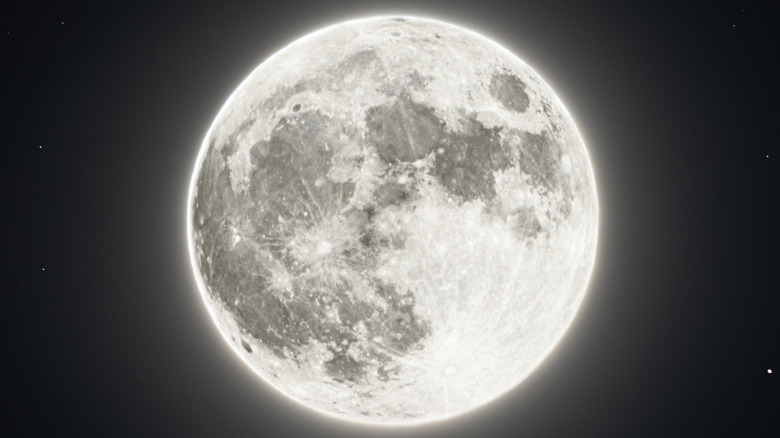
As civilizations and cultures tracked the different moon phases every month, it was common for them to give names to the full moons. These names often referenced agricultural, climate, seasonal, or other events that were significant at the time.
Possibly the earliest mention of the Sturgeon Moon in writing has been found in "Travels through the interior parts of North-America in the years 1766, 1767, and 1768," a book written by North American explorer Jonathan Carver and published in 1778. Attributing the name of each full moon to an unknown indigenous tribe, he wrote, "Auguſt, the Sturgeon Moon; becauſe in this month they catch great numbers of that fiſh." This freshwater fish was a dietary staple for Native Americans living around the Great Lakes and caught in abundance in late summer — although their numbers have dwindled over the centuries.
Sturgeon Moon isn't the only name that August's full moon has earned around the world. The Myaamiaki — Native Americans who originally lived in Eastern Indiana — called it the Green Corn Moon, a reference to miincipi corn. Meanwhile, Inuit communities named it the Swan Flight Moon because young swans would take flight around the same time. In Old English, it was called the Barley, Grain, or Fruit Moon. Additionally, the name Hungry Ghost Moon comes from the ancient Chinese tradition of Taoism, in which it's believed that spirits roam free throughout that period on the lunar calendar.
A Sturgeon Moon can be different colors and sizes
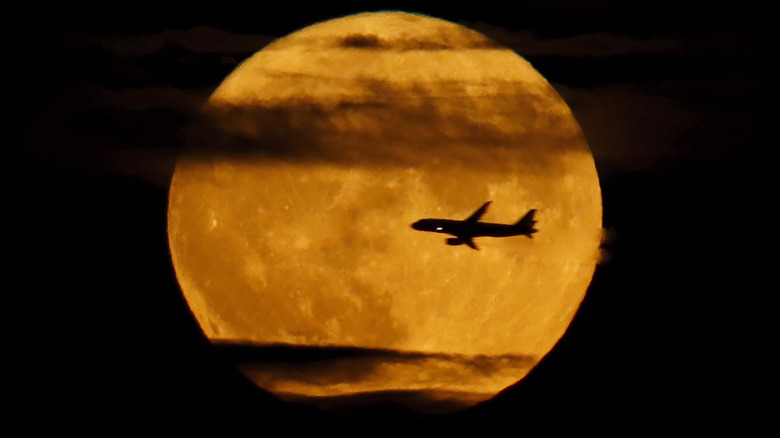
Like the Sturgeon Moon goes by many names, it can also appear as different colors and sizes in the night sky. Either of these traits can make the phenomenon an even more mesmerizing experience, and at least one of these instances can be explained by science.
When the August full moon is at moonrise or moonset, it might look yellow or orange. That's because its light has a long path to travel before human eyes receive it. As it travels, the Earth's atmosphere (which is thickest at the horizon) filters out the short wavelengths of blue, leaving mostly the long wavelengths of red. Once the moon rises overhead, its light has a shorter path to travel, so less blue light is filtered out, making it appear brighter and whiter. However, the moon can still look orange sometimes when its light has to pass through pollution or smoke particles.
In some cases, the Sturgeon Moon can look huge in the sky even though its distance from Earth doesn't change. The "moon illusion" is what makes it look bigger than it actually is, and scientists haven't found a solid scientific explanation yet. Two key aspects could be how the brain perceives the moon's size depending on how far away it is and how far away we think it should be when it's low in the sky. Also, the mind could be playing tricks when other objects — such as buildings and trees — are in the foreground. However, astronauts don't have foreground clues like that, and they still see the moon illusion. The mesmerizing view of the Sturgeon Moon is worth it either way.