

You Should Think Twice Before Popping Your Pimples
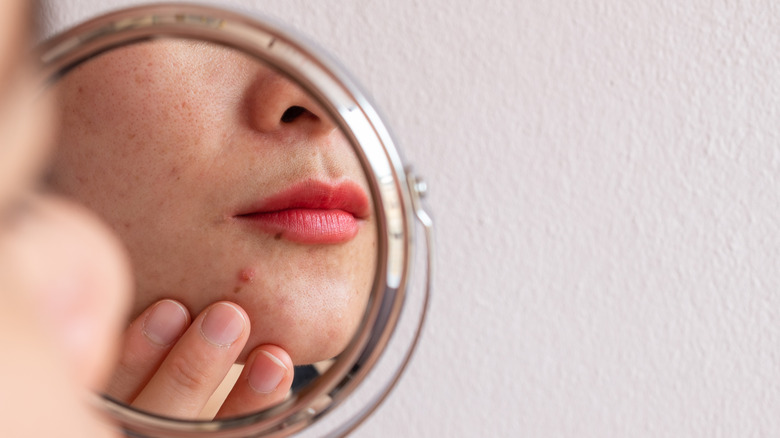
You look in the mirror, and you see it: a newly formed pimple that's emerged on your skin out of nowhere. You've likely heard that it's not a good idea to pop pimples, but it's definitely hard to resist the urge to do so. Before you take that next step though, it's worth pausing before you cause more damage to your skin (which also happens to be the largest organ in your body!). While it's understandable why you might have the urge to pop that pimple, doing so can irritate the surrounding skin, leave scars, and even cause an infection.
If you're successful with popping a pimple, you may get rid of the underlying pus as well as trapped skin cells. The bad news is the area of skin that had the pimple might now be more noticeable due to irritation. Depending on your skin tone, you may still be left with surrounding skin that looks pink, red, purple, or dark brown. Unfortunately, this newfound irritation and inflammation may end up standing out even more than the initial pimple you started with! The situation may be particularly noticeable if your skin is more sensitive. If you have recently popped a pimple and are dealing with some irritation, you do have some time to correct the situation by applying cool compresses or over-the-counter cortisone cream for some soothing relief.
Popping a pimple can also lead to potential infections and scars
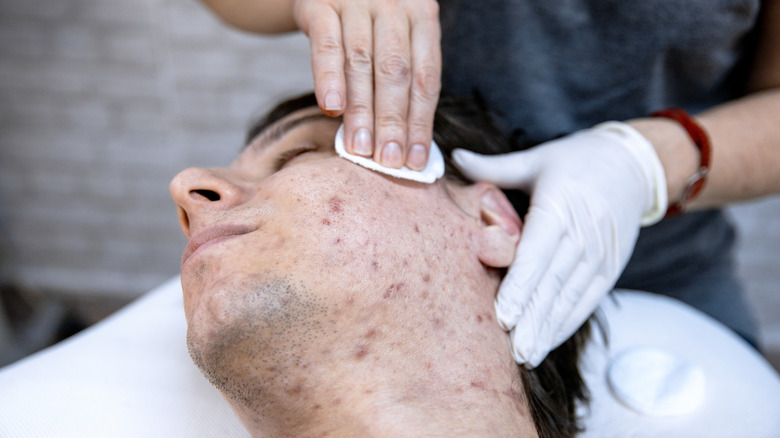
Unfortunately, the aftermath of popping a pimple can evolve beyond temporary skin irritation. One possibility is a skin infection, which is caused by certain types of bacteria pushed into your pore after the popping causes skin to break open. While not common, such infections to have the potential to lead to more widespread issues that can take up to a few weeks to resolve, says the Cleveland Clinic. Aside from skin irritation, you may notice pain, swelling, and warmth around the lesion, and the previously popped pimple may grow in size. It's even possible to develop a fever. A healthcare professional may need to prescribe antibiotics in severe cases.
A popped pimple can also lead to scarring, especially if it gets infected or is related to moderate or severe acne. These scars can vary in appearance and size, with some forming pockmarks, flat areas of hyperpigmentation, or raised bumps. Without treatment, acne scars can take around 12 months to fade on their own, per the Nemours Foundation.
Instead of picking at your skin and possibly causing these issues, you might consider over-the-counter acne treatments instead. Just some of these options include products containing azelaic acid, benzoyl peroxide, and retinoids. While these can take up to several weeks to clear up widespread acne, this is still far less time compared to the time it might potentially take scars to heal. Aside from traditional topical ointments, you can also try pimple patches for targeted treatment of an occasional non-cystic acne lesion. Finally, if you have ongoing moderate to severe acne you're concerned about, you might consider talking with a dermatologist for possible prescription treatment and preventive measures.