

The Surprising Factor That Might Actually Lower Cancer Risk
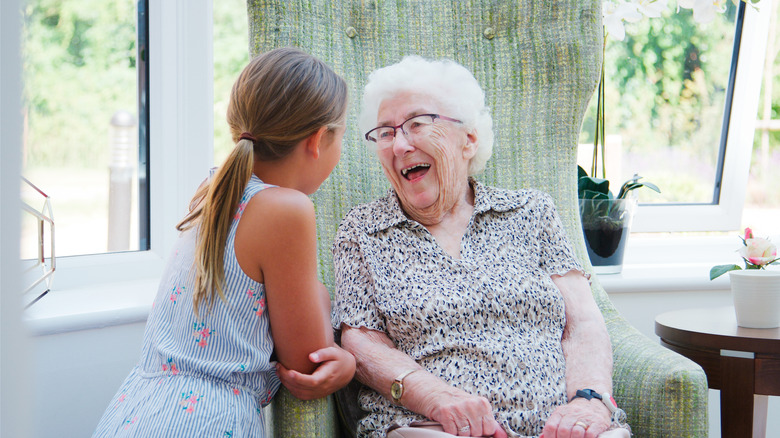
Age is the biggest risk factor for developing cancer. Because cellular damage and carcinogen exposure accumulate over time, older people have a greater chance of cancerous mutations. Tellingly, the aging process starts accelerating around the age of 50. For example, the average 70-year-old has about four times the chance of receiving a cancer diagnosis compared to the average 50-year-old. And yet, according to a 2025 study from Stanford University, extremely advanced age may actually suppress cancer — at least in mice studies.
Scientists have long been aware that cancer risks start to drop after 85 years old. According to the National Cancer Institute, cancer diagnoses are more frequent among the 80 to 84 crowd than among the 85+ crowd. For a long time, this drop was incorrectly suspected to be the result of low screening rates among the elderly, but emerging research suggests that cell division in old people may slow down after a certain age.
To test the idea, the Stanford researchers gave mice cancer. After inducing a tumor-forming mutation in both young and very old mice, it was observed that tumors formed less frequently and less aggressively in very old mice. This suggests that very old age may come with some cancer-suppressing biological changes.
Other studies support the theory. A 2024 collaborative study from Memorial Sloan Kettering Cancer Center discovered the role of iron in slowing down cell division as we enter very old age. In the mice study, the cells in very old mice signaled that they were iron-deficient, even though they weren't. This signaling triggered a slowdown in their division. In the words of the study's primary author Xueqian Zhuang, "Aging cells lose their capacity for renewal and therefore for the runaway growth that happens in cancer."
The many factors affecting cancer risks among the elderly

While recent research suggests extreme old age can suppress cancer growth, an 85-year-old's cancer risk is still higher than that of a child. Simply put, the longer your cells spend dividing, the greater the odds of a mutation developing into cancer. And beyond just age, family history, genes, exposure to carcinogens, and lifestyle choices all factor into an individual's cancer risk.
There are even specific cancers which affect certain age groups more commonly than others, such as the growing rates of colorectal cancer among Gen Z and Millennials. Because older generations had lower rates when they were the same age that Gen Z and Millennials are now, it's unlikely that biological age can explain this spike in colorectal cancer among young adults.
Thus, although advanced age helps slow down and suppress cancer growth, the risk is still there. This highlights the "competing mortality" factor as an explanation for the reduced cancer rates among the 85-and-older folks. For those healthy enough to make it to such a distinguished age, the risk of a heart attack or sudden stroke is far greater than dying from a slow-killing cancer. It's therefore likely the very old have lower cancer rates partly because they die from other causes before they can receive a cancer diagnosis. Indeed, one survey reported 32.5% of people aged 65+ had undiagnosed cancer that was discovered during their autopsy.
Perhaps it's better that way. Some experts protest overdiagnosing cancer among the elderly. They point to the blurry line between harmful and benign cancerous growths, as many people have lived to an old age without knowing the details of their cellular successes or failures. Still, if our bodies start suppressing cancer in our 80s, we'll take the win.