

Science Explains How Snakes Can Still Bite You After Death
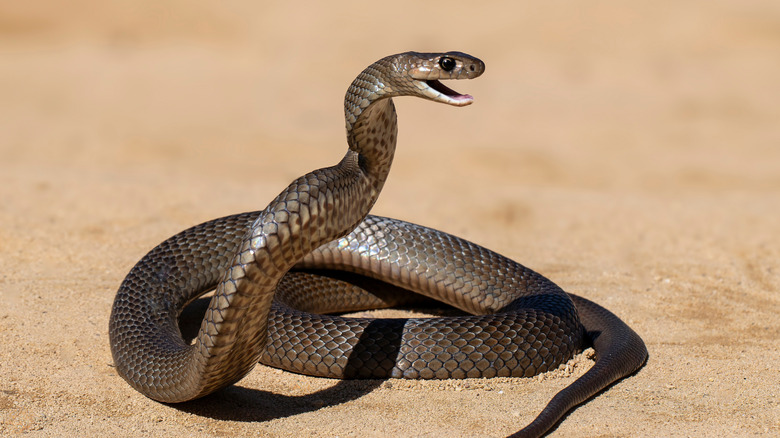
For those who have a fear of snakes, the sight of one is likely to make you turn cold with terror. Realizing it is dead would probably prompt a sigh of relief, but it shouldn't. Terrifyingly, venomous snakes are dangerous even after death, and they can, in theory, still deliver a lethal bite.
A Texas man discovered this phenomenon the hard way after decapitating a rattlesnake, then picking its head up a few minutes later. The snake's jaw clamped down on his hand and delivered the full dose of venom, resulting in a four-day coma, septic shock, and internal bleeding. While it may seem like something from a reptilian horror movie, it is simply down to the functioning of a snake's nervous system.
The poison of snakes such as cobras and rattlesnakes is stored in their venom glands, which are connected to their sharp fangs. Unlike with mammals, cold blooded animals don't need as much oxygen for muscles and nerves to work, meaning that certain body parts can still function after death. In the case of the rattlesnake, touching its head triggered the same response as when alive, activating the bite reflex and resulting in a nasty injury for the recipient.
The venom doesn't disappear when the snake dies
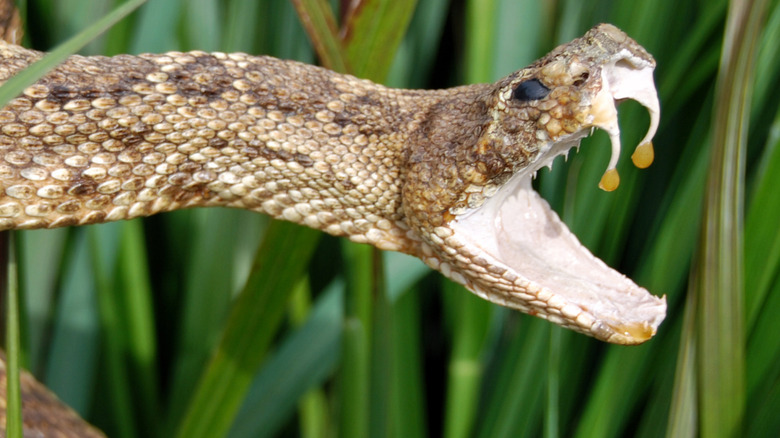
To fully comprehend the dangers of a dead snake, it helps to have an understanding of the anatomy of how their venom delivery works. The bite reflex alone wouldn't be quite as terrifying if the fangs were empty — though it would still be a pretty big shock. But the real danger is the cocktail of poison that sits in the venom glands.
There are different types of poison in the venom glands, depending on the species of snake, but the main ones include haemotoxins and neurotoxins. Haemotoxins are usually present in vipers, including rattlesnakes, and attack your blood, making it difficult to clot. Neurotoxins are found in elapids such as cobras and black mambas (which can be among the worst ways to die), and affect the nerves, causing immobility in the prey. The venom glands are located behind the eyes, and when the bite reflex is activated, the muscles surrounding the glands contract, pushing the venom into the fangs and ultimately into their unfortunate prey.
This process is the reason that the snake bite is still dangerous after death. The system does not need a signal from the brain to activate, and if the nervous system is still able to respond, the rest of the sequence is mechanical and will progress as normal. Scientists believe that the reflex response can still be active for hours after death.
Multiple species of snakes are dangerous after death
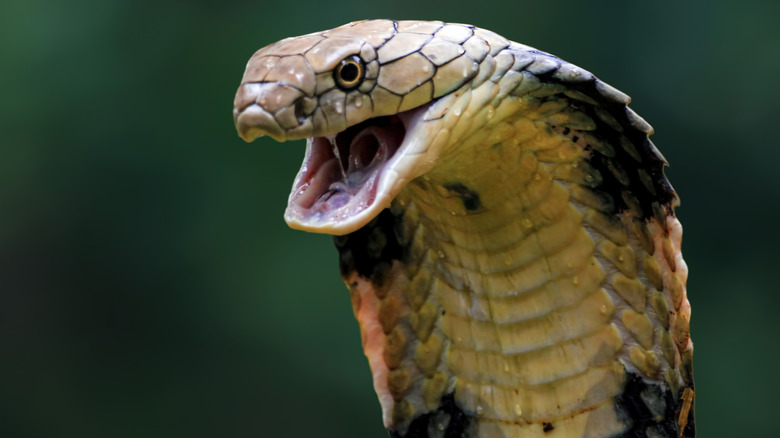
Until recently, the only documented cases of post-mortem venomous bites in snakes was of rattlesnakes, but a 2025 study published in Frontiers in Tropical Diseases showed that other snakes have the ability to do so, too. It documented three cases from Assam, in India, where the recipients were bitten by dead snakes and suffered from a venomous bite. Two of the cases involved cobras, while the third was a black krait, a relative of the cobra. All three victims required antivenom, but recovered. This research shows that the post-death bite phenomenon is not restricted to vipers, but also applies to other venomous snakes.
The time that needs to elapse before this threat passes likely varies between species, so the advice from experts is to never touch a snake that may be venomous, even if you believe it to be dead. Instead, call an expert to remove dangerous snakes, both dead and alive. As we now know, just because it is dead, doesn't mean the danger has passed.