

The Bizarre Phenomenon That Can Happen To Human Skin After Death

While many scientists study the inner workings of live humans, some are busy investigating the bizarre things that can happen after death. For instance, you probably didn't expect the body to still make noise, nor black stains to appear on the eyes. Another phenomenon that's less documented but can occur on the skin is postmortem tanning.
Previously called postmortem sunburn or suntan, postmortem tanning is sort of what it sounds like: an unusual darkening of skin that has been exposed to the sun after death. In two different studies — one published in the American Journal of Forensic Medicine & Pathology and the other in Cureus (these links contain graphic images of postmortem tanning and death, including suicide) — the researchers analyzed three decedents (the legal term for people who are deceased) who were exposed to the sun for prolonged periods of time. Two of the corpses died in abnormally cold environments, but the other four passed away in an area of warm or hot temperatures. However, all of them exhibited postmortem tanning where the sun hit the skin, while the skin that remained covered didn't change color.
When and why postmortem tanning happens to human skin after death
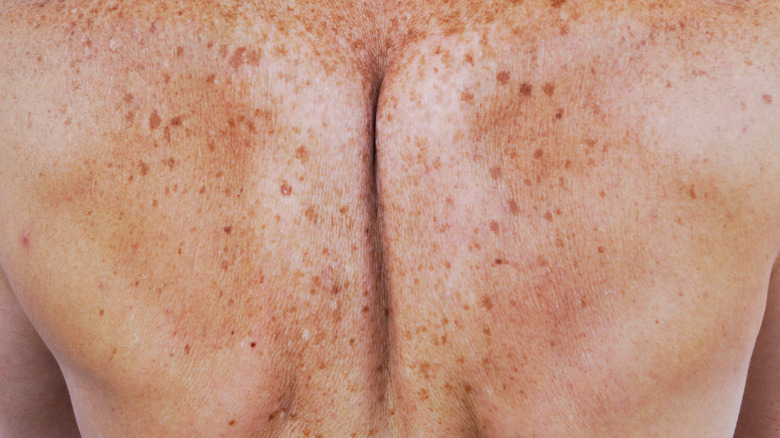
Explanations for when and why postmortem tanning happens is a little more complicated. It starts with how long it takes for a body to decompose, which can be anywhere from two weeks to several years depending on environmental factors. Similarly, temperature was shown in the studies to affect the development of postmortem tanning. It appeared in the warm-exposed decedents much sooner than the cold-exposed ones. However, some of the researchers postulated that it typically occurs during the beginning stages of the human decomposition process, which is when algor mortis, livor mortis, and rigor mortis set in.
Why postmortem tanning occurs is even more complicated, but scientists believe it works similar to tanning in living individuals. This involves the release of melanin (natural pigment) triggered by exposure to ultraviolet A radiation from the sun, which causes immediate, short-term tanning; and melanogenesis (a process of specialized cells synthesizing melanin) after being exposed to ultraviolet B radiation, which causes delayed, longer-lasting tanning. Both of these processes rely on energy and enzymes, which require oxygenated blood flow and an active metabolism.
The researchers believe that such a mechanism could be behind postmortem tanning, even though metabolism stops after death. Their reasoning is that harvesting and growing skin fibroblasts (connective tissue cells) in culture after death is possible, so the usual mechanism behind tanning may be possible as well. However, further investigation is needed to definitively establish the mechanisms behind it.