

Scientists Say These Newly-Discovered Fossils Change Everything We Know About Mammalian Evolution
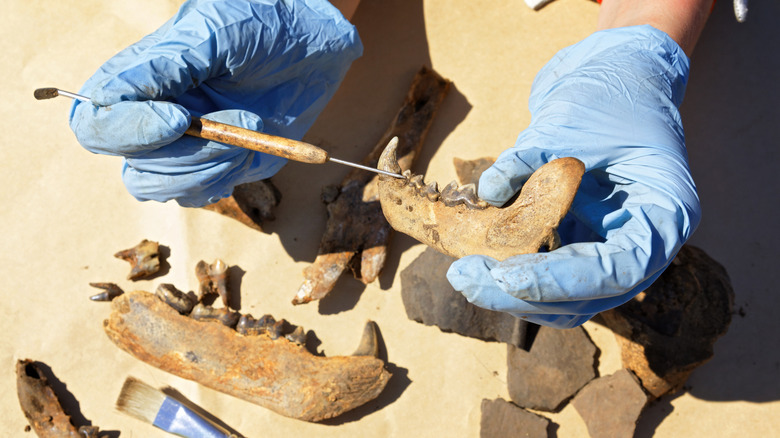
Today mammals can be considered a dominant class of animal, living on every continent on Earth. But this was not always the case. Around 300 million years ago a group of reptiles known as synapsids evolved into the precursors of modern mammals. Over time, these organisms evolved, developing mammalian characteristics like warm blood, hair, and producing milk for feeding their young. Another characteristic of mammals, with the exception of monotremes like the platypus, is viviparity, that is, giving birth to live offspring. However, new fossil evidence shows that the development of viviparity happened 90 to 95 million years earlier than previously thought.
A study published in the journal Frontiers in Mammal Science in 2026 showed that viviparity in cynodonts, a group of animals that were a transition between synapsids and the earliest mammals, arose during the Triassic Period around 236 million years ago. Before this it was thought that live birth was a more recent development in the mammal family tree and that cynodonts were oviparous, or laid eggs.
How much do animals grow

Scientists made this discovery by studying fossilized remains of a cynodont that lived in what is now northwestern Argentina during the Triassic. They observed growth marks in the fossil that occur in bones or teeth during the rapid growth that happens in animals after birth. With this growth line, the scientists were able to estimate the mass of the organism as a newborn and compare it to its adult body mass. They then compared the ratio between these two masses with ratios in thousands of living mammals, reptiles, and birds.
The researchers calculated that the newborn cynodont weighed just under four pounds and had a weight of about 26.5 pounds when it died. This means that the newborn's body mass was around 14% of the mass the cynodont reached. In modern mammals of similar size this figure can be as high as 18%. In contrast, modern reptiles are typically around 0.1% to 0.6% of their adult mass after hatching while birds have a somewhat higher proportion at 1.3% to 4.5%. This finding shows that the cynodont in question was likely viviparous.
The advantages of live birth
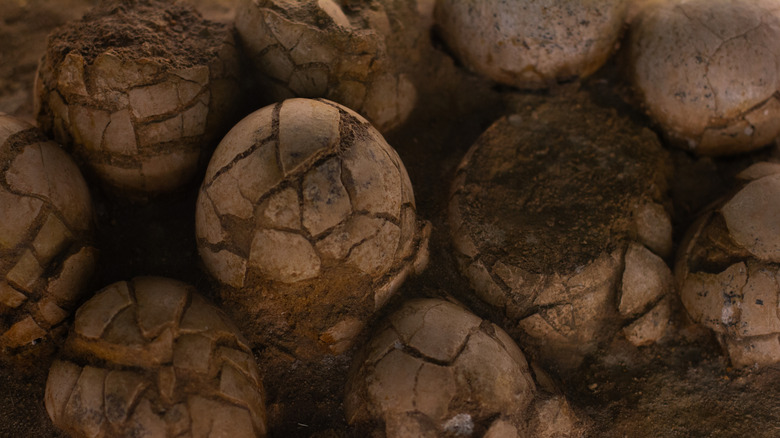
Scientists have noted more than 150 times where viviparity evolved independently. And while often considered a hallmark of mammals, some species of fish and reptiles give live birth. In this case viviparity likely gave cynodonts a distinct advantage during a tough time. The Triassic followed an extreme mass extinction event at the end of the Permian. The extinction of many plants and animals meant intense competition for resources and cynodonts were at the mercy of predators and harsh weather during the Triassic. The embryos of viviparous animals would be better protected than their oviparous counterparts. Another advantage is that a viviparous embryo would receive nutrients from its mother while oviparous embryos are limited to whatever nutrients are in the egg with it.
These findings fill in details about the early days of the rise of mammals. This pushes the clock back on live birth millions of years for this species of cynodont. However, it's possible that these traits were also present in other mammalian precursors in the distant past. Further evidence is needed to determine where exactly mammals' distant relatives shifted from laying eggs to live birth. However, what we've learned from these fossils has already changed what we know about how mammals came to be.