

Doctor Reveals The 2 Most Physically Painful Ways To Die

When it comes to psychological traits, seeking out information about death or dangerous phenomena in general — known as morbid curiosity — is actually quite common. So, you can rest assured that it's not too abnormal to wonder what it physically feels like to die or which ways to die are the most physically painful. For the latter, Sciencing reached out to Dr. John Parente, DO, a board-certified emergency medicine physician practicing in northeast Ohio with more than 20 years of clinical experience and host of the Emergency Minute podcast. He says that one of the most painful fatal injuries is skin burns.
According to the Healthcare Cost and Utilization Project National Inpatient Sample, 2.7% of national hospital burn admissions end in death (per the American Burn Association). Parente explains that it's so painful because "your skin [is] the largest organ in the body [and] is highly innervated with nerve endings (meaning, nerves touch nearly every inch of the skin of our bodies)." Superficial burns (first-degree burns) can cause the most excruciating pain because the nerve endings are exposed to stimulation. Because of that, even the lightest difference in airflow around the skin can be painful.
It doesn't stop there, though. Parente also notes that "massive reactions happen within the body to respond to these injuries, such as cytokine release, inflammatory proteins, etc." Wound healing can't progress without the inflammatory response. During the first phase, proinflammatory cytokine and other proteins are released, increasing inflammation. Anti-inflammatory cytokines are released during the second phase, reducing inflammation. When the first phase becomes prolonged, though, it can actually cause more damage, eventually making the wound deeper and the burn injury more painful. This prolonged system response can also lead to blood vessel, heart, lung, and kidney damage.
Why polytrauma is one of the most physically painful ways to die
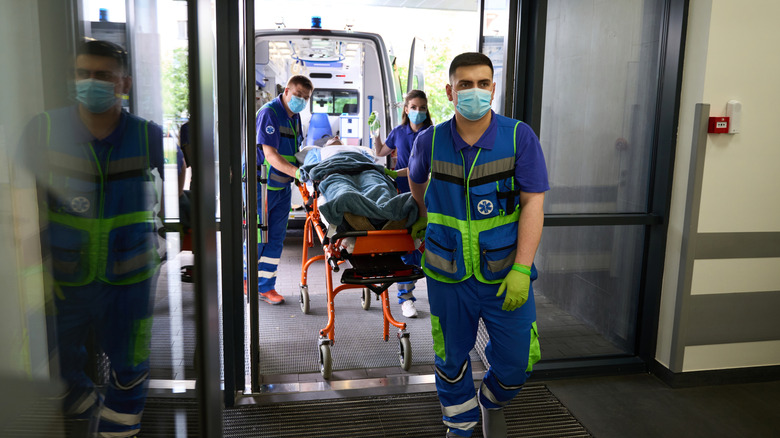
Like burn wounds, Dr. Parente says that polytrauma is another very physically painful way to die because it also triggers "multiple aspects of the nervous system." There are already several body parts that are more sensitive to pain than others, but this type of injury actually involves multiple traumatic injuries. For example, someone in a car accident could suffer from a combination of broken limbs, a collapsed lung, and damaged internal organs that cause internal bleeding.
Parente explains that, because multiple systems in the body are injured, two different types of nerves are activated. One of these is the somatic nervous system, which is part of the peripheral nervous system that expands throughout the whole body except the brain and spinal cord. Connected to the musculoskeletal system, these nerves send signals from the brain to the muscles, allowing the body to move, hear, smell, taste, and touch. It's also responsible for "referred pain," which is when you feel pain somewhere other than where it actually originates.
The other nerves activated by polytrauma, says Parente, are part of the visceral (autonomic) nervous system. Different from the somatic system, the autonomic system connects the brain to most major internal organs, including the spine. It controls the automatic functions that the body performs to survive, such as breathing and regulating heartbeat even while you sleep. The internal nerves of this system can also trigger pain in the abdomen and chest in polytrauma cases, notes Parente. Since both the somatic and visceral subsystems are involved, people who suffer from such injuries can feel pain throughout their entire bodies.