

Six People Were Sealed In A Simulated Spacecraft For 520 Days, Then Scientists Found Something In Their Poop
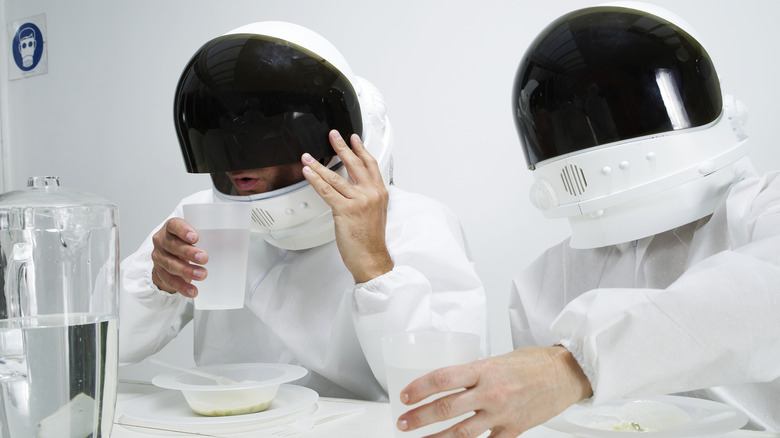
Since the earliest days of human space flight, we've known that traveling in space takes a toll on the body. Weightlessness and increased radiation cause physical changes that resemble the human body aging faster in space. Additionally, the mental and emotional impacts of being away from Earth and isolated from the rest of humanity are also important to understand. To study this, scientists sealed six people in a simulated spacecraft for more than 500 days to see what a trip to Mars might actually look like. A follow-up study of stool samples of the simulated astronauts found significant microbiome changes that could have big implications for future long-duration space missions.
A typical trip to the International Space Station lasts around six months, and two astronauts spent 11 months on the ISS during NASA's One-Year Mission to study the physiological effects on long-term spaceflight. The current record, held by a Russian cosmonaut on the space station Mir in the 1990s, is 437 days. However, a crewed mission to Mars would take even longer than that. The physical effects of space travel are well documented, but the mental and emotional effects are somewhat less clear.
Sealed away for science
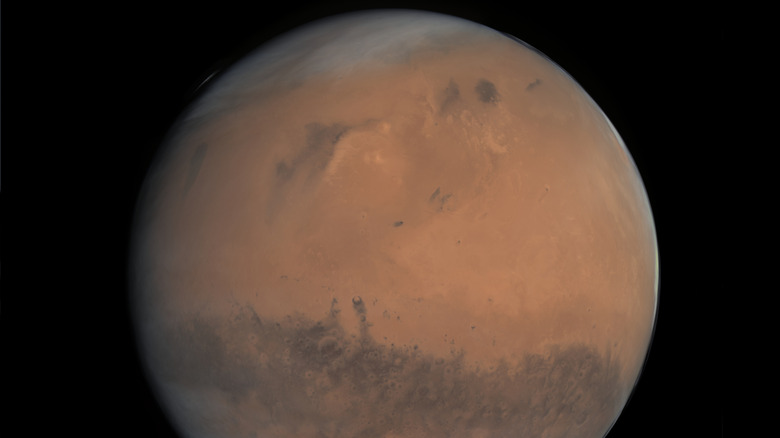
In 2010, a collaborative study by the European Space Agency and the Russian Institute for Biomedical Problems known as Mars500, sealed six people in a simulated spacecraft to analyze the effects of long-term isolation. During their isolation, the subjects only had contact with one another and voice communications with simulated mission control and friends and family like they would in an actual mission. To ensure accuracy, voice communications built in delays of up to 20 minutes to mimic what astronauts would experience on a mission to Mars.
Throughout the study, the participants ate the same kinds of food consumed on the ISS and carried out normal mission activities like maintaining systems and conducting scientific experiments. The simulated astronauts also kept tabs on their own physical and mental health as well as those of each other. During the mission the crew split into two groups, with three people staying in the main section of the isolation chamber and three moving to a second section to simulate landing on Mars and conducting surface activities. In November 2011, after 520 days, the simulated astronauts were released from their isolation, ending the longest study of human confinement to date.
Explaining unexpected changes
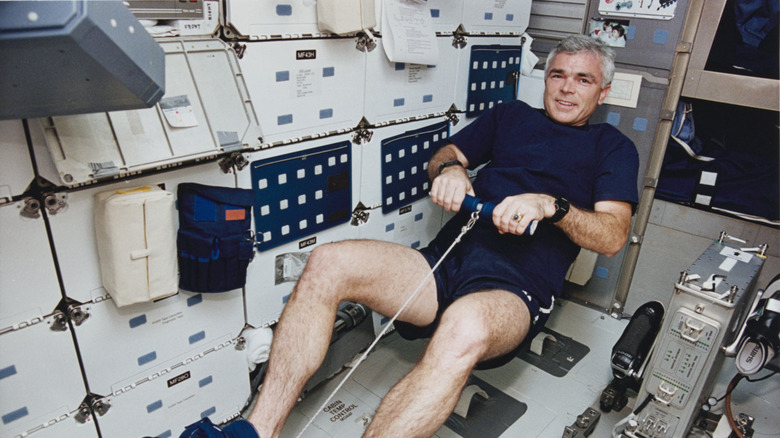
Astronauts in space lose muscle mass due to weightlessness; however, the simulated astronauts also experienced losses in strength and muscle mass. They also had higher fasting blood sugar levels than before the study, and bloodwork showed markers of intestinal inflammation. Studies at the time found no significant changes in the participants' gut microbiomes, but a later reanalysis funded by the Canadian Space Agency had some interesting findings.
A 2021 study by Canadian scientists looked at microbes present in the poop of the six simulated astronauts from the beginning and end of the mission. They identified more than 400 microbial gene sequences, including 213 shared by all six of the astronauts, and found notable changes in 32 microbial sequences. The microbe species included in these changes are known to play roles in things like degrading resistant starch, insulin sensitivity, and inflammation. The scientists also noted interactions between the astronauts' microbiomes and the microbiome of the simulated spacecraft.
The microbiome changes observed in the study can explain the physiological symptoms seen in the simulated astronauts. Further analysis could help with strategies to keep astronauts healthy on long-duration missions.