

You Should Think Twice Before Washing Your Raw Chicken
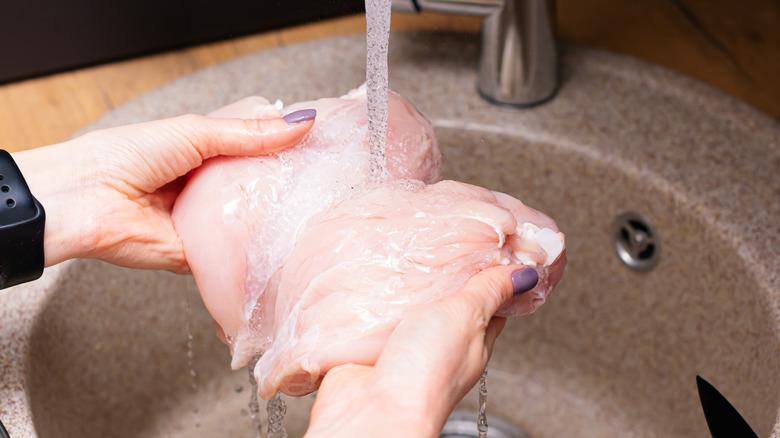
Washing fresh produce before you cook and eat it seems like common sense if you want to keep yourself and your family safe. While we are often told of the dangers of not washing fruits and vegetables before eating them (vinegar is actually more effective than water in this case), the advice doesn't apply when it comes to raw chicken. Though raw poultry contains dangerous bacteria, washing it off with water is not the answer to ensuring it doesn't make you sick.
Food safety around raw chicken is more important than many other foods, due to the dangerous microbes that it carries. Salmonella and Campylobactor are two of the most common bacteria on raw chicken, both of which can make you very ill. Washing the chicken under a running tap, however, makes the situation even more dangerous, by helping the pathogens to move around the kitchen in droplets of water. A study carried out by the U.S. Department of Agriculture (USDA) found that 60% of people who washed chicken under the tap had bacteria remaining in the sink afterward, with a worrying 26% getting microbes from the raw chicken directly on the lettuce that it was to be served with.
The advice from the USDA following the study is to prepare any raw vegetables before touching the raw chicken, and keep them away from the space that the poultry will be prepared in, since even those participants who did not wash their chicken still managed to transfer bacteria to their salad.
Washing chicken spreads bacteria rather than removing them safely
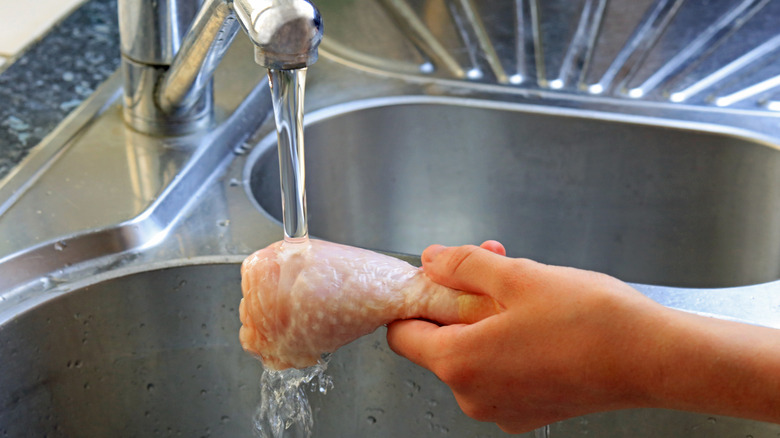
Since those who wash raw chicken are presumably doing so to protect their household from harm, it might shock them to realize their actions are in fact increasing the chance of food-borne disease. A study from 2022 titled Chickensplash! sought to confirm the claims from the USDA regarding washing raw chicken using agar plates to detect whether microbes from the chicken could be transferred elsewhere. Their research confirmed this to be the case, and stated that the flow of the water and height of the chicken in relation to the faucet changed how far the particles traveled, with a higher faucet leading to farther splash distance.
A safety campaign by Drexel University shared the same message about washing chicken, and explained that there is no need to wash it anyway. The way in which commercial poultry is handled now means there is no dirt to be removed, so your chicken is effectively already "washed" when you buy it. The recommendation is to wipe off any coating you wish to remove with a clean paper towel (though it is likely to be a protein layer anyway) and dispose of the towel, before washing your hands thoroughly with soap and water. Salmonella can remain on surfaces for up to 32 hours and is one of the bacteria that are incredibly difficult to kill, so be sure to wash and sanitize surfaces near where raw chicken has been prepared, and especially cutting boards and utensils.
The safest way to destroy dangerous bacteria on chicken is to cook it well
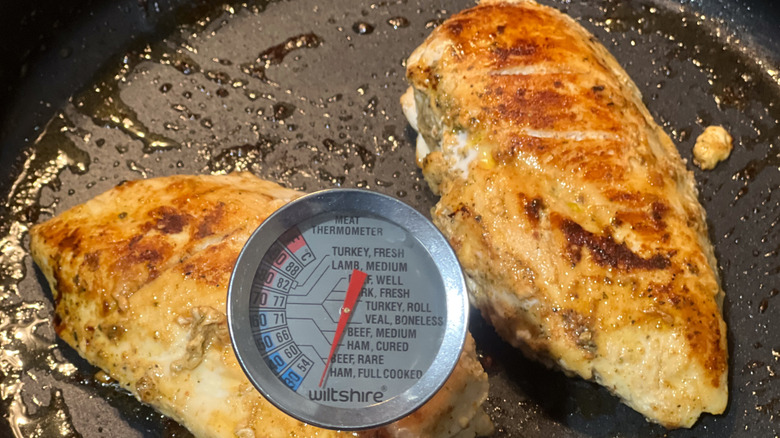
Refraining from washing raw chicken and keeping other fresh produce well away from it are the first two steps to preventing the spread of dangerous bacteria, but cooking the meat properly is crucial, too. No matter how you have prepared the chicken before cooking, including marinating to make the meat more tender, the chicken must be cooked to an internal temperature of at least 165 degrees Fahrenheit. While red meat such as beef can sometimes be served rare, though care must still be taken to cook the exterior properly, poultry must always be cooked all the way through.
Unless you are an experienced chef, judging the temperature of the inside of the meat cannot be accurately done by eye, so using a meat thermometer is the safest way to ensure the chicken has been cooked long enough to destroy the bacteria. Once chicken is cooked, it should be eaten immediately, or refrigerated soon after cooking. The USDA cites 40 to 140 degrees Fahrenheit as the "Danger Zone" for food, and since it mentions Salmonella as one of the bacteria that can grow to dangerous levels in this temperature range, chicken should never be allowed to sit on the counter for a significant time. Leftovers should also be reheated thoroughly before eating. While washing raw chicken creates an additional hazard when working with poultry, good cleaning practices and cooking methods can help keep your household safe by reducing the chance of food-borne illness.