

You Should Think Twice Before Using A Plastic Cutting Board To Chop Food
We may receive a commission on purchases made from links.
For a long time cooks used wooden cutting boards when preparing food. Then plastic cutting boards hit the market, promising better safety and easier care at a lower price. Cooks can cut raw meat on one cutting board, vegetables and fruit on another one, avoiding cross contamination. Plastic cutting boards can also be sanitized in the dishwasher and don't need to be oiled and conditioned like their wooden counterparts. However, scientists researching tiny bits of plastic known as microplastics say you should think twice before using a plastic cutting board.
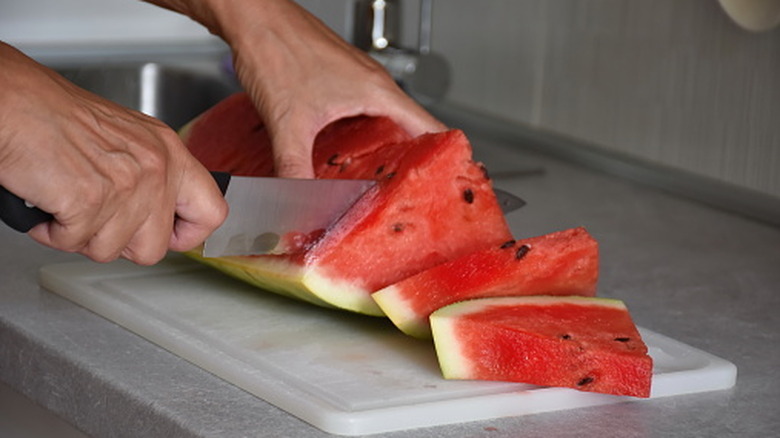
Cutting boards can be less expensive than wooden ones and can reduce the chances of foodborne illness. However, there are also disadvantages to using plastic cutting boards. Specifically, it's possible that chopping food on a plastic cutting board can expose you to microplastics. When a knife blade moves over a plastic cutting board it can release small pieces of plastic that get mixed in with the food. A single stroke of a knife can release 100 to 300 plastic particles, which translates to thousands of particles per meal. Older, more heavily used cutting boards release more particles than newer ones. About half of these particles stay on the cutting board and are washed away later while the other half still end up in food. These microplastics then get ingested, meaning they could pose a risk to your health.
How small is small?

Microplastics are defined as particles of plastic smaller than two-tenths of an inch in diameter. Research has found microplastics in many tissues of the human body. Once inside the body's tissues microplastics may trigger inflammation and oxidative stress, and exposure to high levels of microplastics may be a factor in the rise in colorectal cancer in younger people. However, while we understand how many plastic particles are released when using a cutting board and what fraction ends up in our food, it's less clear about what happens after that.
The body's tissues can take up very small microplastic particles, but larger pieces could simply pass through the gut unaffected. However, it may be possible that some smaller cutting board microplastic particles can be absorbed. Research using mice comparing the effects of food made on wooden and plastic cutting boards found changes in gut bacteria and increased intestinal inflammation in the plastic group.
Another potential risk is what happens when microplastics from a cutting board are heated during the cooking process. Some types of plastics contain additives that can be released when heated, potentially migrating into food. For example, propylene and polyurethane can contain small amounts of phthalates, which may be associated with health problems.
Alternatives to plastic
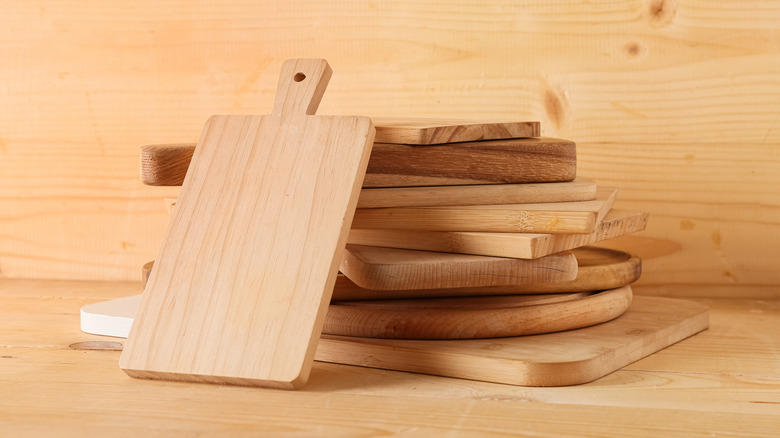
Given the uncertainty about plastic cutting boards, some people might want to find alternatives. The classic wooden cutting boards won't shed microplastics, though knife blades can release tiny wood particles. Additionally, pores in wood and scratches can provide the ideal conditions for bacteria to grow, though washing with hot soap and water can help. The way wooden cutting boards are made is also important. Boards that are a solid piece of wood are safer than those made from pieces of wood that are glued together since some glues can leach into food.
Fortunately cooks have cutting board options beyond just wood or plastic. Composite products like the Epicurean cutting board, which is made of resin and wood fibers, are one alternative. These boards are non-porous, heat-resistant, gentle on knife blades, dishwasher safe, and won't leave microplastics in your food. Another inexpensive, heat-resistant, and dishwasher safe choice is Liflicon's silicone cutting boards; just be aware, silicone boards are flexible and bend when picked up.
Whether you choose to stay with plastic, work with wood, or try out newer composite or silicone cutting boards there are options for everyone. Plastic cutting boards had the benefit of being less expensive and easier to maintain than wooden boards, but with what we know now, cooks may want to think twice about using them.