

You Should Think Twice Before Refilling Your Plastic Water Bottle
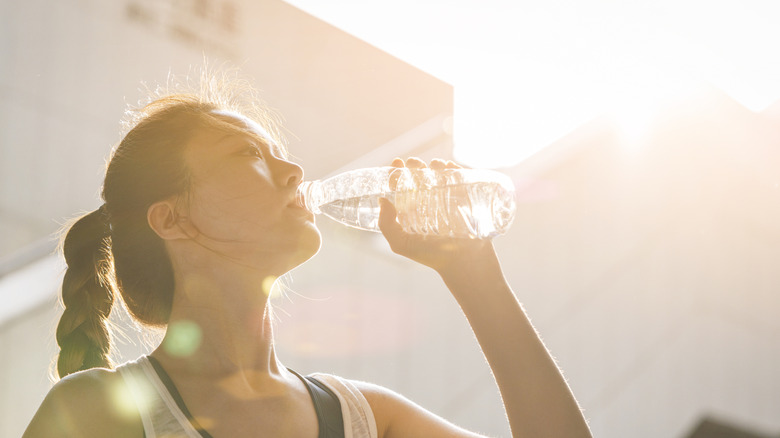
Single-use plastic water bottles are wasteful, yet their convenience makes it hard to give them up. For many, there's a degree of guilt involved in using them, which is part of the reason many Boomers still swear by recycling. But even recycling requires energy, water, and manpower, and the process has a significant carbon footprint. It's therefore tempting to reuse a single-use plastic water bottle. Unfortunately, reusing a bottle can be unhealthy for two big reasons: rapid bacteria growth and chemical leaching.
Most experts consider bacteria, not chemical toxins, to be the biggest health concern from reusing plastic water bottles. Because they have narrow, threaded tops and their thin walls can easily scratch or bend, they provide plenty of sanctuaries for bacteria to build up. This bacteria is most often transmitted to the bottle from the drinker's lips and mouth. Left undisturbed, bacteria clinging to scratches in the inner walls and in the threaded tops can multiply and bloom.
Of course, a vigorous wash is usually enough to ensure a water bottle is free of germs. However, there's a second, longer-term concern: chemical toxins. Unlike reusable bottles, most single-use bottles are made of thin plastic, which sheds microplastics each time you screw the cap. Some scientists believe microplastics to be a factor behind the increased colorectal cancer rates among young adults. And studies have identified over 150 different chemical compounds that can leach into a plastic water bottle, including phthalates, heavy metals, and chemicals that mimic hormones in the body. While these chemicals aren't inherent to bottle reuse, prolonging the life of your single-use water bottle increases your exposure.
Plastic water bottles are unhealthy for your body and the environment
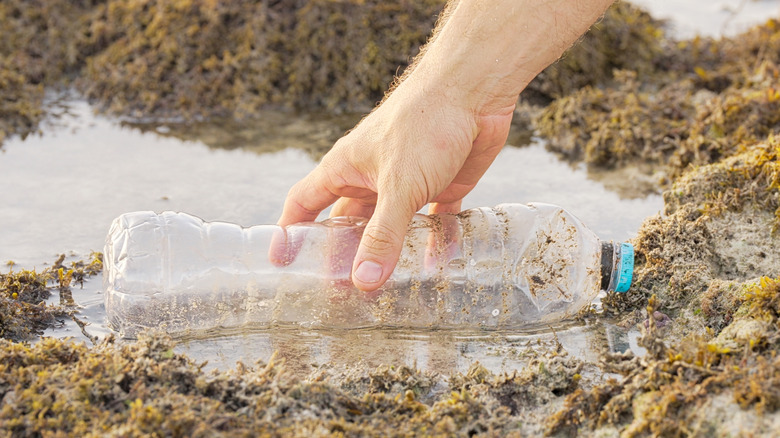
There are still many unknowns about the long-term effects of the microplastics in single-use plastic water bottles. In fact, the "over 150 different chemical compounds" figure, cited from a 2022 study, may be just the tip of the iceberg. In reality, over 16,000 compounds have been identified in PET plastics, many of which form when plastic is exposed to heat or solar radiation. There's a reason the water in your single-use bottle tastes plastic-y after it's been left in the hot car.
The most concerning chemicals found in single-use bottles may disrupt or mimic hormones in the body. Within the last quarter century, studies have revealed the extent to which these chemicals affect health, even as manufacturers claim PET plastics are safe and toxin-free. For example, phthalates, sometimes referred to as "hormone hackers," are consistently found in bottled water, likely generated as byproducts during manufacturing. Even in trace amounts, these compounds can mimic estrogen while suppressing testosterone. Over time, exposure to these chemicals may damage the reproductive system, cause metabolic disorders, and increase the risk of certain cancers, such as breast cancer and prostate cancer.
Thus, single-use plastic bottles come with potential long-term risks, as trace chemical toxins may accumulate in the body over time. Reusing a single-use bottle can increase your exposure to leached chemical compounds and microplastics, but even unopened bottles contain small but significant amounts of toxic chemicals. Other everyday disposable plastics, such as the wrapping on cucumbers, impact the environment, as well, since they contribute to "forever chemicals" and pollution. If you want to avoid exposure, it's probably best to avoid single-use plastic altogether.