

In 1969, Lightning Struck Apollo 12 Twice After Liftoff. One Obscure Switch Saved The Mission
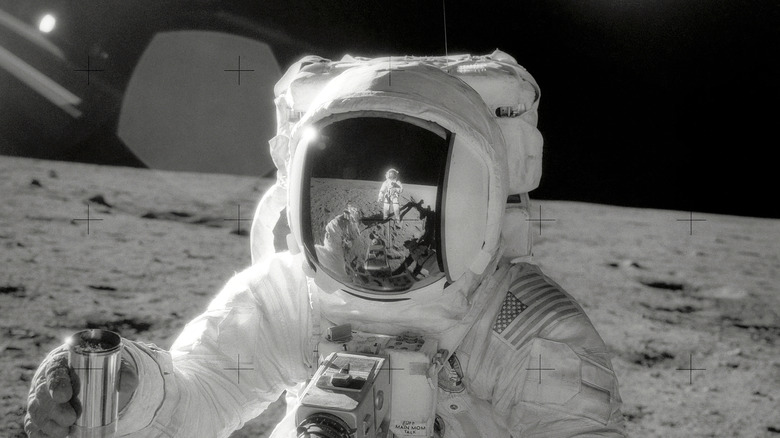
Not only can space permanently damage astronauts, but there are many bad ways to die in space that'll make you think twice about becoming one. Even then, getting struck by lightning two times within a minute after your launch can seem like overkill. On November 14, 1969, this is precisely what the three astronauts aboard the lunar landing mission Apollo 12 experienced. Yet, they managed to continue their mission unharmed, thanks to a virtually unknown switch known as "SCE to Aux" — and one young controller who had previously paid attention to a strange and obscure bug in the system.
Lightning not striking in the same place twice is a popular myth people need to stop believing. Apollo 12 found this out the hard way when the first lightning hit it just 36.5 seconds into the launch, and the second came a mere 16 seconds later at 52 seconds. They had a devastating effect to the craft's electronics. The astronauts' command module was suddenly a Christmas tree of assorted warning lights, and NASA's Mission Control in Houston was dealing with data that made no sense whatsoever.
Fortunately, one man not only kept his cool, but immediately recognized the issue. Down in Houston, a flight controller called John Aaron had encountered a similar telemetry issue in test conditions roughly a year before. He had found the issue interesting, and dug around until he discovered the root cause: the ship's Signal Conditioning Electronics would go haywire in particular conditions. So, upon encountering the exact same signs at a time of crisis, he simply passed the command: "Try SCE to Aux." This rerouted the Signal Conditioning Electronics, which fixed the issue and returned the vessel to normal operational parameters.
Quick thinking and preparedness saved the Apollo 12 mission
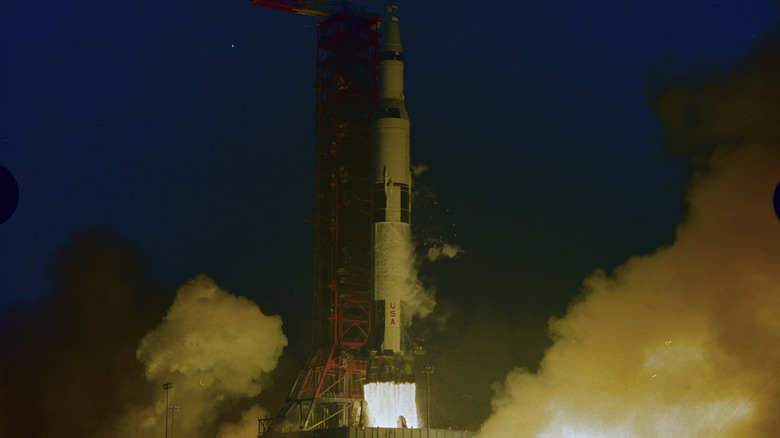
The trouble the lightning strikes caused Apollo 12 was ultimately an electrical one: The spacecraft was now running on lower power than anticipated, which jumbled the way the Signal Controlling Electronics translated electrical signals to understandable data. In addition, three of the craft's fuel cells had gone offline.
John Aaron was observing all this at his console as the controller responsible for electrical and environmental controls and communications systems (EECOM). His experience with this particular type of issue made him the perfect man for the hour: The switch Aaron was referring to was so obscure that none of the people who relayed his "SCE to Aux" command even knew what it meant. Fortunately, lunar module pilot Alan Bean was familiar with the switch, and was able to execute the command. This put the SCE to an auxiliary setting, and just like that, everything was in working order again. The only hiccup the lightning scare caused was a failure to reach the intended heliocentric orbit, due to a trajectory command issue the incident had caused.
This was a comparatively minor problem. Charles Conrad Jr., Richard Gordon Jr., and Bean were able to proceed with their mission. Conrad and Bean became the third and fourth person in history to walk on the moon, and the trip was ultimately a fun joy ride. As for Aaron, his calmness and preparedness earned him the nickname "steely-eyed missile man" — a massive compliment in the space game. He went on to play a mission control role on a number of space missions, including the difficult and crisis-ridden Apollo 13. Loren Dean can be seen portraying him, "EECOM Arthur," in Ron Howard's 1995 movie about that particular incident.